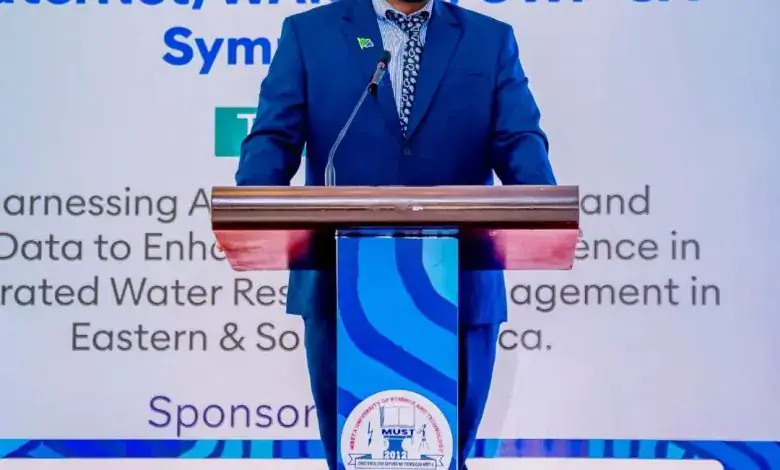
The Arusha region is currently hosting a three-day scientific conference on sustainable water resource management and climate resilience in East and Southern Africa. The event was officially opened by Dr. Toba Nguvila, Regional Administrative Secretary of Arusha, on behalf of the Prime Minister, Dr. Mwigulu Nchemba. Dr. Nguvila emphasized that climate change has increased the complexity and urgency of managing water resources. He stressed the need to integrate water security strategies with climate resilience.
Climate change has brought about significant challenges to water resource management in Tanzania. Changes in rainfall patterns, prolonged droughts, floods, and rising temperatures pose threats to water availability, agricultural production, infrastructure, hydroelectric power generation, and community safety. Dr. Nguvila highlighted the need for enhanced planning that incorporates climate information and conservation of water sources. This will ensure sustainable management of water resources and mitigate the impacts of climate change.
The conference brings together experts and stakeholders to discuss innovative solutions to address the challenges of climate change and water resource management. Dr. Nguvila emphasized that the integration of climate-resilient strategies into water management is crucial for sustainable development. The event aims to promote collaboration and knowledge sharing among participants to develop effective solutions to the region's water challenges.
Professor Maulilio Kipanyula, Deputy Vice-Chancellor of the Nelson Mandela African Institute of Science and Technology (NM-AIST), represented the Minister of Education, Science, and Technology, Professor Adolf Mkenda. Professor Kipanyula stressed that scientific research should inform decision-making, drive innovation, and address real-world challenges facing society and industry. He emphasized the importance of investing in the next generation of scientists and researchers, particularly young people.
The conference also highlights the need for inclusive and gender-sensitive approaches to water resource management. Zakia Meghji, Chairperson of the Mbeya University of Science and Technology Council, called for greater participation of women in water resource management, scientific research, and the adoption of modern technologies. This, she argued, would ensure that solutions to water challenges are responsive to the needs of all groups in society.
The three-day conference will feature discussions on innovative technologies and strategies for sustainable water resource management. Participants will share experiences and expertise on climate-resilient water management practices, water conservation, and sustainable development. The event aims to promote collaboration and knowledge sharing among stakeholders to address the region's water challenges.
The outcome of the conference is expected to contribute to the development of effective strategies for sustainable water resource management in East and Southern Africa. The event will also promote investment in the next generation of scientists and researchers, particularly young people, to drive innovation and address the region's water challenges. Key recommendations from the conference will be shared with relevant stakeholders to inform policy and practice.
Key points
- Climate change has increased the complexity and urgency of managing water resources in Tanzania.
- The conference aims to promote collaboration and knowledge sharing among stakeholders to develop effective solutions to the region's water challenges.
- There is a need for inclusive and gender-sensitive approaches to water resource management in Tanzania.