The Rwenzori Mountains Landscape in Uganda is home to over 31,000 smallholder farmers participating in the Trees for Global Benefit (TGB) Programme, implemented by the Environmental Conservation Trust of Uganda (ECOTRUST). The programme, which began in 2012, has grown to cover 56 sub-counties across four districts: Kasese, Buyangabu, Kyenjojo, and Kabarole. In Kasese district alone, the programme has expanded from 16 farmers to over 20,000 participants. This initiative aims to restore one of Uganda's most important ecosystems while promoting sustainable livelihoods.
The programme's success is attributed to its scientific approach to restoration, providing simple and tailored solutions for rural communities to adopt tree growing as a viable long-term investment opportunity. This approach has enabled families to diversify their incomes while contributing to climate change mitigation. However, the journey was not without challenges. Initially, the initiative faced widespread skepticism, with many people fearing land loss or misinformation about the programme. Continuous community sensitization was crucial in changing perceptions and gradually increasing farmer participation.
The Kyarumba Banywani Tree Farmers Cooperative, established in the programme, has become a thriving network of over 12,400 men, women, and youth. The cooperative's Secretary for Business, William Kimera, recalled the initial struggles, stating that they started with only 30 members and faced significant skepticism. However, through education and sensitization, the community began to understand the benefits, leading to steady growth in participation. Today, the community speaks positively about the programme, with confidence that numbers will continue to grow.
The rapid expansion of the programme has supported the establishment of the Kyarumba Banywani Tree Farmers SACCO, a fully registered financial institution providing services, including loan financing, to members. The SACCO has become critical in the area, with members saving part of their carbon payments, accessing affordable credit, and financing education, household improvements, and small businesses. SACCO Manager Muhindu Jojina noted that members can borrow up to twice their savings amount, with low interest rates, helping families pay school fees and expand businesses.
The partnership between ECOTRUST and local communities has also created employment opportunities for local professionals. Jojina mentioned that ECOTRUST's support has enabled the SACCO to establish proper systems while creating jobs. The income has helped improve the livelihood of Jojina's family, invest in livestock, support his parents, and contribute to caring for vulnerable children. Regular training provided by ECOTRUST equips farmers with skills in agroforestry, livestock management, and sustainable farming practices.
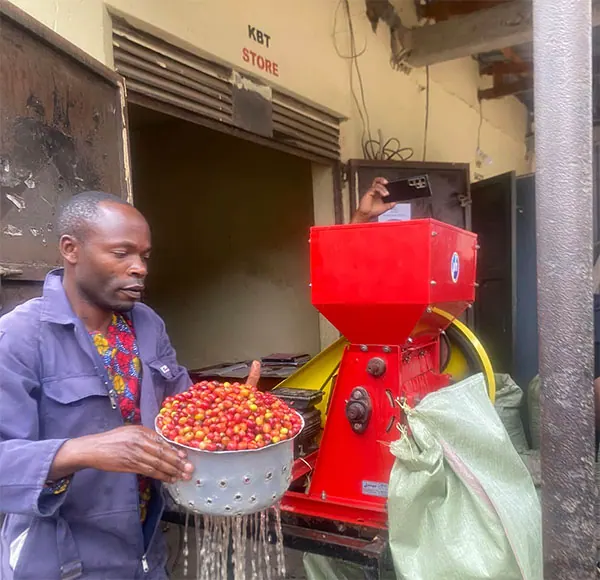
The Kyarumba Banywani Cooperative has expanded into value addition, with farmers processing their own coffee using pulping machines provided through the partnership with ECOTRUST. This enables them to sell higher-value parchment coffee instead of raw cherries. Kimera highlighted that their mountain coffee is unique due to the rich alluvial soils of the Rwenzori, attracting international buyers. Beekeeping has also become an important source of income, with members receiving training in hive management and honey production.
The cooperative's investment in community health has been a significant achievement, with the establishment of a community health clinic that opened on July 1, 2024. The clinic provides subsidized treatment to members, reducing the financial burden of healthcare for rural households. Kimera stated that the payments from carbon credits motivate farmers to protect their trees, helping meet household needs today and providing a potential long-term reward when the trees reach maturity.
Key points
- The partnership between ECOTRUST and local communities in the Rwenzori Mountains Landscape has restored the ecosystem and built resilient livelihoods for over 31,000 smallholder farmers.
- The programme has promoted sustainable livelihoods, enabling families to diversify their incomes while contributing to climate change mitigation.
- The initiative has also created employment opportunities, improved healthcare, and provided access to affordable credit for local communities.