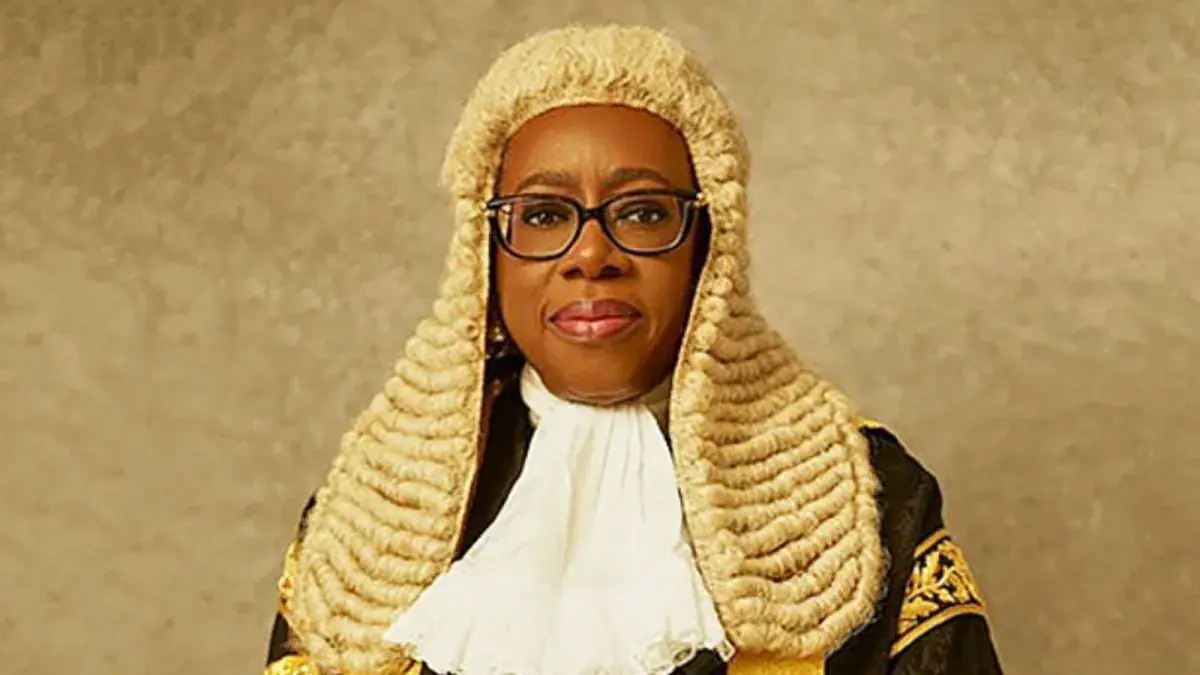
Chief Justice of Nigeria (CJN), Kudirat Kekere-Ekun, has sworn in 375 judges selected to serve on Election Petition Tribunals ahead of the 2027 general elections. The inauguration ceremony took place at the Body of Benchers Complex in Abuja. During the event, Kekere-Ekun charged the judges to resist political interference and uphold the rule of law in determining electoral disputes. She emphasized the importance of impartiality, integrity, and strict adherence to constitutional provisions in their decision-making.
The judges were urged to discharge their responsibilities with efficiency in case management and avoid unnecessary delays in proceedings, given the statutory timelines governing election petition cases. Kekere-Ekun also cautioned lawyers, political parties, media organisations, and members of the public against unethical practices, including the abuse of ex parte applications and online campaigns designed to influence pending cases or intimidate judicial officers. The CJN stressed that the Judiciary must remain committed to resolving disputes based strictly on the law and available evidence.
The inauguration comes 68 days before the scheduled commencement of the 2027 general elections, with presidential and National Assembly elections slated for January 16, and governorship and State Houses of Assembly elections set for February 6, 2027. President of the Court of Appeal, Justice Monica Dongban-Mensem, described the inauguration as an important institutional preparation for the judicial responsibilities that would follow the elections. She emphasized that the credibility of Nigeria’s democratic process depended not only on the conduct of elections but also on the availability of impartial and efficient mechanisms for resolving disputes arising from them.
Justice Dongban-Mensem reminded the judges that their conduct and decisions would attract considerable public scrutiny. She disclosed that the 375 judicial officers were drawn from different courts and judicial institutions across the country, with 138 having previously served on election tribunals and 237 appointed for the first time. The legal framework for the tribunals is provided under Section 285(1) and (2) of the 1999 Constitution, as amended, and Section 134(3)(a) and (b) of the Electoral Act, 2026.
INEC Chairman, Professor Joash Amupitan, stressed the importance of cooperation between the electoral body and the Judiciary in ensuring credible elections and resolving disputes that may arise from the process. He described election petition tribunals as critical constitutional institutions for managing post-election disagreements and sustaining public confidence in democratic governance. Amupitan also drew attention to emerging challenges in electoral litigation, particularly the growing influence of digital technology and misinformation.
The INEC chairman acknowledged the role of the Bimodal Voter Accreditation System (BVAS) and the INEC Result Viewing Portal (IReV) in promoting transparency. However, he noted that judicial officers must be prepared to address emerging digital threats, including artificial intelligence-generated deepfakes, which could complicate the adjudication of election disputes. The three-day workshop for justices and tribunal members in Abuja aims to equip them with the necessary skills to navigate these challenges.
The Chief Justice of Nigeria also launched the second edition of the Judicial Electoral Manual and a specialised capacity-building workshop for judicial officers. The event marked a significant step towards ensuring the Judiciary's readiness to handle the electoral disputes that may arise from the 2027 general elections. The cooperation between the Judiciary and INEC will be crucial in maintaining the integrity of the electoral process and upholding public confidence in democratic governance.
Key points
- The Chief Justice of Nigeria, Kudirat Kekere-Ekun, has sworn in 375 judges for Election Petition Tribunals to ensure impartiality and efficiency in resolving electoral disputes ahead of the 2027 general elections.
- The Judiciary must remain committed to resolving disputes based strictly on the law and available evidence, while INEC, security agencies, and legal practitioners have specific responsibilities in ensuring credible elections.
- The inauguration of the tribunal judges and the capacity-building workshop aim to address emerging challenges in electoral litigation, including the growing influence of digital technology and misinformation.
Reporting sources
- CJN Kekere-Ekun Swears In Election Tribunal Judges Ahead Of 2027 · Politics Nigeria