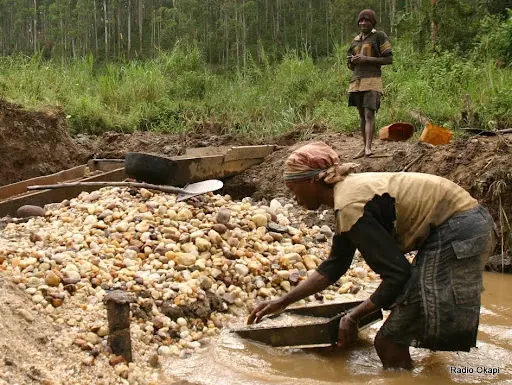
The civil society of Basoko territory, in the province of Tshopo, Democratic Republic of the Congo, is sounding the alarm over the environmental and socio-economic consequences of gold mining in the Aruwimi River. They accuse certain mining companies operating in the region of using dredges and robots to extract gold from the riverbed, a practice that degrades water quality and threatens local biodiversity.
According to Emmanuel Madipa, a member of the Basoko civil society, intensive mining has significantly disrupted the Aruwimi ecosystem. He explains that residents, who previously relied on fishing for food and income, are now witnessing a gradual disappearance of fish in the river. The continuous operation of machines and dredges underwater disturbs the natural habitat of aquatic species and substantially reduces the fish resources available to riverine communities.
The decline in fish populations directly affects the food security of local populations. Emmanuel Madipa believes this situation contributes to the deterioration of nutritional conditions, especially among children. He notes that the lack of fish has led to a decrease in vitamin intake, causing children to become fragile. Many families depended on fishing as their primary source of protein, and the decrease in fish production risks increasing food vulnerability in several villages.
Beyond the impact on aquatic life, civil society actors are also concerned about the degradation of the Aruwimi River's water quality. According to Emmanuel Madipa, residents have observed a change in the water's color, which was previously used daily for domestic consumption. He warns that if no measures are taken to regulate mining activities, riverine populations will be exposed to health risks.
The civil society is calling on Congolese authorities to intervene to protect the Aruwimi River and the communities that depend on it. They propose that the government halt the dredging activities of Chinese companies, which they claim are causing harm. They also demand investigations into the environmental impact of mining operations and the strict application of regulations protecting natural resources.
Efforts by Radio Okapi to obtain a reaction from the Basoko territory administrator regarding these accusations were unsuccessful. In the meantime, the civil society's concerns continue to revive the debate on the effects of mining on the environment and local livelihoods. The situation highlights the need for a balance between economic activities and environmental protection.
The issue in Basoko underscores the broader challenges of managing natural resources in the Democratic Republic of the Congo. The country is rich in minerals, but the exploitation of these resources often comes at a significant environmental and social cost. The call for action from the Basoko civil society reflects a growing awareness of the need for sustainable practices in the mining sector.
Key points
- The civil society of Basoko territory is raising alarm over the severe environmental and socio-economic consequences of gold mining in the Aruwimi River.
- Intensive mining has disrupted the Aruwimi ecosystem, causing a decline in fish populations and affecting the food security of local populations.
- The civil society is calling on Congolese authorities to intervene to protect the Aruwimi River and the communities that depend on it.