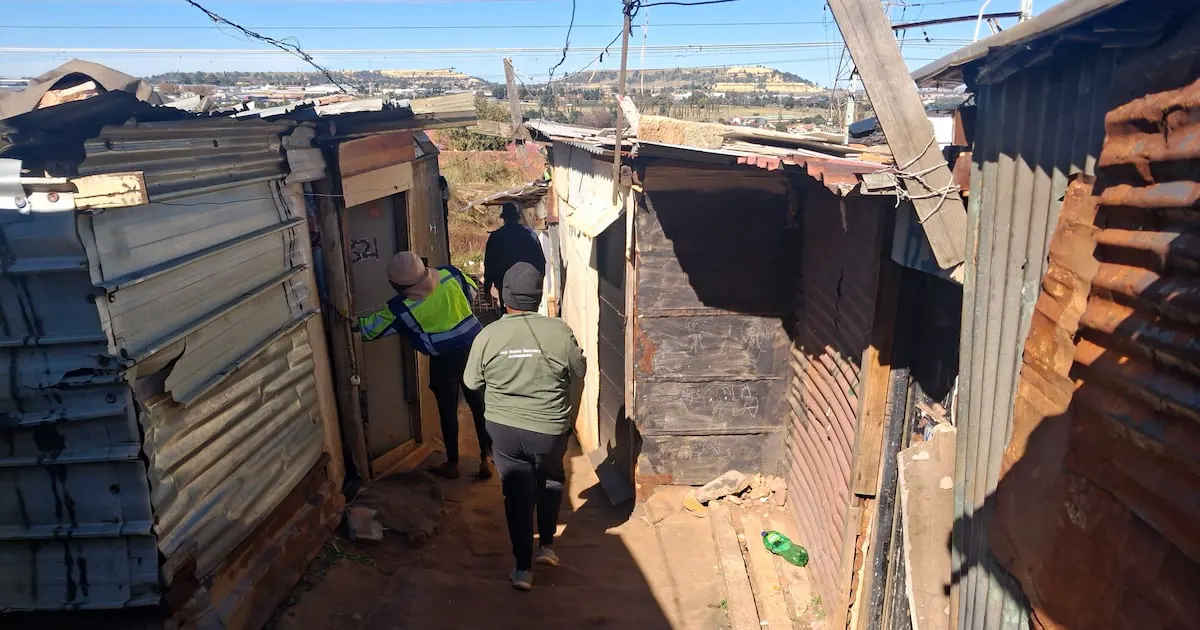
The City of Johannesburg has taken a significant step towards addressing service delivery challenges in informal settlements with the approval of a new policy. The Informal Settlement Policy, which was approved by the city council on September 30, aims to improve the planning, upgrading, and servicing of informal settlements. According to Mlungisi Mabaso, MMC for human settlements, the policy will bring greater coordination to the development of informal settlements and address long-standing service delivery challenges.
The new policy provides for the provision of basic services, integration of informal settlements with surrounding townships, and greater participation by residents in decisions affecting their communities. This move is expected to bring relief to residents who have complained about serious service delivery challenges and a fragmented approach to the development of their areas. Mabaso emphasized that the policy is a huge milestone for all communities living in informal settlements.
One of the key features of the policy is the introduction of a system under which residents will be profiled and households enumerated, with each household assigned a number identifying where it lives. This is intended to help prevent people from occupying or owning multiple shacks in different settlements. The human settlements department will also enter into social compacts with communities, setting out the responsibilities and expectations of both the city and residents.
The policy further provides for tenure security through the City of Johannesburg Land Use Scheme, including transitional residential settlement areas and temporary permits. An informal settlement will be recognised or acknowledged by the city once it has been profiled or enumerated and the required information has been recorded. This move is expected to provide a framework for improving the living conditions and development of informal settlements across the city.
Each settlement will have a layout plan identifying areas for community facilities, businesses, access routes, environmentally sensitive areas, and future services. This will help ensure that informal settlements are developed in a coordinated and sustainable manner. The policy also emphasizes the importance of community participation in decision-making processes.
Mabaso noted that Johannesburg is the first city in the country to adopt such a policy, which demonstrates its commitment to addressing the challenges faced by informal settlements. The policy is expected to have a positive impact on the lives of thousands of residents living in informal settlements across the city.
The City of Johannesburg will begin implementing the policy immediately, with Mabaso assuring residents that the city is committed to working with them to improve service delivery and living conditions in informal settlements. The policy is a significant step towards creating a more equitable and sustainable urban environment.
Key points
- The City of Johannesburg has approved a new Informal Settlement Policy to improve service delivery in informal areas.
- The policy provides for the provision of basic services, integration with surrounding townships, and greater community participation.
- Johannesburg is the first city in South Africa to adopt such a policy, demonstrating its commitment to addressing informal settlement challenges.