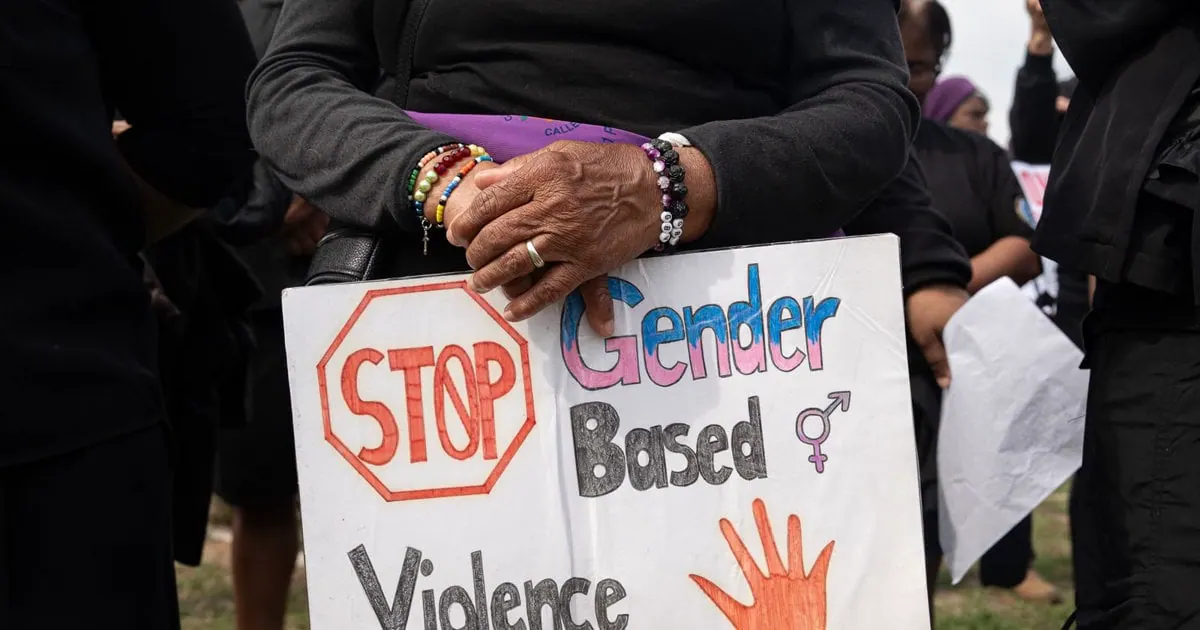
A coalition of civil society organisations in South Africa has launched a court battle against the government over the lawfulness of the National Council on Gender-Based Violence and Femicide. The council was appointed by President Cyril Ramaphosa in July, with a mandate to combat gender-based violence and femicide. The groups argue that the council lacks sufficient powers to hold government accountable for inaction on GBV. They also claim that the law relied upon for the council's appointment is flawed.
The court challenge comes amid a surge in GBV-related killings in South Africa. In recent weeks, several bodies have been discovered in Ekurhuleni, with police investigating the murders. The incidents have raised concerns about the effectiveness of the government's efforts to combat GBV. President Ramaphosa has promised to provide an update on the steps government is taking to address the issue. The GBV council was established to leverage the classification of GBV and femicide as a national disaster.
The classification of GBV as a national disaster was made in November 2024, but it did not unlock additional funding from government. Instead, it was supposed to result in departments reprioritising their budgets and allocating funds towards the fight against GBV. However, 10 months since the classification, there is still a lack of transparency on how much money has been spent towards addressing GBV. The Department of Women, Youth and Persons with Disabilities has admitted that it does not have exact figures on spending by other departments.
The civil society groups leading the court battle, including Wise 4 Afrika and the One in Nine Campaign, argue that the National Council on Gender-Based Violence and Femicide Act is flawed. They claim that the act fails to provide sufficient monitoring and information-gathering powers, rendering the council ineffective. The groups plan to escalate their bid to the Constitutional Court if necessary.
President Ramaphosa appointed the nine-member council in July, with a term of office until 2029. The council's mandate includes challenging harmful attitudes and practices, advancing women's economic empowerment, and strengthening law enforcement. However, the civil society groups argue that the council lacks teeth and is unable to hold government accountable for its actions.
The court challenge is part of a broader effort to hold government accountable for its response to GBV in South Africa. The country has been plagued by high levels of GBV and femicide, with many cases going unreported or unsolved. The civil society groups hope that the court battle will lead to a more effective response to GBV and greater accountability from government.
The Pretoria High Court will hear the case, with the outcome likely to have significant implications for the government's response to GBV. The court challenge is a key test of the government's commitment to addressing GBV and femicide in South Africa.
Key points
- Civil society groups challenge lawfulness of South Africa's GBV council
- GBV council lacks sufficient powers to hold government accountable
- Classification of GBV as national disaster did not unlock additional funding