City Power, Johannesburg's power utility, has implemented a new revenue split, where 70% of electricity revenue collected will be transferred to the company within 48 hours, while the City of Johannesburg retains the remaining 30%. This move has sparked concerns over the company's financial sustainability, with critics arguing that it's an arbitrary top-line tax rather than ringfencing. The new split will see the City of Johannesburg collecting every rand that customers pay for electricity and keeping 30% off the top.
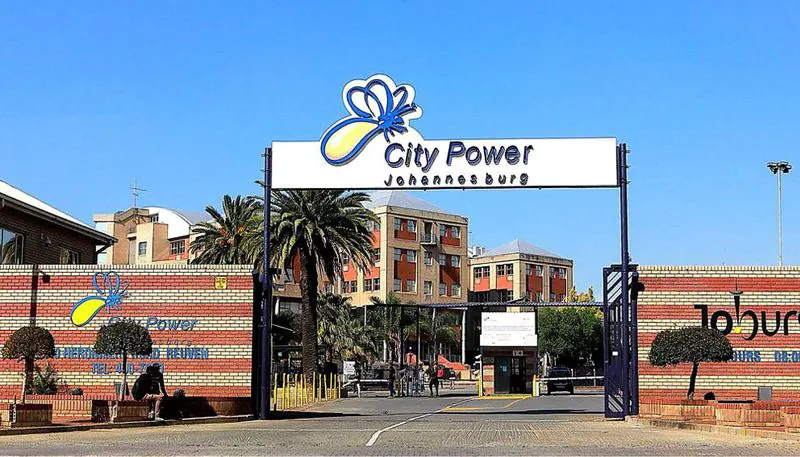
The City Power head office in Booysens, Johannesburg, which oversees electricity distribution for South Africa's economic hub, has seen sustained high turnover in its board, CEO, CFO, and COO posts since 2017. The company's acting CEO, Charles Tlouane, sent a letter to customers dated 21 September 2026, outlining the new revenue split. The letter describes the arrangement as "ringfencing," but critics argue that it's not a genuine ringfencing measure.
A report by the Centre for Development and Enterprise (CDE) entitled "Powering Joburg's Turnaround," published on 29 September 2026, describes the result as "an opaque and potentially arbitrary financial relationship between the City and City Power." The report warns of "a material risk of structural insolvency" for City Power. The company's financial struggles are evident, with a widening gap between expenditure and revenue since 2019.
City Power's overdraft with the City reportedly grew from R9.98-billion in June 2023 to about R19.1-billion by March 2026. Its infrastructure backlog is said to be at R44.25-billion. Planned maintenance and capital expenditure have repeatedly fallen below target. Eskom has been another casualty, with City Power's arrears of R5.25-billion to Eskom reportedly settled in August, but a further R2.3-billion in historic debt remains.
The new revenue split has raised concerns over the impact on customers, with significantly increasing numbers of forced interruption reports and restoration times significantly longer than benchmarks in most developed and developing countries. The arrangement gives the City certainty, with its 30% arriving whatever happens, while City Power carries everything else, including Eskom tariff increases, electricity theft, non-payment, cable failures, and the cost of borrowing.
Critics argue that the arrangement is not a dividend, but a guaranteed 30% levy on gross cash collected. The arithmetic does not work, with a typical municipal electricity distributor in South Africa facing bulk purchases from Eskom making up about 70% of its total operating costs. It is not sufficient to pay Eskom, City Power's technical and non-technical losses, staff, contractors, materials, maintenance, finance, and network renewal costs.
The CDE report warns that the arrangement must be shown to be able to fund what City Power is expected to deliver. The company's financial struggles are a result of a combination of factors, including a lack of structural funding reform. Without reform, Johannesburg's power utility faces guaranteed insolvency. The City of Johannesburg's arrangement with City Power has raised concerns over the company's financial sustainability and its ability to deliver electricity services to customers.
Key points
- City Power's new 70/30 revenue split has raised concerns over its financial sustainability.
- The arrangement gives the City of Johannesburg certainty, but City Power carries all the risk.
- Critics argue that the arrangement is not ringfencing, but an arbitrary top-line tax.