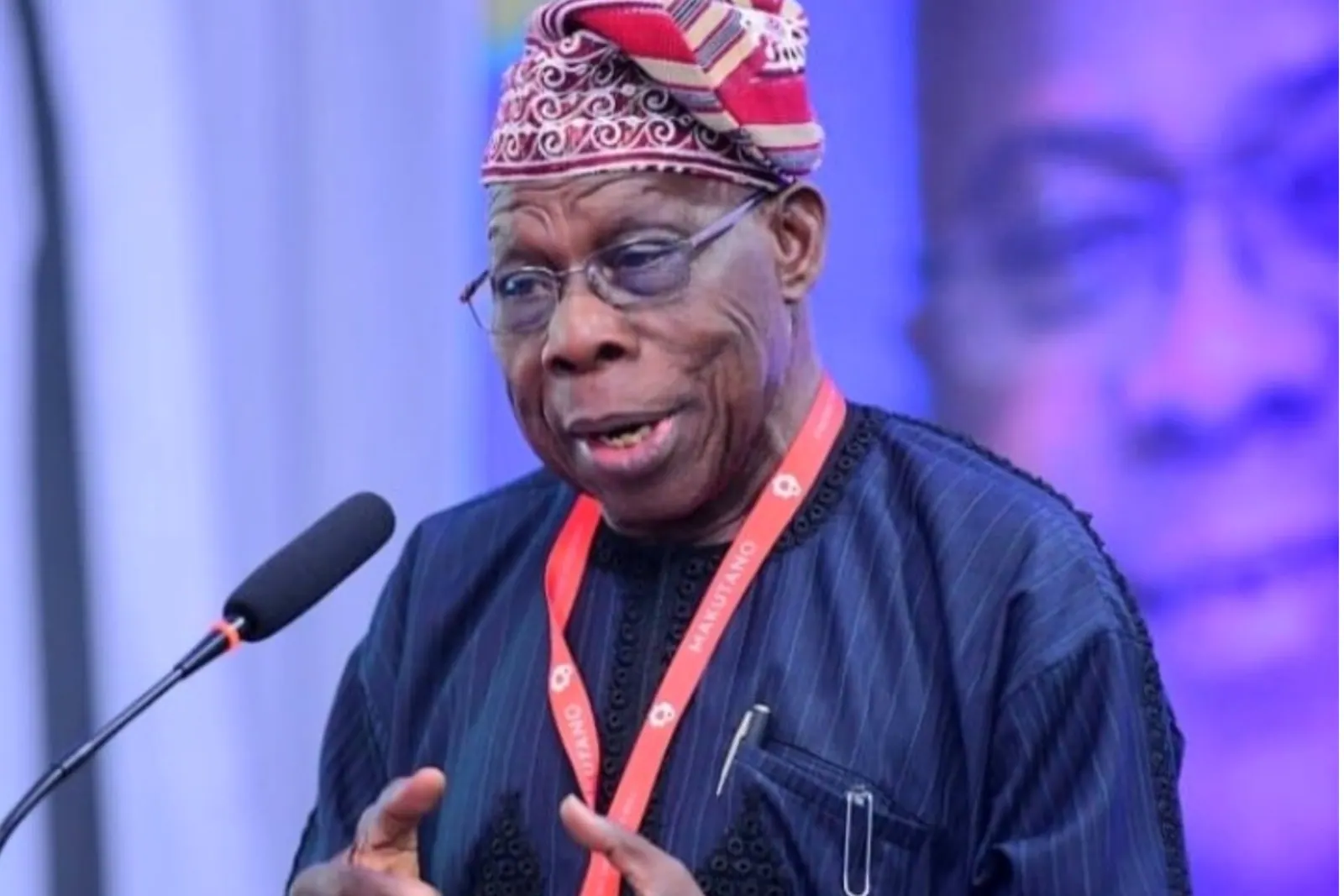
Former Nigerian President Olusegun Obasanjo has disclosed that Lafarge, a French cement company, allegedly put obstacles in the way of Aliko Dangote's efforts to expand cement production across Africa. Mr. Obasanjo made these allegations in Nairobi, Kenya, during the groundbreaking ceremony of a $16 billion oil refinery project in Lamu, Kenya. This meeting with Kenyan and other East African institutional investors was part of activities surrounding the ongoing initial public offering of Dangote Petroleum Refinery and Petrochemicals FZE.
According to Mr. Obasanjo, Lafarge was particularly opposed to Mr. Dangote's expansion into cement production, describing the company's actions in Senegal as a "traumatic" experience for the Nigerian businessman. He recalled that after Mr. Dangote completed a 5-million-tonne cement plant in Senegal, local residents, allegedly instigated by Lafarge, challenged his ownership of the land on which the factory was built. Mr. Obasanjo stated that he took Mr. Dangote to President Wade, who provided the necessary support, and Mr. Dangote completed the project.
Mr. Obasanjo further revealed that Lafarge's opposition to Mr. Dangote's expansion plans continued even after the completion of the Senegalese project. He claimed that Lafarge instigated local people to challenge Mr. Dangote's ownership of the land, leading to a court case that Mr. Dangote eventually won. However, Mr. Dangote had to pay $12 million to operate his cement factory two years after its completion. Mr. Obasanjo described this dispute as part of Lafarge's efforts to prevent Mr. Dangote from challenging its position in Africa's cement market.
The former Nigerian president also highlighted how Nigerian government policy and private-sector investment combined to start Dangote Group's cement production in Nigeria. In 2003, Mr. Obasanjo summoned Mr. Dangote to discuss why he was importing cement rather than producing it locally. Mr. Dangote told him that importing cement was more profitable than producing it. Subsequently, Mr. Obasanjo introduced a policy linking cement import licences to plans for domestic production, which encouraged Mr. Dangote to establish large-scale cement plants in Nigeria.
Mr. Obasanjo noted that Mr. Dangote's cement production plans initially submitted to him were ambitious, targeting five million tonnes of cement, despite Nigeria having produced less than three million tonnes annually for decades. The policy eventually helped Mr. Dangote establish large-scale cement plants in Nigeria before expanding into other African countries, including Tanzania, Ethiopia, and Senegal. Mr. Obasanjo commissioned the first 5 million tonnes cement project in Nigeria just before leaving office.
Mr. Obasanjo linked Mr. Dangote's success in cement manufacturing to the development of his oil refinery, saying the experience provided the businessman with the confidence and inspiration to undertake the refinery project. During a recent visit to the refinery, Mr. Obasanjo recalled that Mr. Dangote publicly credited him for the policies that helped his cement business. Mr. Dangote reportedly told refinery workers that his cement production experience encouraged him to venture into the refinery project.
The Dangote Group's expansion beyond Nigeria demonstrates the potential of African economic integration, Mr. Obasanjo said, urging the continent to take integration seriously. The same approach is now being applied to the refinery, with the project expected to strengthen trade and economic ties between Nigeria and other African markets. The refinery's public share sale, which aims to raise $1.6 billion, will help finance the project's next phase of expansion, expected to double processing capacity by 2030.
Key points
- Lafarge allegedly tried to hinder Aliko Dangote's cement expansion in Africa.
- Obasanjo introduced a policy linking cement import licences to plans for domestic production, encouraging Dangote to establish large-scale cement plants in Nigeria.
- The Dangote Group's expansion demonstrates the potential of African economic integration.