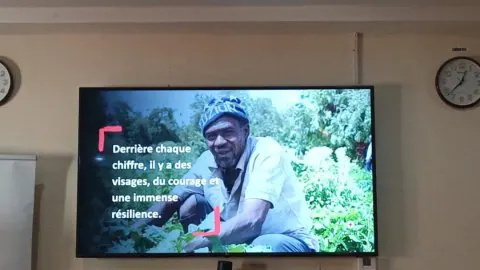
The International Committee of the Red Cross (ICRC) presented its humanitarian actions in Burkina Faso for the first six months of 2026. The organization provided assistance in health, food security, access to clean water, and protection of people affected by the crisis. This meeting with media professionals also marked the launch of the 20th anniversary celebrations of the ICRC's permanent presence in the country. The ICRC works with local authorities, communities, and partners to respond to the significant humanitarian needs in areas affected by the security crisis.
In the health sector, 352,984 people affected by the crisis received consultations and healthcare services in 29 health structures supported by the ICRC. The interventions also focused on maternal and infant health, with 2,417 assisted and hygienic births taking place in supported health centers and communities. Additionally, 21,309 children were monitored as part of the Integrated Management of Childhood Illnesses (IMCI). These interventions enabled vaccinations against measles and the reconstruction of vaccination calendars. A total of 286 health agents received training, particularly in IMCI.
The ICRC also provided emergency care, with 1,249 wounded individuals stabilized thanks to the intervention of health agents trained by the organization. Mental health and psychosocial support were also provided, with 1,231 people affected by armed violence receiving care and psychosocial support. Furthermore, 37 survivors of gender-based violence were taken care of. Access to clean water was also a priority, with 29,000 people from host communities and internally displaced persons (IDPs) benefiting from improved access to this resource through the construction and rehabilitation of 46 water points.
In terms of food security, 67,830 people from host communities and IDPs received food distributions. The standard food kit distributed per household consisted of 50 kg of millet, 25 kg of rice, 25 kg of beans, 10 liters of oil, and 1 kg of salt. Support for livelihoods was also crucial, with 7,420 households receiving seeds for agricultural production. Additionally, 6,200 households received food rations to protect their seeds. The ICRC also provided assistance to 1,413 households for land restoration and income development.
The ICRC's actions also focused on detention conditions and family protection. Three infrastructure projects were carried out in three prisons to improve detention conditions. Two establishments also received leisure equipment. During the first six months of 2026, 16 visits were made to detained individuals in five detention centers. Moreover, 302 authorities strengthened their knowledge of detention conditions and the treatment of people deprived of liberty during workshops.
The ICRC and the Burkinabé Red Cross facilitated 3,499 calls allowing separated individuals to reestablish or maintain contact with their loved ones. Additionally, 5,142 Red Cross messages were collected and/or distributed. As part of its protection activities, 2,906 people were also sensitized to topics such as access to healthcare, economic recovery of affected people, and protection of links.
The ICRC's actions in Burkina Faso aim to respond to the significant humanitarian needs in areas affected by the security crisis. The organization's interventions focus on health, food security, access to clean water, and protection of people affected by the crisis. The ICRC has been present in Burkina Faso for 20 years and continues to work with local authorities, communities, and partners to provide humanitarian assistance to those in need.
Key points
- - 352,984 people affected by the crisis received healthcare services. - 67,830 people received food distributions. - 29,000 people benefited from improved access to clean water.