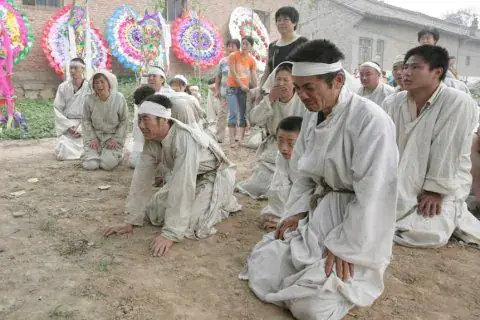
In 2009, a Chinese mother finally found a bride for her deceased son, Li Chaolong, who had died of lymphoma in 2008. The bride, Li Xiuying, was from the same village and suffered from a severe kidney condition. After being chosen for the union, she died shortly after. The two families organized the marriage, despite having lost their children, to ensure Li Chaolong could be buried with his ancestors. This unusual event sheds light on the traditional Chinese practice of mínghūn, or posthumous marriage.
The tradition of mínghūn dates back to the Tang dynasty, which ruled China from 618 to 907. Historian Ping Yao studied this practice and found that it was used to address various concerns, such as providing symbolically for children who died prematurely or maintaining family ties. In some communities, people believed that the deceased needed companionship in the afterlife. This practice highlights the complex and often conflicting views on marriage, death, and family in Chinese culture.
In some cases, posthumous marriages involve the burial of the deceased couple together. A 2016 study in the district of Guangzong, Hebei province, found that families would often hold a wedding ceremony for the deceased, complete with a red coffin and a wedding feast. This blending of funeral and wedding rites underscores the significance of family and social obligations in Chinese culture.
The story of Li Chaolong and Li Xiuying raises questions about the role of family and societal expectations in shaping individual lives. In many cultures, marriage is seen as a crucial life event, but when it becomes a criterion for determining one's value or place within the family, problems arise. Many people marry or stay in unhappy relationships due to fear of disappointing their parents or being judged by others.
The practice of posthumous marriage also highlights the complexities of Chinese culture and tradition. While it may seem unusual or even disturbing to outsiders, it reflects a deeper understanding of family, marriage, and community. By examining such practices, we can gain a better understanding of the cultural and social norms that shape our lives.
Anthropologist Chris K. K. Tan's study of posthumous marriages in China provides valuable insights into the cultural significance of these unions. His research shows that these marriages are not just curious anomalies but rather a reflection of deeply held cultural values and beliefs. By exploring these values and beliefs, we can gain a deeper understanding of Chinese culture and society.
Ultimately, the story of Li Chaolong and Li Xiuying serves as a reminder of the complexities and nuances of human culture and society. As we reflect on our own traditions and values, we can learn from the experiences of others and gain a deeper understanding of the world around us. By embracing this complexity, we can foster greater empathy and understanding across cultures and communities.
Key points
- The tradition of posthumous marriage in China highlights the complex and often conflicting views on marriage, death, and family in Chinese culture.