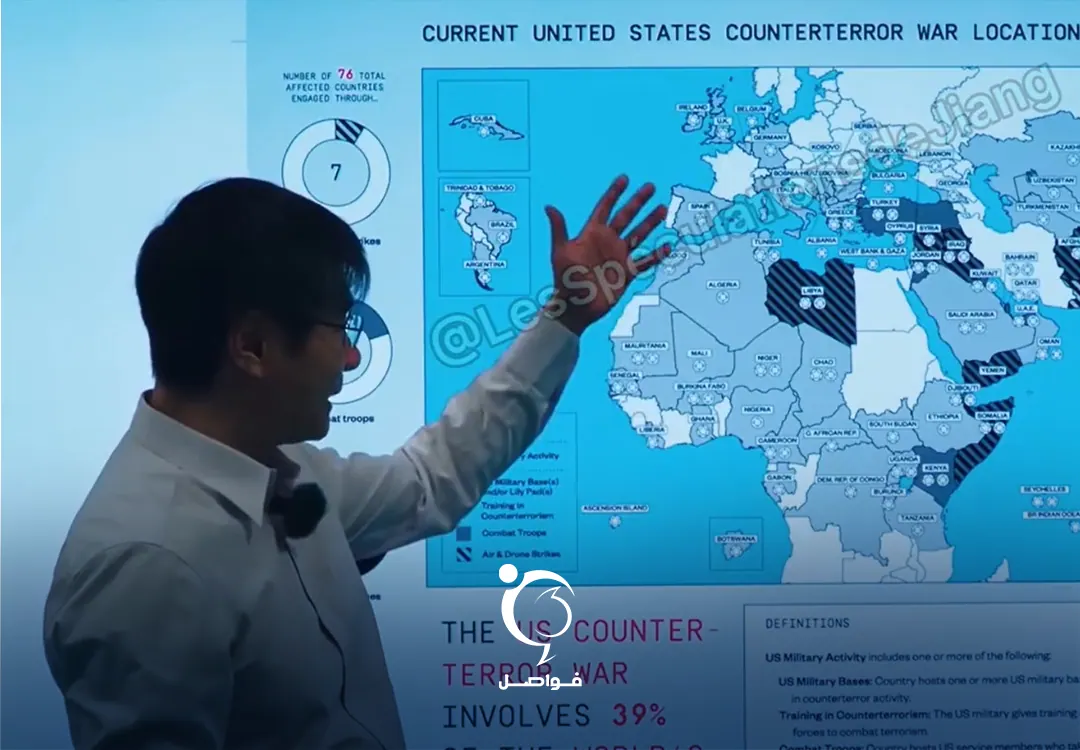
A Chinese philosophy teacher, Jiang Shucheng, has sparked debate with his recent lecture to high school students in Beijing. As part of a series on "predictive history," Jiang discussed the connection between historical events and the conflicts in the Middle East. He used Libya as an example, questioning why the country was targeted for destruction after the 9/11 attacks carried out by Al-Qaeda.
Jiang's lecture highlighted the series of wars that followed the 9/11 attacks, including those in Libya, Afghanistan, Iraq, and Syria. He expressed puzzlement about the rationale behind targeting Libya, suggesting that the country's destabilization may have contributed to a broader regional reconfiguration. Jiang's comments have generated interest and discussion among students and observers.
The Chinese teacher's analysis focused on the transformations that occurred in Libya before and after 2011. He noted the decline of stability and the emergence of challenges such as human trafficking and migration to Europe. Jiang proposed two possible explanations for the events: unforeseen consequences or a deliberate plan to reshape the region.
Jiang's lecture reflects his interest in understanding the complexities of global conflicts. As a philosophy teacher, he encourages critical thinking and analysis among his students. By exploring the connections between historical events, Jiang aims to help his students develop a deeper understanding of the world's intricacies.
The impact of Jiang's lecture extends beyond the classroom, sparking conversations about the consequences of foreign interventions. His questions about Libya's destruction resonate with those seeking to understand the country's ongoing challenges. As Libya continues to navigate its complex situation, Jiang's comments serve as a reminder of the need for nuanced discussion and analysis.
Jiang's approach to teaching history emphasizes the importance of considering multiple perspectives and potential consequences. By encouraging his students to think critically about global events, he fosters a deeper understanding of the interconnectedness of nations and the complexities of international relations.
The relevance of Jiang's lecture lies in its thought-provoking nature, inviting listeners to consider the motivations and outcomes of foreign interventions. As the international community continues to grapple with conflicts and their aftermath, Jiang's comments serve as a catalyst for reflection and discussion.
Key points
- A Chinese philosophy teacher questioned the rationale behind Libya's destruction after the 9/11 attacks.
- The teacher, Jiang Shucheng, used Libya as an example in his lecture on predictive history.
- Jiang proposed two possible explanations for Libya's destabilization: unforeseen consequences or a deliberate plan to reshape the region.