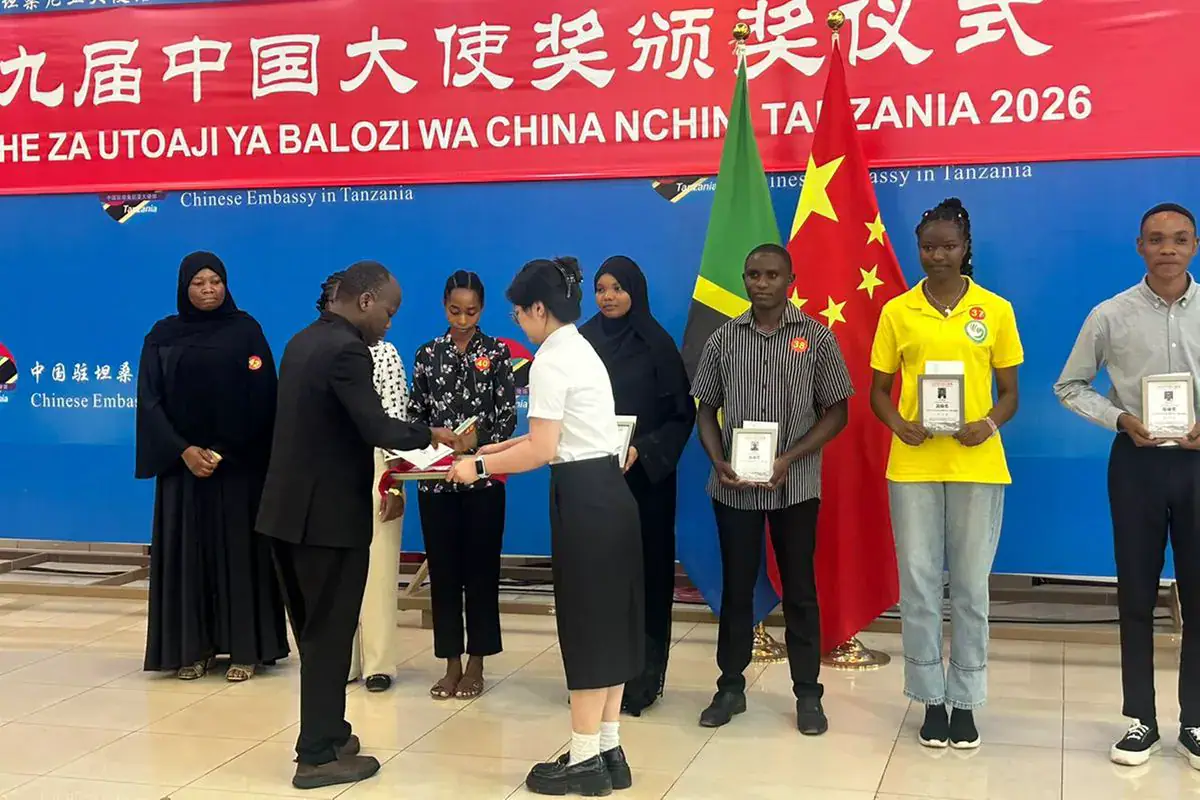
The 2026 Chinese Ambassador's Award ceremony was held in Dar es Salaam, where 133 students and teachers were recognised for their outstanding contributions to Chinese language teaching and learning. Commissioner for Education, Dr Lyabwene Mtahabwa, noted that proficiency in Chinese could give Tanzanian students a competitive edge in the global labour market. He made the remarks on Thursday, November 12, 2026, at the ceremony. The event celebrated the achievements of recipients from various institutions, including the University of Dar es Salaam and the University of Dodoma.
Dr Mtahabwa attributed the growing interest in Chinese among Tanzanian students to the country's longstanding cooperation with China in education, science, technology, and innovation. He stated that the partnership was transforming Tanzania's education system. However, he cautioned students against abandoning their cultural identity while embracing foreign languages. Dr Mtahabwa emphasised that globalisation should not come at the expense of national values and traditions. He encouraged students to maintain their Tanzanian identity while acquiring new skills.
Chinese Ambassador to Tanzania, Chen Mingjian, praised the award recipients for their commitment and innovation in teaching and learning Chinese. She noted that over 2,000 Chinese language learners in Tanzania had taken HSK proficiency examinations in the previous 10 months, reflecting growing enthusiasm for the language. Ms Chen highlighted the significance of learning Chinese, which provides access to cultural knowledge, economic opportunities, and technological advancement. She urged students to apply their skills beyond the classroom.
The demand for Chinese is growing across Africa, with over 20 countries incorporating the language into their national education systems by the end of 2025. More than 50 higher learning institutions have established Chinese language or teaching programmes. Ms Chen cited the example of Ridhwan Mohamed, a second-year Bachelor of Arts with Education student at the University of Dar es Salaam, who won this year's Chinese Bridge Competition for university students in Tanzania. He will represent the country at an international contest in China.
Among the award recipients was Masudi Kidaso, who has taken his efforts to promote the language beyond university. He developed an illustrated introductory Chinese textbook using artificial intelligence, making the subject more accessible and engaging for young learners. Ms Chen praised such initiatives, saying they strengthen educational and cultural exchanges between Tanzania and China. The 133 recipients came from various institutions, including Confucius Institutes and secondary schools.
Ridhwan Mohamed's interest in Chinese was sparked by watching Chinese martial arts films, particularly those starring actor Jet Li. He began learning Chinese in Form One at Mkonge Secondary School in Lindi and continued his studies at Usagara Secondary School in Tanga. His passion later took him to the University of Dar es Salaam's Confucius Institute, where he has continued learning the language and taking part in competitions. Mr Mohamed has already started receiving opportunities, including requests to teach Chinese and work as an interpreter.
The recognition of Tanzanian students and teachers' achievements in Chinese language learning highlights the growing importance of the language in the country. As globalisation continues to shape the labour market, proficiency in Chinese is becoming increasingly valuable. The award ceremony celebrated the recipients' efforts to promote Chinese language learning and strengthen links between Tanzanian institutions and their Chinese counterparts. The event acknowledged the role of Chinese language education in fostering cultural exchanges and cooperation between Tanzania and China.
Key points
- 133 Tanzanian students and teachers were honoured for their achievements in learning and teaching Chinese.
- Growing interest in Chinese among Tanzanian students is attributed to the country's longstanding cooperation with China in education, science, technology, and innovation.
- Proficiency in Chinese is seen as a competitive edge in the global labour market, providing access to cultural knowledge, economic opportunities, and technological advancement.