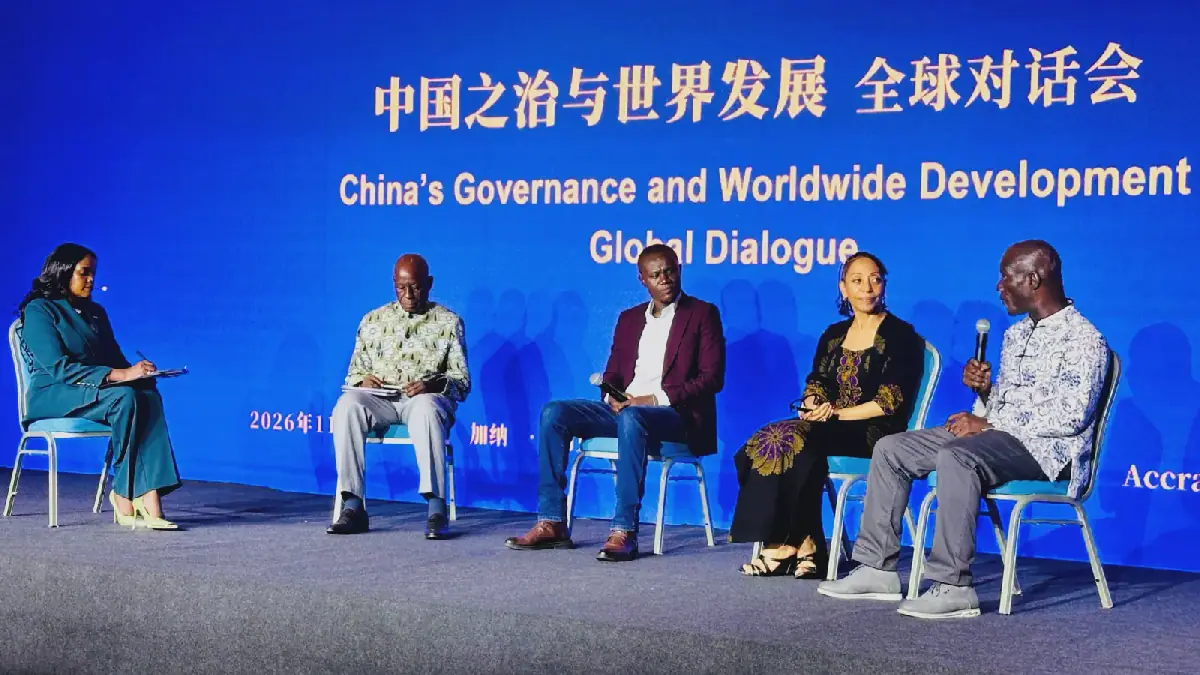
A panel of experts has emphasized the importance of policy consistency, long-term national planning, and institutional continuity in achieving sustainable development in Ghana and other African countries. They drew lessons from China's experience, citing strong political institutions, pragmatic leadership, and people-centred governance as key factors underpinning China's development. The panel included Professor Richard Asante of the University of Ghana, Ms Samia Nkrumah, a politician, Mr Paul Frempong, Executive Director of the Africa-China Centre for Policy and Advisory, and Ambassador Anani Demuyakor, President of the Ghana-China Friendship Association.
Professor Asante identified institutional continuity and sustained implementation of national policies as crucial elements that have enabled China to pursue long-term development goals beyond short-term political considerations. He cited Shanghai's transformation into an international financial centre as an example of the importance of consistent national planning. Ms Nkrumah noted that Ghana's historical relationship with China is rooted in shared development experiences, recalling that the two countries established diplomatic relations in 1960.
Ms Nkrumah urged African governments to build political consensus on national development priorities to ensure continuity across successive administrations. She emphasized the need for a clear direction, saying "If it is manufacturing, so be it; if it is control of our resources, so be it, but we need that consensus." Mr Frempong proposed that African countries adapt relevant aspects of China's development planning and implementation experience within their multiparty democratic systems.
Mr Frempong suggested linking national development plans to budgets, assigning implementation responsibilities to specific institutions, and establishing measurable targets and accountability mechanisms. He also stressed the importance of citizen participation and regular monitoring of government commitments, budgets, and development outcomes. Ambassador Demuyakor urged African countries to approach China's development experience with openness and a willingness to learn.
Ambassador Demuyakor noted that China's governance approach offers useful perspectives, technologies, and opportunities. On China-Africa relations, Professor Asante said the partnership presents an opportunity to strengthen multilateralism and promote a more representative global governance system. He cited China's Global Development Initiative, Global Security Initiative, Global Civilisation Initiative, and Global Governance Initiative as platforms for discussions on greater representation of developing countries in international affairs.
Ms Nkrumah called for African development strategies to reflect the continent's history, cultural values, and identity, while urging countries to strengthen continental unity and pursue shared development objectives. Mr Frempong cited Africa's admission to the G20 in 2023 as an example of progress in strengthening the continent's representation in global decision-making.
Mr Frempong said cooperation with China could further support Africa's development through access to financing, technology, and capacity-building opportunities. Ambassador Demuyakor called for greater openness towards China's contribution to global development. The experts made these calls at the Ghana Session of the "China's Governance and Worldwide Development Global Dialogue" during a panel discussion.
Key points
- Policy consistency and long-term national planning are critical lessons Ghana and other African countries can draw from China to achieve sustainable development.
- African governments must build consensus on national development priorities and ensure that policies and programmes continue beyond electoral cycles.
- China's development experience offers useful perspectives, technologies, and opportunities for African countries to strengthen their development.
Reporting sources
- China’s policy consistency key to sustainable development – Panelists · Ghana News Agency