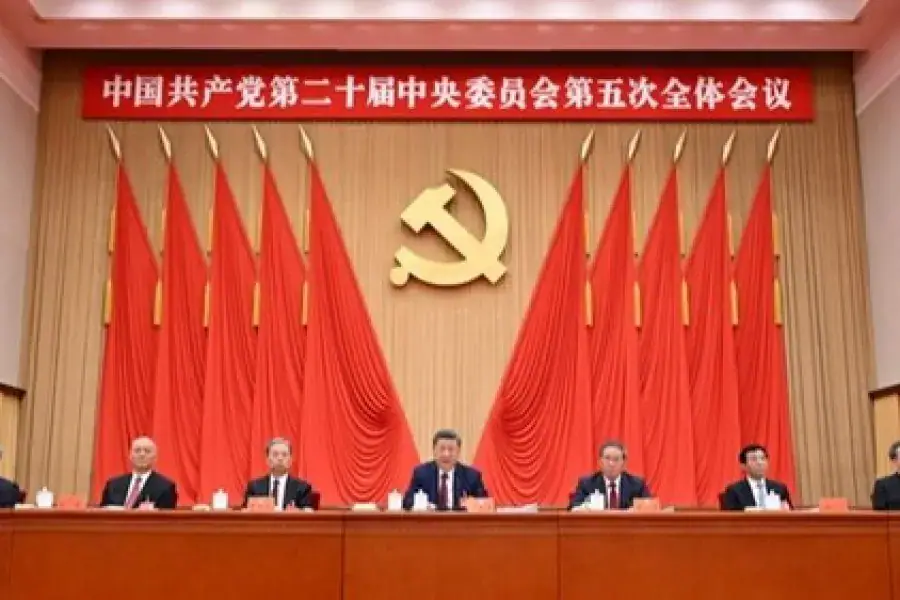
The 5th Plenary Session of the 20th Central Committee of the Communist Party of China (CPC) took place from October 26 to 29, 2026, drawing global attention. This significant political event highlighted the party's role in China's development and renewal. The session's outcomes have far-reaching implications, not only for China but also for other nations seeking to understand the country's governance model. China's trajectory since the founding of the People's Republic in 1949 has been shaped by the CPC's strategic leadership and governance.
The CPC's central role in China's governance has been a defining feature of the country's development. From reconstruction and unification to industrialization, reform, and opening-up, the party has consistently demonstrated its ability to mobilize resources and implement strategic plans. China's remarkable progress, including the eradication of extreme poverty, is attributed to the CPC's long-term planning and commitment to development. Over 800 million people have been lifted out of extreme poverty in a few decades, accounting for nearly three-quarters of the global reduction during the same period.
The concept of "modernization à la chinoise" embodies China's ambition to pursue national development while considering its unique characteristics. This approach encompasses industrial transformation, innovation, improving living standards, modernizing public services, and achieving balanced development. The CPC's governance strategy emphasizes discipline, surveillance, and sanctions to ensure effective governance. The party's commitment to consolidating its leadership and addressing complex challenges is reflected in the resolutions adopted during the plenary session.
The plenary session prioritized the fight against corruption and strengthening party discipline. This effort is integral to the CPC's governance approach, which focuses on political discipline, loyalty, and responsibility. The session's outcomes also highlighted the importance of promoting a new generation of competent and responsible cadres. China's experience offers valuable lessons for other countries, particularly in Africa, on strategic planning, resource mobilization, and governance.
The 5th Plenary Session's resolutions emphasized several key priorities, including strengthening political discipline, improving control and supervision mechanisms, and intensifying anti-corruption efforts. The party aims to consolidate its leadership and address complex challenges, both domestically and internationally. China's continued commitment to development and openness may offer new opportunities for cooperation with African countries.
Professor Yoro Diallo, a principal researcher and director of the Center for Francophone Studies, noted that China's experience provides valuable insights for African countries. He highlighted the importance of long-term strategic planning, mobilizing national resources, and governance in achieving development goals. China's approach to poverty reduction, which combines targeted policies with investments in infrastructure, human resources, and technology, is particularly relevant.
The 21st National Congress of the CPC is scheduled to take place in Beijing in the second half of 2027. As China continues to navigate complex challenges, its governance model and development strategies will likely remain a subject of interest for global observers. The CPC's commitment to its principles and priorities will shape China's trajectory and potentially influence the development paths of other nations.
Key points
- China's Communist Party prioritizes governance, anti-corruption efforts, and national development.
- The 5th Plenary Session sets priorities for China's future development and cooperation.
- China's experience offers valuable lessons for African countries on strategic planning and governance.