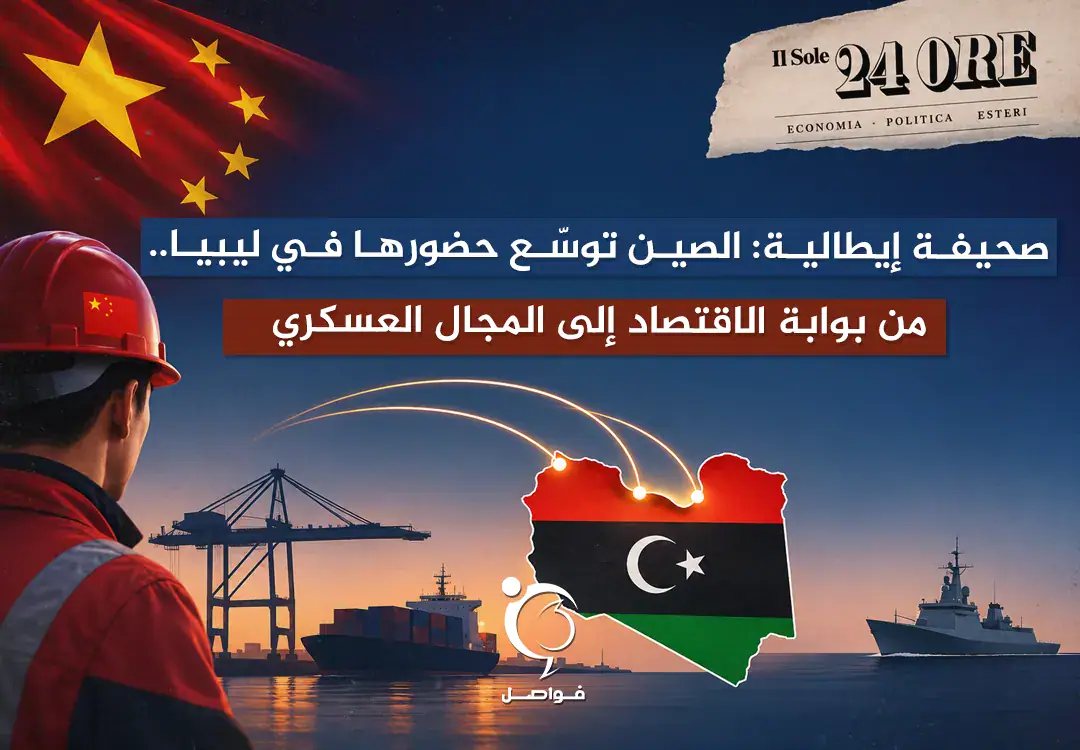
China's involvement in Libya has evolved beyond economic interests and infrastructure projects, sparking concerns about its expanding military presence. According to a report by the Italian newspaper "Il Sole 24 Ore", China's engagement in Libya has shifted from solely focusing on commercial interests and reconstruction projects to also encompassing the military domain. This development has significant implications for the country's future and the balance of power in the region.
The resurgence of China's interest in Libya is marked by the reopening of its embassy in Tripoli in November 2025, after a hiatus of over a decade. This move signaled a renewed commitment to strengthening ties with Libya, with a focus on economic cooperation and reconstruction projects. The Italian newspaper's report highlights that China's ambitions in Libya now extend beyond economic interests, with the country seeking to establish a more comprehensive presence.
Libya's strategic location in North Africa and the Mediterranean makes it an important player in the global competition for influence. China's growing presence in the country is seen as a significant development in this context, with implications for the regional balance of power. As China seeks to expand its cooperation with Libya, it faces the challenge of navigating the country's complex and divided institutions.
The Italian report suggests that China's expanding presence in Libya may be part of a broader strategy to establish itself as a major player in the region. This has significant implications for other global powers with interests in Libya, including Italy, which has historically had strong ties with the country. As China continues to deepen its engagement with Libya, it will be closely watched by other nations with interests in the region.
China's growing military presence in Libya raises questions about its long-term intentions and the potential impact on regional security. While China's economic interests in Libya are well-established, its military ambitions are less clear. The country's complex and divided institutions, combined with the presence of various international powers, create a challenging environment for China to navigate.
The development has significant implications for Libya's future, as the country continues to grapple with internal divisions and external pressures. As China expands its presence in Libya, it will need to balance its economic interests with the complex web of relationships between different Libyan factions and international powers. This will require careful diplomacy and a deep understanding of the country's intricate politics.
The situation in Libya remains fluid, with various international powers vying for influence in the country. As China continues to expand its presence, it will be closely watched by other nations with interests in the region. The impact of China's growing military presence in Libya will be significant, with far-reaching implications for regional security and global politics.
Key points
- China's growing influence in Libya raises questions about its military ambitions
- Libya's strategic location in North Africa and the Mediterranean makes it an important player in the global competition for influence
- China's expanding presence in Libya may be part of a broader strategy to establish itself as a major player in the region