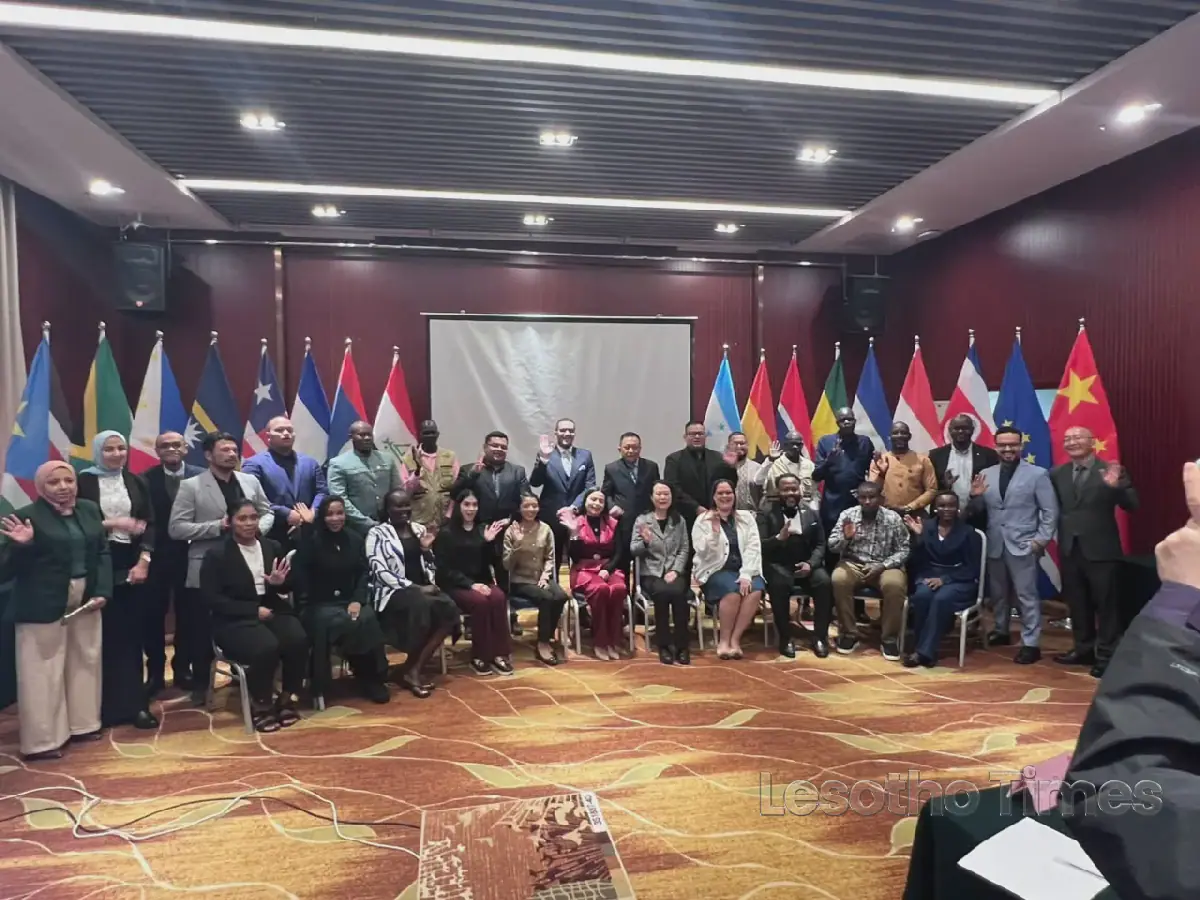
China's National Radio and Television Administration (NRTA) recently hosted two training workshops for media professionals from 17 countries participating in the Belt and Road Initiative. The workshops aimed to promote China's broadcasting industry and encourage partnerships with developing countries. Director-general of the NRTA's International Cooperation Department, Zhou Jihong, addressed the participants, highlighting the significance of 2026 as a pivotal year for the industry's digital transformation.
Zhou Jihong emphasized that digital technologies are reshaping the media landscape, with short-form videos and micro-dramas becoming increasingly popular. She noted that these new formats are thriving, while artificial intelligence and ultra-high-definition technology are transforming content creation and distribution. The NRTA presented slides showcasing the growth of micro-dramas, which are forecast to be worth over 100bn yuan by 2027.
The training workshops featured presentations on China's broadcasting industry, including its vast audience reach and technological advancements. According to the NRTA, television reaches 99.82% of China's population, while radio reaches 99.74%. The country has a significant number of cable subscribers, IPTV users, and over-the-top streaming service users. China also boasts 1,115 high-definition channels and 20 ultra-high-definition channels on major online platforms.
The NRTA highlighted China's progress in broadcasting, from the first government radio service in 1928 to the launch of Beijing TV Station in 1958. The administration also showcased its advancements in technology, including the use of Chinese-made 8K broadcast vehicles at the 2024 Paris Olympics. Zhou Jihong noted that the industry has come a long way since the reform and opening-up of 1978.
As part of its outreach efforts, the NRTA has trained over 7,500 professionals from 160 countries. The administration has also broadcast shows from Belarus, Mongolia, and Kenya on Chinese regional stations. Zhou Jihong expressed China's willingness to work with partners in the spirit of the Silk Road, promoting broadcasting as a channel for civilizational dialogue.
The NRTA is building county-level "convergent media centres" that merge traditional and new media. The administration has cancelled 83 channel frequencies while optimizing 47. Participants at the workshops were encouraged to share their experiences and knowledge gained in China with their home countries.
The training workshops demonstrate China's efforts to promote its broadcasting industry and foster partnerships with developing countries. By courting media partners along the Belt and Road, China aims to expand its influence in the global media landscape. The NRTA's initiatives are expected to shape the future of broadcasting and media cooperation among participating countries.
Key points
- China's broadcasting regulator is promoting short-form video and micro-dramas to media professionals from 17 countries participating in the Belt and Road Initiative.
- The NRTA forecasts micro-dramas to be worth over 100bn yuan by 2027.
- China has trained over 7,500 professionals from 160 countries as part of its outreach efforts.