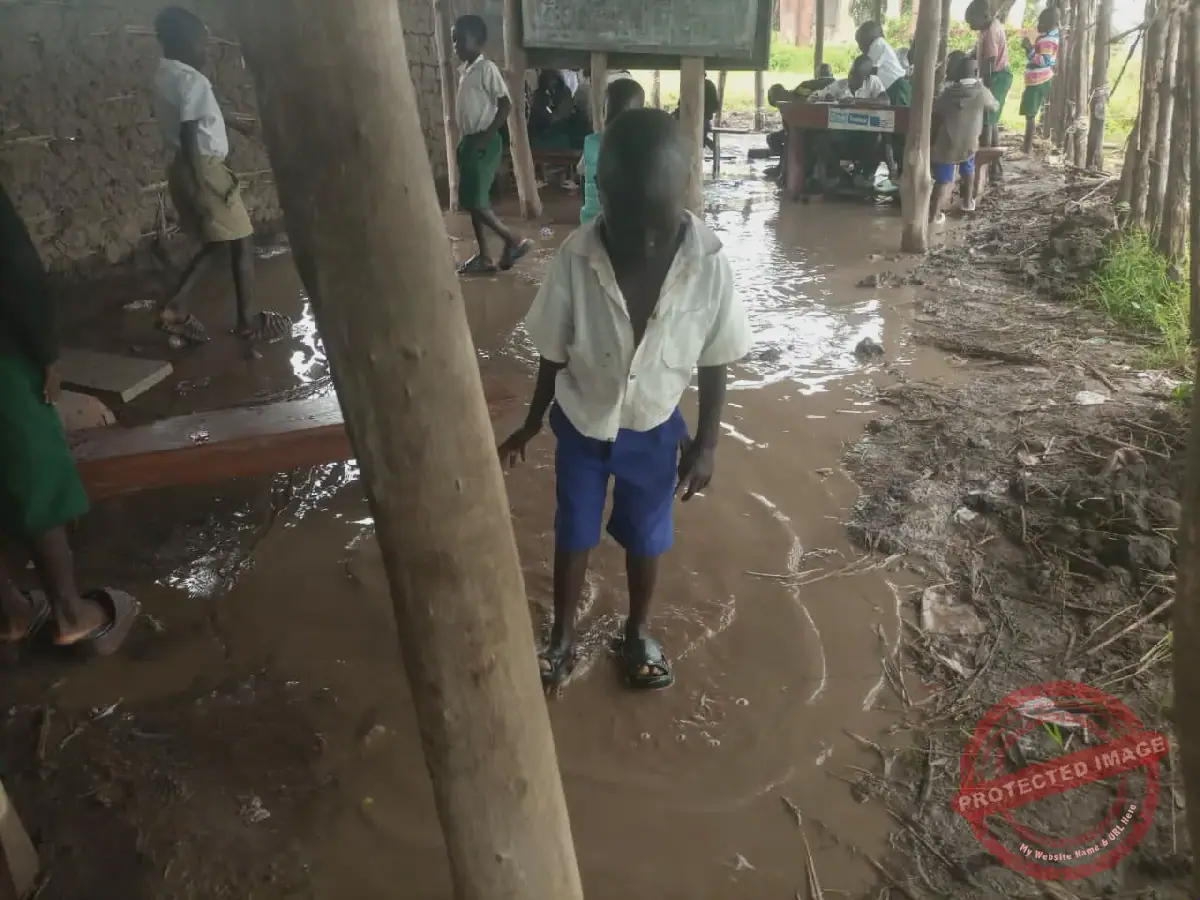
Pupils at Rodo’ba Primary School in Bazi (Saba) KiliKili Boma, Gulumbi Payam, Morobo County, Central Equatoria State, are studying in difficult conditions. Photographs from the school show children trying to continue their education amidst flooding and deteriorating infrastructure. This situation has raised concerns about the safety and quality of education for these students. The school's conditions are a stark reminder of the challenges faced by rural communities in South Sudan. Education is crucial for the country's development, but it seems that many schools are not equipped to provide a conducive learning environment.
The condition of Rodo’ba Primary School is not an isolated incident. Local education authorities have previously expressed concerns about the state of school infrastructure in Morobo County. In July 2026, Eye Radio reported that former Morobo County Commissioner Charles Data Bullen highlighted the need for improvement. Many schools in the county were operating without adequate furniture, and there were shortages of teachers and limited financial resources. These challenges have been affecting the delivery of education in the county for years, and it seems that not much has changed.
The 2016 conflict had a devastating impact on schools in Morobo County. Many schools were destroyed or looted, leaving them without essential facilities. Despite appeals for support, it appears that many schools are still struggling to provide a safe and conducive learning environment. The situation at Rodo’ba Primary School raises questions about the government's commitment to improving education infrastructure in rural areas. The county commissioner at the time, Charles Data Bullen, had appealed for additional support to improve learning conditions in schools.
In August 2026, former Central Equatoria Governor Emmanuel Adil Anthony visited Morobo County and inspected several schools. He acknowledged the difficult conditions faced by pupils and teachers and pledged support for some schools. The governor allocated 50 million South Sudanese pounds for the rehabilitation of Ombasci Primary School, including support for brick moulding. However, it is unclear if similar interventions have reached other schools in the county, such as Rodo’ba Primary School.
The situation at Rodo’ba Primary School is a concern for education stakeholders. The school's infrastructure is in a poor state, with flooded classrooms and collapsing mud-walls. This situation is likely to affect the students' academic performance and overall well-being. The government and other stakeholders must take urgent action to address the school's infrastructure challenges and provide a safe learning environment for the students.
The challenges faced by schools in Morobo County are a microcosm of the broader issues affecting education in South Sudan. The country has made progress in increasing access to education, but the quality of education remains a concern. The government and development partners must prioritize education infrastructure, teacher training, and resources to improve the learning environment. This will require a sustained commitment to addressing the systemic challenges facing the education sector.
The plight of students at Rodo’ba Primary School highlights the need for increased investment in education infrastructure in rural areas. The government, development partners, and other stakeholders must work together to address the school's infrastructure challenges and provide a safe learning environment for the students. This will require a coordinated effort to ensure that schools in rural areas receive the support they need to provide quality education.
Key points
- Students at Rodo’ba Primary School in Morobo County, South Sudan, are studying in flooded classrooms with collapsing mud-walls.
- The school's conditions raise concerns about the safety and quality of education for these students.
- The situation highlights the need for increased investment in education infrastructure in rural areas of South Sudan.