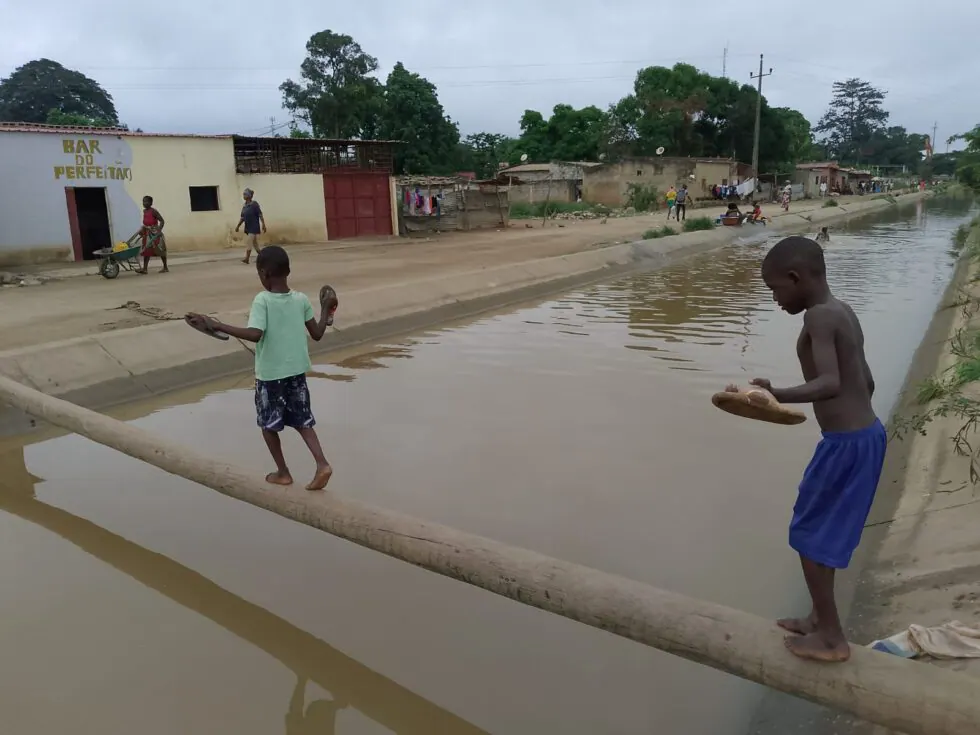
In the Riceno neighborhood of Caxito, Angola, a makeshift bridge has become a popular crossing point for residents, particularly children, despite the presence of two safer bridges. The improvised crossing, created over an irrigation ditch, is narrow and poses significant risks to users. Many residents, including children, opt to use this passage rather than the designated bridges, which they claim are too far or poorly located.
The makeshift bridge has been the scene of at least one close call. Maria Carlos, a local resident, witnessed an accident involving a child who lost balance while crossing and fell into the water. Fortunately, the child was rescued in time, averting a tragedy. This incident highlights the dangers associated with the improvised crossing and the need for a safer solution.
Some residents, like Pedro Miguel, argue that the existing bridges are not conveniently located, making the makeshift crossing a more practical option. However, this perspective is not universally shared, and many acknowledge the risks associated with the improvised bridge. Pedro Miguel suggests that parents should be held accountable for allowing their children to play in this hazardous area.
The president of the Riceno neighborhood residents' commission, Noé Simão, has announced plans to remove the makeshift bridge due to the risks it poses. Although there have been no reported serious accidents so far, the commission recognizes the potential for tragedy and aims to mitigate this risk. The area is prone to accidents, given the large number of people using the makeshift crossing as a shortcut to the local market.
The Riceno neighborhood is intersected by the Caxito irrigation ditch, which has led to the creation of the makeshift bridge as a shortcut to the Kawango Market. The two existing bridges, while safer, are often bypassed by residents seeking to save time. This behavior puts users at risk, and authorities are urged to address the situation.
Local residents and officials stress the need for a safer and more efficient crossing solution. While the existing bridges provide a safer alternative, their location and accessibility are being questioned. The removal of the makeshift bridge and potential improvements to the existing infrastructure are seen as essential steps towards ensuring residents' safety.
The situation in Riceno highlights the challenges faced by communities in balancing convenience and safety. The makeshift bridge, while a testament to residents' resourcefulness, poses significant risks that must be addressed. Efforts to find a safer solution are underway, with the goal of protecting residents, particularly children, from potential harm.
Key points
- Children in Caxito are risking their lives by crossing a makeshift bridge over an irrigation ditch, despite the presence of safer alternatives.
- Local residents and officials are calling for a safer and more efficient crossing solution to replace the makeshift bridge.
- Plans are underway to remove the makeshift bridge and potentially improve existing infrastructure to ensure residents' safety.