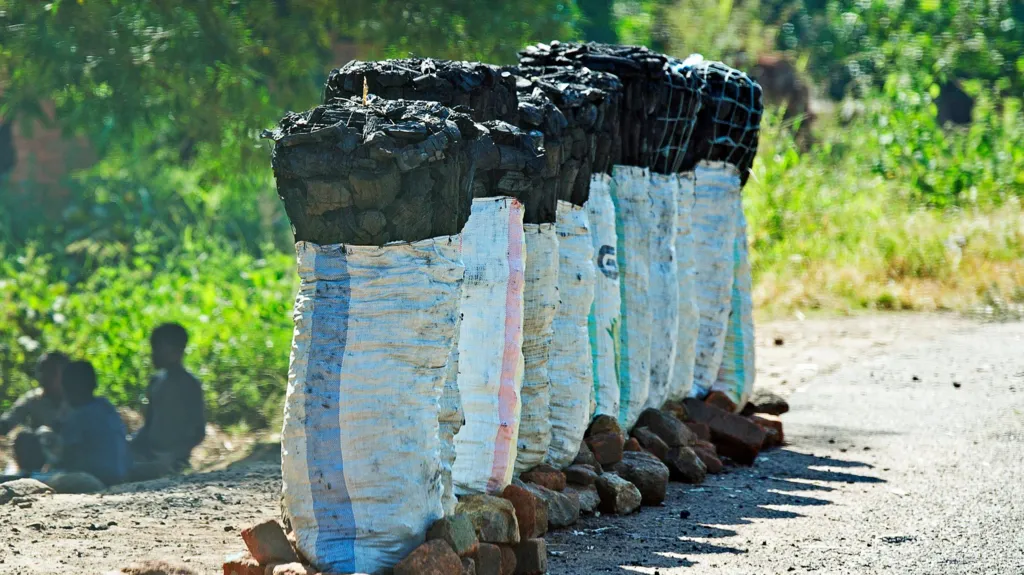
A severe energy crisis in Malawi has led to a surge in charcoal sales as households struggle with persistent power outages and shortages of liquefied petroleum gas (LPG). Residents like Lackson Shumba from Lilongwe District are finding it difficult to access LPG, forcing them to rely on charcoal despite the high prices. Shumba reported that his household has been without gas for almost three weeks.
The charcoal market is experiencing a boom, with vendors like Mirriam Kunthochi from Mgona in Lilongwe benefiting from the increased demand. Kunthochi noted that a single bag of charcoal now sells for K70,000, and customers continue to buy despite the steep prices. In other parts of the country, such as Blantyre and Mzuzu, a bag of charcoal sells for an average of K60,000.
The Civil Society Network on Climate Change (Cisonecc) has expressed concerns that the energy crisis could undermine forest conservation efforts. National Coordinator Julius Ngoma warned that the shortages will accelerate deforestation as households turn to charcoal and firewood for energy. He attributed this to the lack of access to clean energy technologies, which are scarce, inaccessible, and expensive for most Malawians.
The Ministry of Natural Resources is implementing measures to reduce the country's reliance on charcoal by promoting alternative energy options. Spokesperson Tikondane Vega acknowledged that charcoal consumption is widespread and emphasized the need for cost-effective alternatives. The government aims to curb the overreliance on charcoal and promote cleaner energy sources.
A recent study published in Frontiers in Sustainable Cities found that increasing charcoal prices alone will not drive Malawi's transition to cleaner cooking fuels. The study revealed that 82.8 percent of households surveyed across major cities continued to use biomass fuels for cooking despite rising prices. The research suggested that some households are combining charcoal with cleaner fuels rather than abandoning biomass altogether.
The study also reported a significant increase in charcoal prices over the past two years. Average prices have risen from K176 per kilogramme in 2022 to K340/kg and K497/kg in 2024 for charcoal with dust, and from K185/kg to K348/kg and K507/kg for charcoal without dust. These price increases have not deterred households from using charcoal due to its multiple uses.
The persistence of the energy crisis and the thriving charcoal market pose significant challenges to Malawi's environmental conservation efforts. As households continue to rely on charcoal and firewood, the country's forests face increased pressure. The government and stakeholders must address the root causes of the energy crisis and promote sustainable energy solutions to mitigate the impact on the environment.
Key points
- The energy crisis in Malawi has led to a surge in charcoal sales, raising concerns over forest conservation efforts.
- The government's efforts to promote alternative energy options aim to reduce the country's reliance on charcoal.
- A recent study found that increasing charcoal prices alone will not drive Malawi's transition to cleaner cooking fuels.