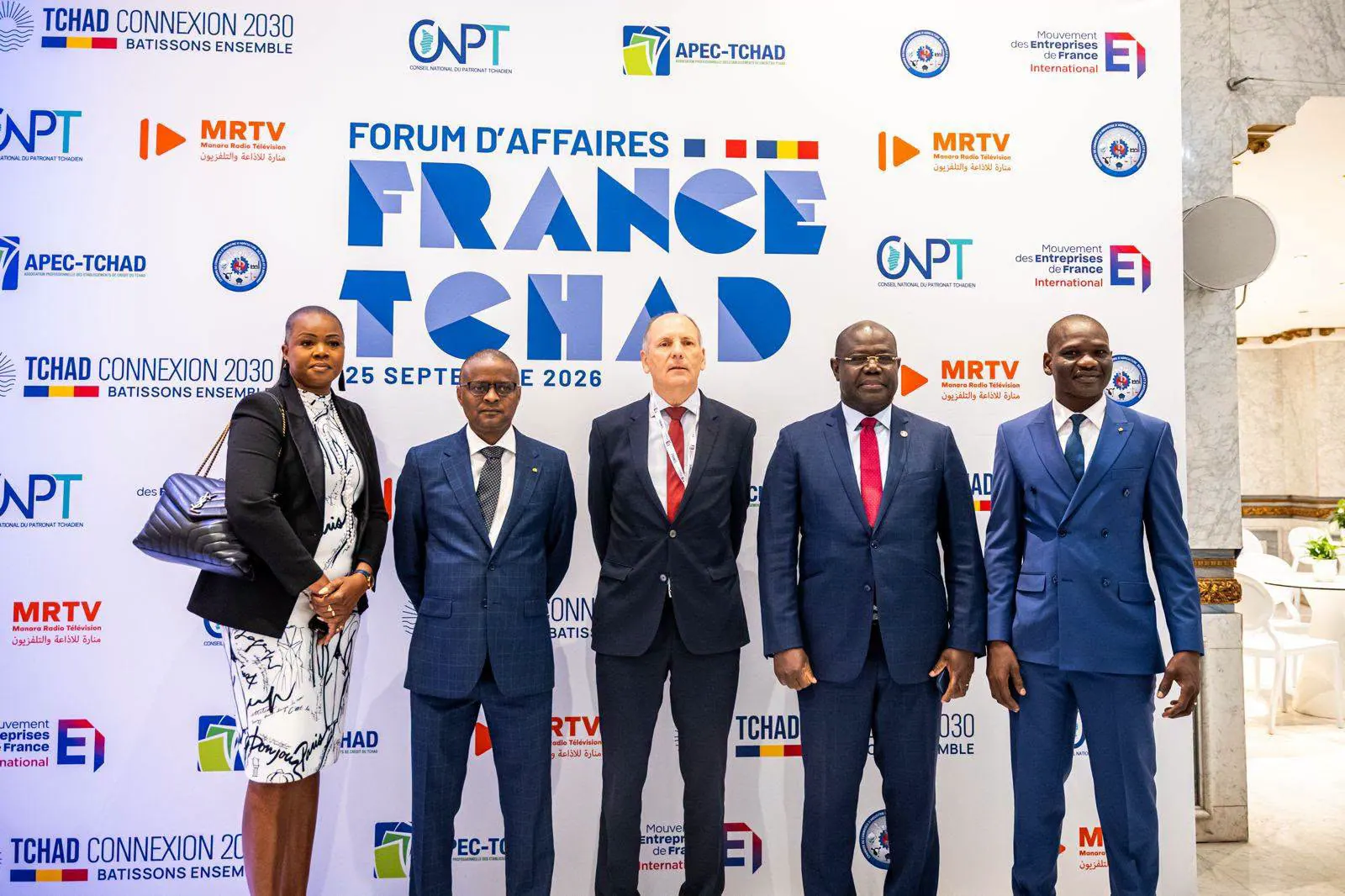
On September 25, 2026, Chad presented its National Development Plan in Paris, valued at $30 billion. The plan, known as Tchad Connexion 2030, aims to achieve 10% growth by 2030 and includes 18 programs, 179 projects, and 89 reforms. The plan was unveiled at the France-Chad Business Forum, co-organized by MEDEF International and the Republic of Chad, which brought together around 250 companies from both countries.
The forum resulted in the signing of five agreements between Chad and French companies. These agreements include the development of a dry port in Toukra with Africa Global Logistics, a modern slaughterhouse with Ceva Santé Animale and Kibervet, health centers with Ellipse Group, a research center with MOBIS, and an entrepreneurship school with MK Formation. However, no public funding was announced for these projects.
Chad's previous development plan, the 2017-2021 PND, had secured nearly $20 billion in promises from Paris in 2017 but was only financially executed at 29%, according to a report by the Ministry of Economic Prospects and International Partnerships. The new plan, Tchad Connexion 2030, was adopted in May 2025 and has a similar value of $30.3 billion. In November 2025, Chad announced $20.5 billion in commitments from Abu Dhabi, with $4.1 billion backed by 40 agreements with investors.
Despite progress in public finances, Chad's economy is advancing slowly. The country's non-oil revenue has increased significantly, from 479 billion FCFA in 2020 to over 1,150 billion FCFA in 2025, according to the International Monetary Fund and the Chadian Public Finance Observatory. However, oil revenue fell to 55% of the forecast in 2025, and the 2026 budget anticipates a further decline.
The Chadian government attributes the increase in non-oil revenue to the digitization of tax collection and online payment systems. In 2025, tax revenue from non-oil sources reached 116% of the target, without introducing new taxes. However, the country's investment spending in 2025 was only 958 billion FCFA, or around $1.6 billion, with 82% financed by domestic resources.
According to the World Bank, Chad's GDP per capita has only increased by around 3% over the past decade, from $994 to $1,022 in current dollars. The country's electricity coverage is also limited, reaching only 13.4% of the population in 2024. The implementation of the new development plan will require significant investment, estimated at around $6 billion per year over five years.
The France-Chad Business Forum was seen as a success, with the final communiqué highlighting "new perspectives of cooperation" between the two countries. However, the lack of public funding announced for the five agreements signed during the forum raises questions about the implementation of Chad's ambitious development plan. The country's ability to attract investment and achieve its growth targets remains a challenge.
Key points
- Chad's new development plan, Tchad Connexion 2030, aims to achieve 10% growth by 2030 and includes 18 programs, 179 projects, and 89 reforms.
- The plan has secured $20.5 billion in commitments from Abu Dhabi, but no public funding was announced for the five agreements signed during the Paris forum.
- Chad's non-oil revenue has increased significantly, but the country's economy is advancing slowly, with limited electricity coverage and low GDP per capita.