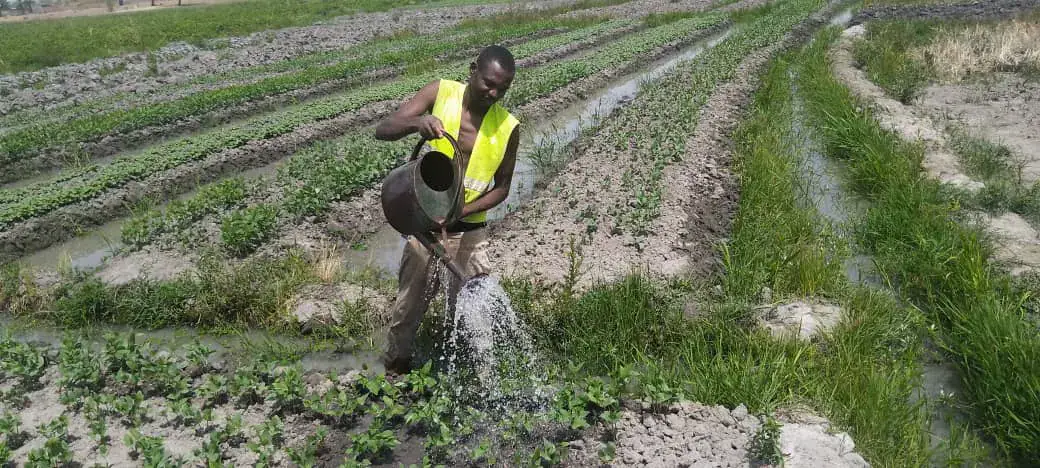
The Chadian government is shifting its focus to market gardening in response to the consequences of low rainfall on the agricultural season. This move aims to alleviate food insecurity risks. Minister of Agricultural Production and Industrialization, Keda Ballah, presented market gardening as an alternative to address the current impasse during a session at the National Assembly on November 9, 2026.
However, the government's ability to mobilize necessary resources has raised concerns. According to Minister Ballah, his department is still awaiting support from technical and financial partners to launch the off-season campaign. This dependence on external financing has sparked worries about the country's capacity to effectively respond to the new agricultural emergency.
Agronomist Izadine Malloum Mbassa views market gardening as an interesting alternative to Chad's current pluviometric crisis. Nevertheless, he cautions that simply announcing this option is insufficient; the necessary resources must be available to make it a reality. Mbassa emphasizes that the Ministry of Agriculture must demonstrate its operational and financial capacity to support this transition.
Mbassa highlights that market gardening requires hydraulic infrastructure, irrigation systems, quality seeds, agricultural equipment, and adapted technical support for producers. He also points out the significant dependence of Chad's national agricultural policy on international partners' financing and support. Mbassa argues that sustainable food security cannot be built on programs primarily funded externally.
The agronomist recommends that the government make market gardening a genuine public policy, supported by a substantial national budget, structural investments, and close producer support. However, he notes that market gardening should not replace rain-fed crops, which ensure a significant portion of the population's food supply. Instead, it should be integrated into a comprehensive strategy for agricultural resilience and food sovereignty.
The focus now shifts to the means of implementing market gardening. The initiative should not become a mere political plan B in response to rainfall deficits but a sustainable national strategy financed and led by the government. The goal is to provide producers with the necessary conditions to ensure the country's food security without systematically relying on external aid.
Ultimately, Chad's market gardening plan faces significant challenges, primarily related to financing and implementation. The government's ability to address these challenges will determine the success of this initiative in mitigating food insecurity risks and promoting sustainable agricultural practices in the country.
Key points
- Chad's market gardening initiative relies heavily on external financing, raising concerns about the country's ability to ensure sustainable food security.
- The implementation of market gardening requires significant investment in infrastructure, equipment, and technical support for producers.
- A comprehensive strategy for agricultural resilience and food sovereignty is necessary to ensure the long-term success of market gardening in Chad.