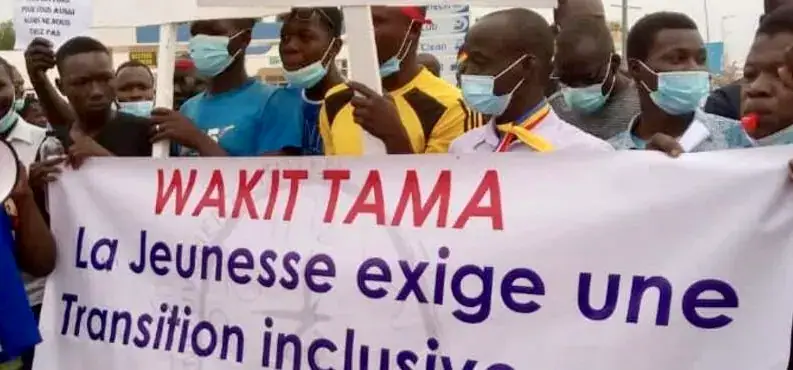
The Coalition des Actions citoyennes Wakit Tamma, a Chadian citizen movement, has expressed disappointment over the persistence of crises in Chad four years after the country's Dialogue national inclusif et souverain (DNIS). In a statement released on November 11, 2026, Wakit Tamma lamented the slow pace of national refoundation and called for a new, inclusive, and corrective political dialogue. The coalition highlighted various challenges, including the management of the dengue fever epidemic, which they say has exposed weaknesses in the healthcare system.
Wakit Tamma pointed to the ongoing difficulties in accessing healthcare and the high costs of medical care for the population. They also cited the recent resurgence of clashes in Miski, despite a peace agreement signed in April 2025, as evidence of the limitations of current security arrangements. According to the coalition, these arrangements fail to address the root causes of the conflict, particularly the governance of gold resources. Wakit Tamma advocates for a more fundamental dialogue based on justice and transparency in resource management.
The coalition also expressed concerns over Chad's tense relationships with neighboring countries, including Niger and the Central African Republic. They urged the Chadian authorities to prioritize preventive diplomacy and ensure transparency in their security commitments to avoid being drawn into rivalries between foreign powers. Furthermore, Wakit Tamma criticized restrictions on public freedoms and obstacles faced by opposition groups, including the Transformateurs, GCAP, and FOC.
Wakit Tamma argued that reducing dissenting voices does not consolidate a republic. Instead, they advocate for impartial institutions and democratic rules that guarantee free political competition. The coalition reiterated its proposal for a corrective, inclusive, and sincere political dialogue to address the shortcomings of the DNIS. They also suggested establishing an independent mechanism for monitoring and following up on commitments, involving political forces, citizen organizations, and diplomatic partners.
According to Wakit Tamma, the real challenge is not redistributing power among political actors but rather building together the rules that govern its exercise, contestation, and peaceful transfer in the interest of all Chadians. The coalition's statement reflects growing concerns over Chad's progress since the DNIS. The Chadian government has not publicly responded to Wakit Tamma's criticisms and proposals.
The DNIS was initially seen as a crucial step towards national reconciliation and reform in Chad. However, Wakit Tamma's assessment suggests that significant work remains to be done to address the country's deep-seated issues. The coalition's call for a new dialogue and greater transparency in governance may resonate with some segments of the Chadian population.
Wakit Tamma's criticisms and recommendations come at a critical juncture for Chad, which continues to face numerous challenges, including security concerns, economic difficulties, and questions about its democratic trajectory. The international community is closely watching Chad's progress, and Wakit Tamma's proposals may influence future diplomatic engagement and support.
Key points
- Wakit Tamma coalition calls for a corrective, inclusive, and sincere political dialogue to address Chad's persistent crises.