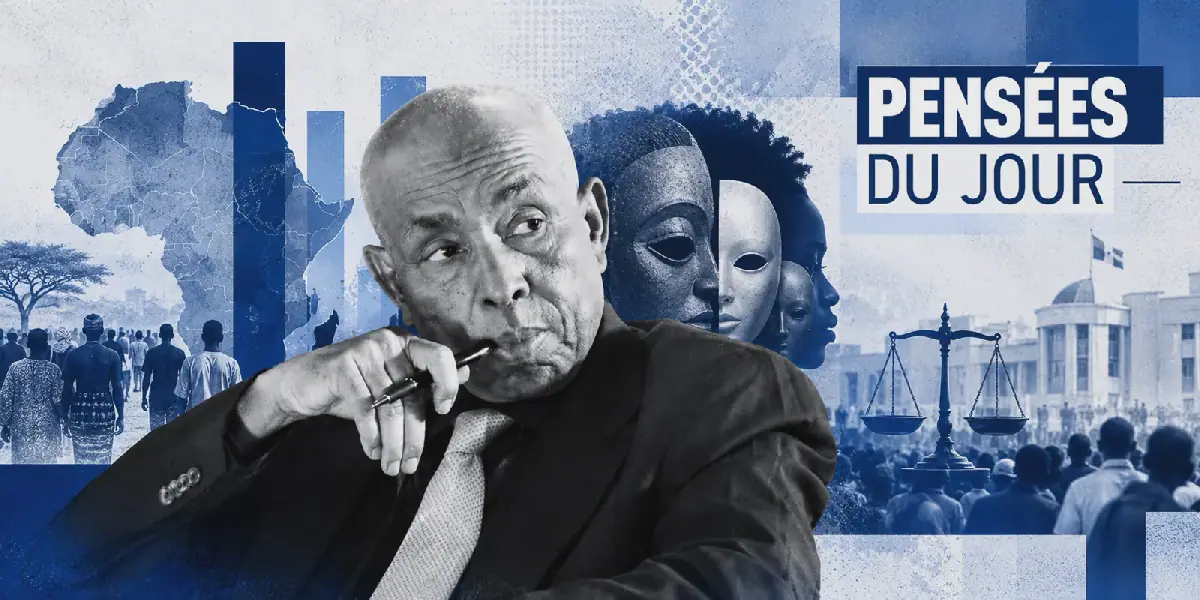
In many African countries, particularly in the Sahel-Saharan region, numerous populations have yet to escape the trap of ethnicity and ethnic identity. Ethnicity, like clans, is a social organization model born out of survival. This model was created by prehistoric societies as an endogenous mechanism for protection and collective insurance against natural risks and the law of the strongest. An ethnic group is typically identified by a shared language, customs, and territory.
The concept of ethnicity has no biological basis, although its members may claim real or imagined kinship ties. Before the advent of the state, humans lived under constant threat, and the "law of the jungle" enforced solidarity and cooperation. Each person needed others, and others were never considered anything more than future allies. However, in the 21st century, some people still live with one foot in the Middle Ages and the other in modernity.
The African political class has failed to successfully implement the national project more than half a century after independence. In some countries, the population is merely a juxtaposition of communities divided by everything. Communal withdrawal and particularism have become vectors of social disintegration. Many define themselves by their ethnicity, human geography, and sometimes their confession, against a backdrop of stigmatization.
Certain political parties have geographic strongholds, and even sovereign functions have been subtracted and entrusted to local chiefs. This has led to the erosion of modern justice, which guarantees equal access to justice for all. The question remains as to how to reassure investors about the existence of formal justice. The day the state, driven by its republican values, rises above particularisms, citizenship will be born.
According to Prof. Zakaria Ousman, also known as Zako, from the Chadian Centre for Strategic Studies and Prospective Research, the path to nation-state building is crucial for creating collective property and destiny. He emphasizes that think global and act smarter. The professor's thoughts, "Les Pensées du Prof," highlight the need for African nations to rethink their approach to identity and citizenship.
Ousman's views resonate with many Africans who yearn for a unified national identity. He argues that until the state prioritizes its republican values, many African countries will struggle to build a cohesive nation-state. The professor's ideas have sparked a national conversation about the role of ethnicity in modern African society.
As African nations strive to build a more modern and inclusive society, they must confront the legacy of ethnicity and its impact on national identity. By prioritizing republican values and promoting a sense of shared citizenship, countries like Chad can work towards a more cohesive and unified future.
Key points
- Chad and other African nations must transition from ethnic identity to national citizenship to build a cohesive nation-state.