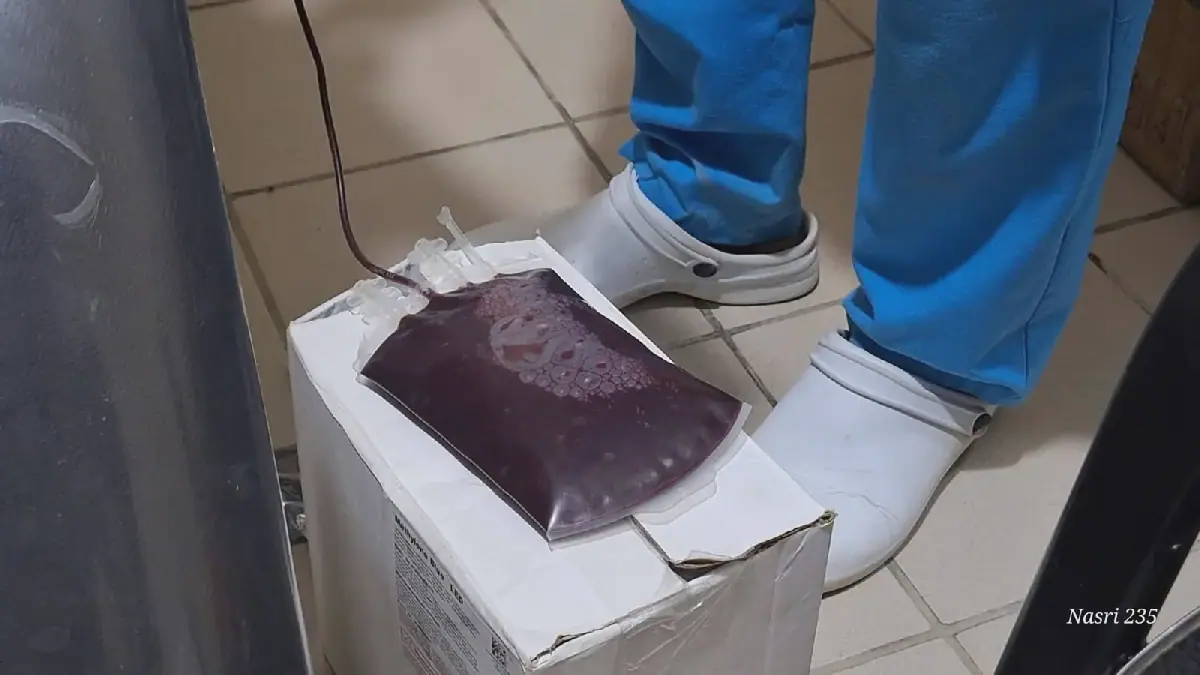
The National Blood Transfusion Center in N'Djamena, Chad, has been accused of discrimination in the distribution of blood. Idriss Kondebé claims that on November 5, 2026, he was told that there was no blood available for his wife, who was to undergo a cesarean section. However, shortly after, another person arrived and was able to obtain a blood transfusion. Kondebé alleges that the center had over 400 pouches of blood available, but was unwilling to provide it to his wife.
According to Kondebé, he offered to donate blood himself, but was refused. He believes that the center's actions constitute discrimination. The center's management has denied these allegations. Brahim Nabak Assali, the center's general supervisor, stated that such incidents have never occurred during his tenure. He explained that the center prioritizes patients based on medical need, not personal characteristics.
Assali suggested that Kondebé's wife may have had a rare blood type, which could have contributed to the shortage. He also denied allegations that the center sells blood, stating that there is no evidence to support these claims. As a public institution, the center is subject to scrutiny and criticism, Assali noted.
The center has called on Chadians to donate blood voluntarily. The incident highlights the challenges faced by blood transfusion centers in ensuring a stable blood supply. Kondebé's experience has raised concerns about the fairness and transparency of the center's operations.
The center's management has a responsibility to ensure that blood is distributed fairly and efficiently. The allegations of discrimination have not been substantiated, but they have sparked a debate about the center's practices. Further investigation is needed to determine the facts of the case.
Blood transfusion centers play a critical role in healthcare, and their operations must be transparent and accountable. The center's denial of the allegations is a positive step, but more needs to be done to address concerns about fairness and equity.
The incident has implications for the healthcare system in Chad, where access to blood transfusions can be a matter of life and death. The center's management must take steps to rebuild trust and ensure that blood is distributed based on medical need alone.
Key points
- The National Blood Transfusion Center in N'Djamena has denied accusations of discrimination in blood distribution.
- The center's management has suggested that the shortage of blood may have been due to the patient's rare blood type.
- The incident has sparked a debate about the center's practices and the need for transparency and accountability in blood transfusion services.