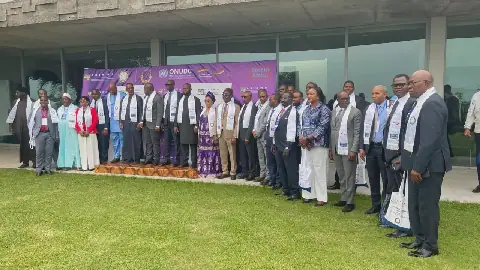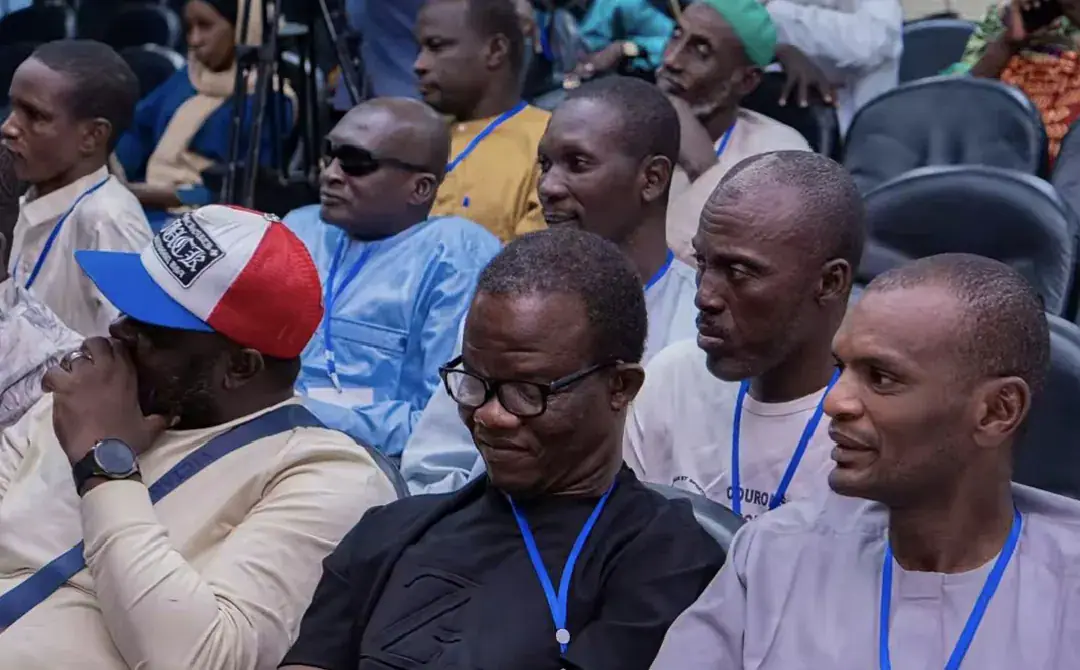
The Chadian Ministry of Social Action and the National Agency for Protection and Promotion of the Rights of Persons with Disabilities (ANPPDPH) recently organized a workshop in N'Djaména. The event, held from November 16 to 18, focused on finding alternative economic activities for persons with disabilities affected by the ban on crossing the Ngueli bridge with tricycles or motorcycles. The ban had hindered their ability to engage in income-generating activities.
Participants at the workshop formulated several recommendations to address their challenges. They called for a roundtable discussion with major enterprise leaders and technical and financial partners. The group also urged the acceleration of the national disability card issuance process and the integration of disabled graduates into the public sector. Additionally, they requested the initiation of an inclusion law for persons with disabilities.
The disabled community also sought specific concessions, including reserved spaces in markets and the establishment of telephone kiosks. They requested reduced taxation, training in negotiation and financing techniques, and facilitated access to public and private markets. These demands aim to enhance their economic opportunities and social inclusion.
Sittina Abdelmadjid Haggar, the Deputy Secretary General, expressed solidarity with the disabled community. She emphasized the need for realistic solutions to ensure their socio-professional integration. Haggar stated that no genuine development can occur while excluding a part of the population. She vowed to work towards creating opportunities for persons with disabilities.
The Ngueli bridge, connecting N'Djaména to the Cameroonian city of Kousseri, was previously used by hundreds of persons with disabilities to import goods for sale. However, the customs authority recently banned this activity without providing an official reason. The workshop aimed to transform this challenge into an opportunity for sustainable and adapted solutions.
The ANPPDPH workshop brought together various stakeholders to discuss the challenges faced by persons with disabilities in Chad. The event highlighted the need for collaborative efforts to address these issues. Participants emphasized that disability should not be a reason for exclusion or marginalization.
The Chadian government's response to these demands and the implementation of the proposed solutions remain to be seen. The disabled community's call for an inclusion law and economic empowerment has been made. It is now crucial for the authorities to engage with these stakeholders and work towards creating a more inclusive environment.
Key points
- The Chadian government has been urged to initiate an inclusion law for persons with disabilities.
- The disabled community seeks reduced taxation and facilitated access to public and private markets.
- A roundtable discussion with major enterprise leaders and technical and financial partners has been proposed.