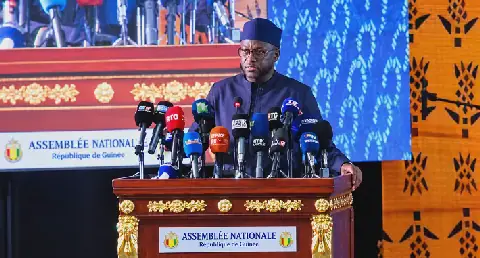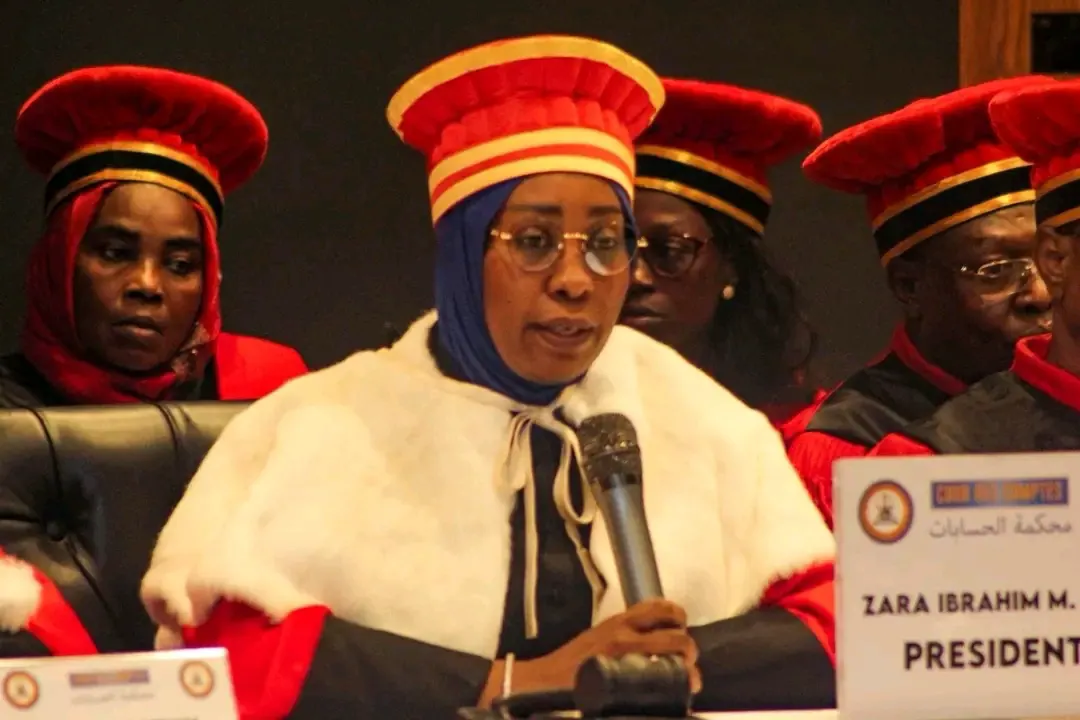
On October 5, 2026, the Court of Accounts in Chad marked the beginning of its 2026-2027 judicial year, reviewing its performance over the 2025-2026 period. The institution's president, Zara Ibrahim Mahamat Itno, presented the past year as a period of consolidation for the Court. This period saw the implementation of harmonized working methods, increased controls, training, and enhanced collaboration with other public control actors. The Court's role in Chad's national system is expected to strengthen progressively.
The Court of Accounts' primary missions include verifying the regularity of state financial operations, adjudicating public accountants' accounts, and evaluating the economy, efficiency, and effectiveness of public policies. During the 2025-2026 period, the Court worked on 60 public accountants' accounts at various stages of instruction. The Court's Public Prosecution Office issued over 40 formal notices to public establishment accountants and communal receivers who failed to produce or deposit their management accounts.
In addition to its jurisdictional work, the Court of Accounts focused on developing a collection of judicial forms to better secure its non-judicial acts. The institution conducted several audits and controls, including those of the communes of N'Djamena's 1st, 5th, and 9th arrondissements, the La Renaissance University Hospital Center, and the Agency for Rural Electrification Development and Energy Mastery. Other audits targeted the PDRS project, the PRAPS 2 program, and the accounts of political parties regarding their eligibility for public subsidies.
The Court of Accounts' audits also covered an environmental assessment of the Niger River. These missions revealed recurring difficulties, including governance weaknesses, internal control insufficiencies, and issues related to financial information reliability. The Court identified unjustified expenses, irregularities in public market procedures, and weaknesses in patrimony management. Furthermore, the institution highlighted problems in following up on its recommendations.
The Court of Accounts' analysis of finance laws from 2013 to 2023 showed persistent issues. According to its findings, budgetary and accounting rules are not always applied, despite being essential for transparency and good governance. The institution's president emphasized the need to address these challenges and enhance public resource management.
The Court of Accounts' efforts aim to strengthen its role in Chad's public control system. By consolidating its methods and enhancing collaboration with other control actors, the institution seeks to improve the transparency and efficiency of public resource management. The Court's work will continue to focus on evaluating public policies and ensuring accountability.
Key challenges identified by the Court of Accounts include addressing governance weaknesses, improving internal controls, and enhancing financial information reliability. The institution's recommendations will be crucial in promoting transparency and good governance in Chad's public sector. The Court's ongoing efforts will be essential in monitoring the implementation of its recommendations and promoting positive change.
Key points
- The Court of Accounts in Chad reviewed its 2025-2026 activities, highlighting reforms and challenges in public resource management.
- The institution identified recurring difficulties, including governance weaknesses and internal control insufficiencies.
- The Court's efforts aim to strengthen its role in Chad's public control system and promote transparency and good governance.