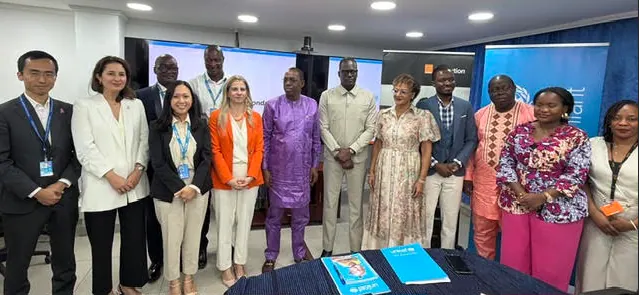
The Fondation Orange Guinée (FOG) and UNICEF have strengthened their collaboration in the education sector by signing a protocol agreement on October 5, 2026, in Conakry. The partnership aims to promote access to digital technology in Guinean schools. As part of this initiative, 50 schools across six regions will benefit from digital learning hubs powered by solar energy and connected to the internet. The goal is to make digital technology a valuable tool for children's and young people's learning.
The program also includes training for teachers and providing educational resources tailored to learners' needs. UNICEF's representative in Guinea, Maddalena Bertolotti, praised the collaboration, emphasizing its importance for the future of Guinean education. She noted that while access to digital equipment can improve learning conditions, it alone cannot resolve the challenges facing Guinean schools. Bertolotti highlighted that poverty of learning remains a significant challenge, with many children struggling to acquire basic skills in reading, writing, and arithmetic.
According to Bertolotti, digital technology can be a crucial lever for improving education quality and reducing disparities among learners. However, she stressed that certain conditions must be met, including access to electricity, connectivity, validated educational content, and teacher training. The UNICEF representative emphasized that digital technology must serve national pedagogical priorities and be used in real school and community settings.
The partnership also includes training 500 adolescent girls in science, technology, and digital skills. Additionally, 100 scholarships and excellence awards will be granted to young laureates to support their academic journey and promote excellence. Ousmane Boly Traoré, president of the Fondation Orange Guinée, stated that this commitment aligns with Orange Guinée's corporate social responsibility policy.
Traoré explained that the foundation has adopted Orange Group's objectives to contribute to various aspects of corporate social responsibility. He emphasized the need to support children and young people in using digital tools that will be made available to them. Traoré noted that the youth need accompaniment to harness their energy, and UNICEF is there to provide that support.
Malick Bah, director general of the Institut national de recherche et d'action pédagogique (INRAP), representing the Ministry of National Education and Literacy, praised the progress made in digitalizing educational content. He mentioned the Learning Passport, a pedagogical platform that has reached over 100 schools and nearly 1,000 teachers. Bah stressed the importance of providing content that aligns with official school programs.
The new protocol agreement between Fondation Orange Guinée and UNICEF aims to enhance access to digital education while ensuring that technological tools serve learning and Guinean education priorities. The partnership seeks to make a positive impact on the country's education system, particularly in disadvantaged areas.
Key points
- The partnership will benefit 50 schools and 500 adolescent girls.
- The program includes training for teachers and providing educational resources.
- The initiative aims to improve education quality and reduce disparities among learners.