The Great Green Wall initiative, one of Africa's largest ecological programs, aims to restore 100 million hectares of degraded land by 2030. Nine countries, including Chad, Eritrea, Ethiopia, Djibouti, Somalia, Sudan, South Sudan, Mauritania, and Mali, are participating in a regional workshop in N'Djamena to discuss biophysical data essential for the initiative's success. The workshop, organized by Chad's Ministry of Finance and Environment, in collaboration with the Food and Agriculture Organization (FAO), will present and validate analysis results from the countries involved.
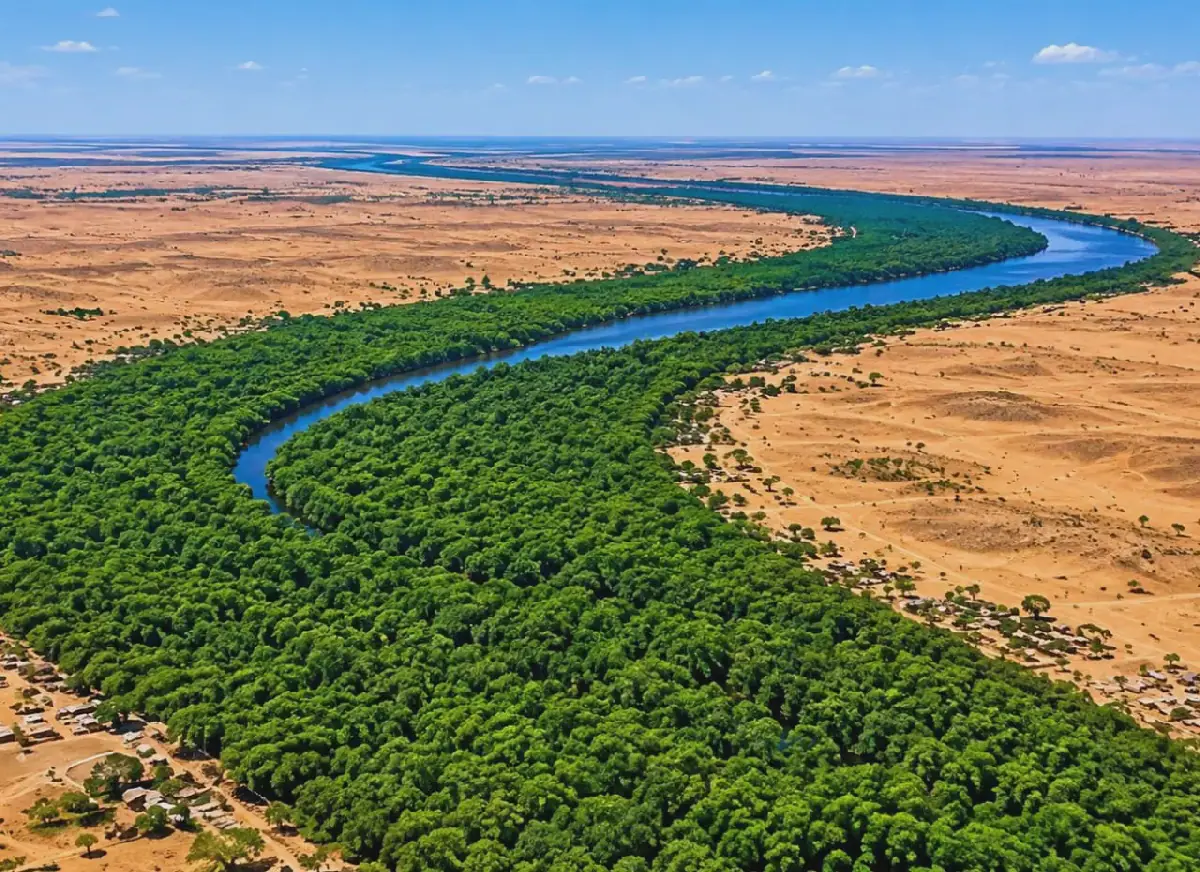
The Great Green Wall initiative, launched in 2007 by the African Union, seeks to restore degraded landscapes in the Sahel and Horn of Africa. The program's corridor spans approximately 8,000 kilometers, from Senegal to Djibouti. It involves various interventions, including reforestation, natural regeneration, soil restoration, agroforestry, and sustainable water resource management. By 2030, the initiative aims to restore 100 million hectares of land, sequester 250 million tons of carbon, and create 10 million green jobs, while enhancing food security and rural incomes.
The workshop in N'Djamena focuses on analyzing biophysical data, including soil, vegetation, water, and ecosystem information. This data will help identify priority areas, select restoration techniques, and evaluate progress. Experts will also strengthen national capacities for data exploitation and interpretation, sharing experiences to improve intervention planning. The initiative has received significant international financial support, with $14.3 billion in new commitments announced at the January 2021 One Planet Summit.
The Great Green Wall initiative extends across several countries in Africa, with a corridor spanning from Senegal to Djibouti. The program's goal is not only to combat desertification but also to improve food security and rural incomes. The initiative's success relies on effective implementation and measurable results on the ground. The workshop in N'Djamena aims to bridge the gap between financial commitments and actual land restoration efforts.
The regional workshop in N'Djamena brings together experts from various countries to discuss biophysical data and its application in land restoration. The event is a crucial step in ensuring the effective implementation of the Great Green Wall initiative. By sharing experiences and expertise, participants aim to enhance the planning and execution of land restoration projects.
Chad's Ministry of Finance and Environment, in collaboration with the FAO, is leading the organization of the workshop. The event is expected to produce concrete outcomes, including the validation of analysis results and enhanced national capacities for data exploitation. The Great Green Wall initiative has the potential to significantly impact the environment and local communities in Africa.
The Great Green Wall initiative is a long-term program that requires sustained efforts and commitment from participating countries. The workshop in N'Djamena marks an important milestone in the initiative's implementation. With the support of international partners, including the World Bank, European Union, and African Development Bank, the initiative can achieve its ambitious goals and make a lasting impact on the environment and local communities.
Key points
- Experts from 9 African countries are gathering in N'Djamena to discuss biophysical data for land restoration under the Great Green Wall initiative.