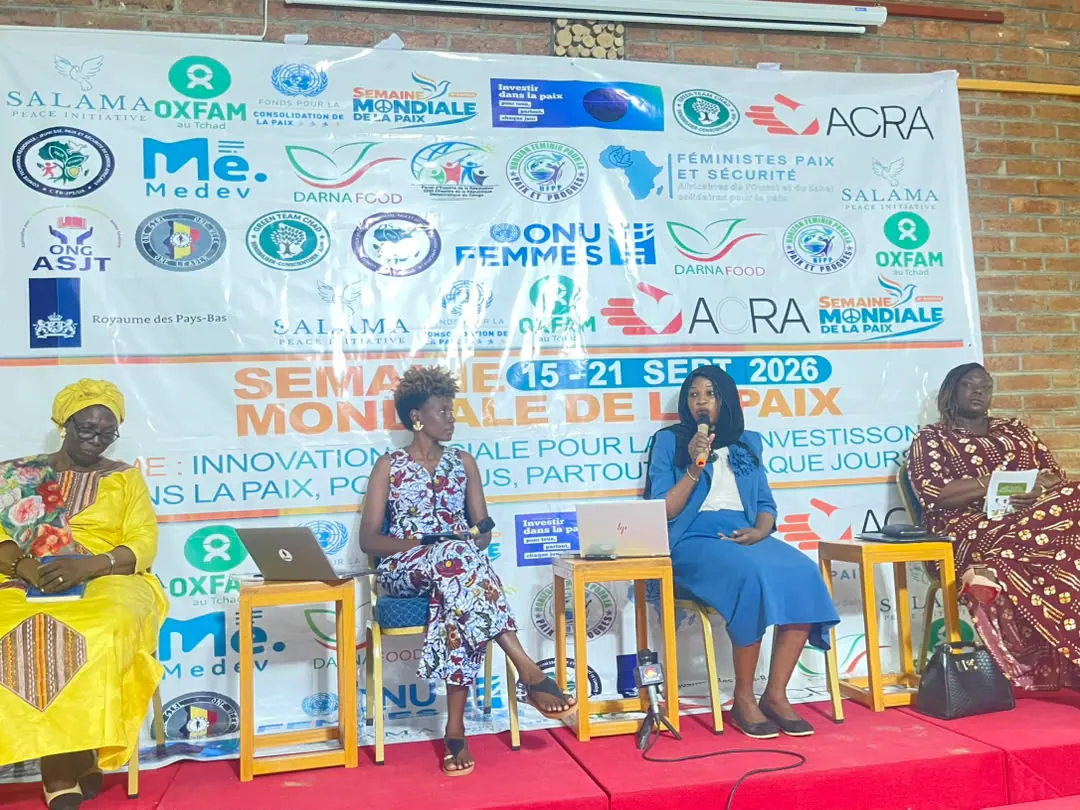
As part of the fourth edition of the Global Peace Week, a citizen's debate was held in N'Djamena under the theme "Beyond quotas: strengthening the power and decision-making of women in Chad". The panel discussion was presented and led by Meram Mahamat Mourba, Djikoloum Guisse Marlyse, and Achta Djibrine. The event aimed to explore ways to increase women's influence in peace processes and decision-making.
According to the representative of OXFAM, Chad has made significant progress in implementing the 2018 ordinance on parity and its application decree, which imposes a minimum quota of 30% women in politics. This has led to 64 women being elected out of 189 deputies, representing around 34% of parliamentary representation, up from only 12% previously. However, the presence of women in politics does not automatically guarantee effective decision-making power.
The debate highlighted that quotas should be a starting point, not an end goal. Women play a crucial role in preventing conflicts, community mediation, and social cohesion in households and villages. Their participation in political and security processes strengthens the durability of agreements. According to UN data cited during the discussions, peace agreements involving women have 35% more chances of being sustainable.
The event, supported by Oxfam and the project "Strengthening female leadership for increased participation of women in decision-making and peace processes in Chad", brought together various stakeholders to discuss the role of women in peacebuilding. The debate emphasized the need to move beyond quotas and ensure that women have a meaningful impact on decision-making processes.
The representative of OXFAM also noted that while progress has been made, there is still much work to be done to ensure that women have an equal voice in peace processes. The debate provided a platform for women to share their experiences and perspectives on how to increase their influence in decision-making.
The event concluded with a call to action, emphasizing the need to transform intentions into concrete commitments to build a more just, inclusive, and peaceful Chad. The debate highlighted the importance of women's participation in peace processes and decision-making, not only for their own empowerment but also for the stability and prosperity of the country.
The Global Peace Week debate in Chad is part of a larger effort to promote women's participation in peace processes and decision-making. The event demonstrated the commitment of various stakeholders, including Oxfam and the Chadian government, to promoting women's empowerment and increasing their influence in peacebuilding.
Key points
- The debate emphasized the need to move beyond quotas and ensure that women have a meaningful impact on decision-making processes.
- Women's participation in political and security processes strengthens the durability of agreements.
- Peace agreements involving women have 35% more chances of being sustainable.