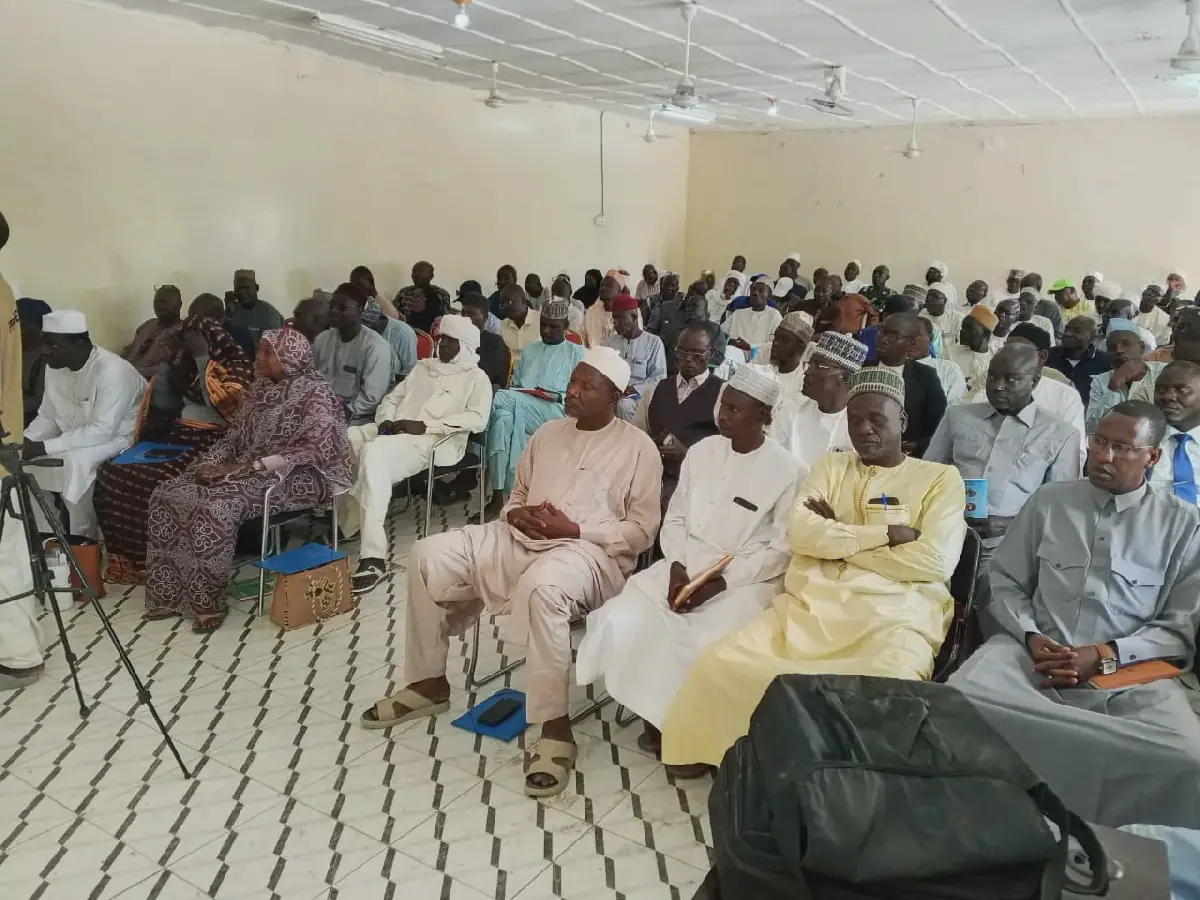
The city of Massakory, capital of Chad's Hadjer-Lamis province, hosted a two-day training session from November 9-10, 2026, on gender-sensitive education. The training targeted administrative authorities, school officials, and provincial counselors from six provinces under the Centre and North-West Academies. Organized by the Ministry of National Education, Bilingualism, and Civic Promotion, in collaboration with UNICEF and the Global Partnership for Education, the session aimed to address persistent inequalities in Chad's education system.
Chad's education system faces significant disparities, with an index of parity of 0.86 in primary education. In middle school, the completion rate is 16.1% for girls compared to 25.1% for boys. In secondary school, the gross enrollment rate is 15.82% for girls versus 27.45% for boys. Social factors also hinder girls' education, with 66.9% of girls married before age 18, according to the 2019 EDST survey. Additionally, 32.6% of girls and women aged 15-49 do not participate in social, school, or professional activities due to menstruation.
The training focuses on gender-sensitive pedagogy as a strategic approach to address these disparities. Fatime Gatibé Tabo, Director of Girls' Education Development and Gender Promotion, emphasized that this pedagogy is not just a theoretical concept but a powerful tool for transformation. It encourages rethinking practices, attitudes, and evaluation methods to ensure every child learns without distinction of sex and feels valued and encouraged to succeed.
Layom Fatimé Suzanne, Secretary General of the Hadjer-Lamis province, opened the training and highlighted the importance of gender-sensitive education. She stated that such an approach leads to justice, inclusion, and sustainable development. Suzanne encouraged teachers to model professional practices that promote gender-sensitive education and to implement it in their daily work.
The two-day training covers essential topics, including integrating gender into school planning and management, monitoring and evaluation, and accountability. Participants will also develop action plans and institutional commitments to promote gender-sensitive education. The goal is to equip authorities and educators with the skills and knowledge needed to address inequalities and promote inclusive education.
The collaboration between the Ministry of National Education, UNICEF, and the Global Partnership for Education underscores the commitment to improving education in Chad. By addressing the root causes of disparities and promoting gender-sensitive education, stakeholders aim to create a more inclusive and equitable education system. This approach is critical to Chad's development, as educated girls and women are essential for sustainable and balanced growth.
The training in Massakory marks a significant step towards achieving these goals. By empowering educators and authorities with the knowledge and skills to promote gender-sensitive education, Chad can begin to address the persistent inequalities in its education system. The outcome of this training will be crucial in shaping the future of education in Chad and promoting sustainable development.
Key points
- Authorities in Chad's Hadjer-Lamis province receive training on gender-sensitive education to address persistent inequalities in the education system.