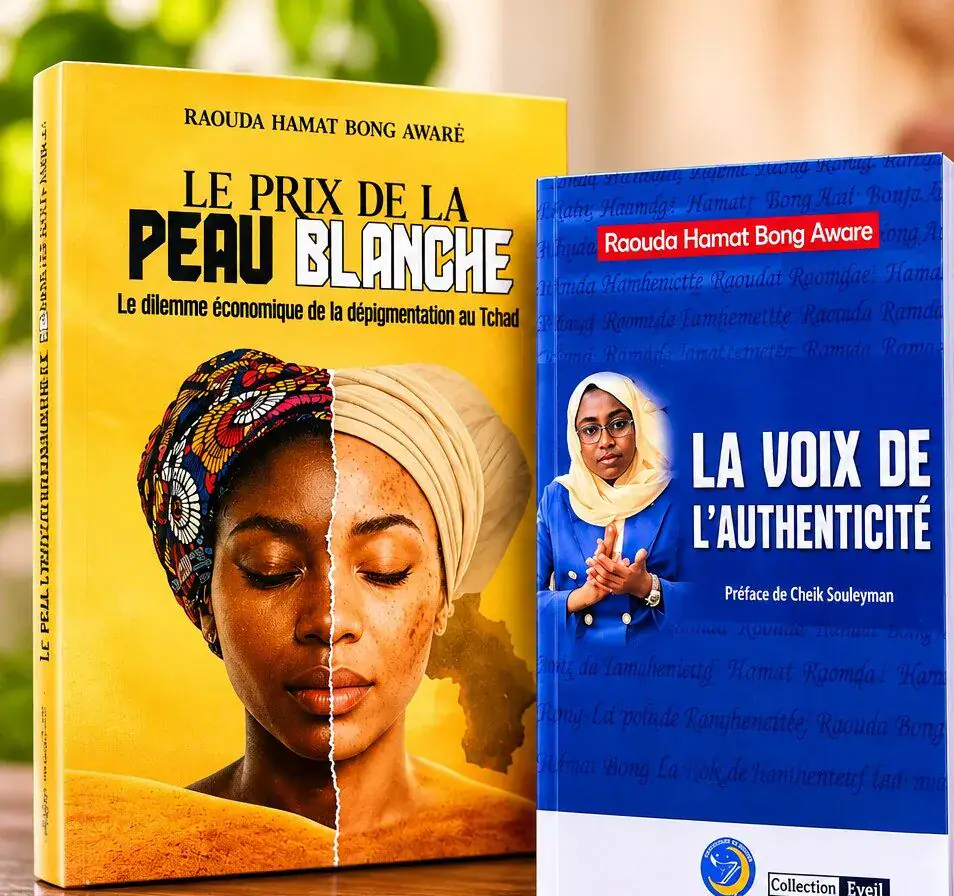
Raouda Hamat Bong Aware, a 23-year-old author from Abéché, Chad, has published two essays: "Le Prix de la peau blanche" (The Price of White Skin) and "La Voix de l’authenticité" (The Voice of Authenticity). These works explore the obsession with skin bleaching in Chad and its consequences. The essays, presented on November 28, 2026, in N’Djaména, aim to spark debate about the cultural and economic implications of this trend. Aware's work is a culmination of years of reflection and research.
The first essay, "Le Prix de la peau blanche," examines the economic aspects of skin bleaching. According to critic and literary professor Robert Mamadi, women in Chad can spend hundreds of thousands of francs CFA on skin-lightening products, which can strain family budgets and lead to debt. This spending can also affect household finances, as families may prioritize these products over other essential expenses. The economic impact of skin bleaching is significant, with many individuals and families struggling with the financial burden.
The second essay, "La Voix de l’authenticité," explores the identity crisis associated with skin bleaching. Aware questions the impact of cultural and ideological changes on personal identity, particularly for young people. She argues that the pursuit of a lighter skin tone can lead to a loss of cultural heritage and a disconnection from one's roots. This essay is informed by Aware's background in economic sciences and her experience producing podcasts on these topics.
The health risks associated with skin bleaching are also a major concern. Dermatologist Dr. Djimtebaye has warned about the complications linked to skin-lightening practices, including delayed healing, stretch marks, pigmentation disorders, and kidney damage. Some products pose serious health risks, which can have long-term consequences for individuals who use them. Aware's work highlights the need for greater awareness about these risks and the importance of promoting healthy and positive body image.
Aware's essays have been praised for their courage and insight. Her editor has commended her for tackling a sensitive topic that many people are reluctant to discuss. While Aware does not claim to have all the answers, she hopes that her work will inspire readers to think critically about the issue of skin bleaching and its implications. By sparking this conversation, she aims to promote greater self-acceptance and self-love.
The launch of Aware's essays has generated significant interest and debate in Chad. Many people have praised her for shedding light on a topic that is often ignored or stigmatized. The essays have also sparked discussions about the cultural and economic factors that drive the skin bleaching trend. As a result, Aware's work has been recognized as an important contribution to the ongoing conversation about identity, culture, and beauty standards in Chad.
Ultimately, Aware's essays encourage readers to reflect on the true cost of skin bleaching and the importance of self-acceptance. By sharing her insights and perspectives, she hopes to inspire a more nuanced and informed conversation about beauty, identity, and culture in Chad and beyond. Her work serves as a reminder that true beauty and self-worth come from within, and that self-acceptance is a powerful tool for personal growth and empowerment.
Key points
- The essays explore the economic and identity costs of skin bleaching in Chad.
- The author, Raouda Hamat Bong Aware, aims to spark debate and promote self-acceptance.
- The work highlights the health risks and cultural implications associated with skin bleaching.