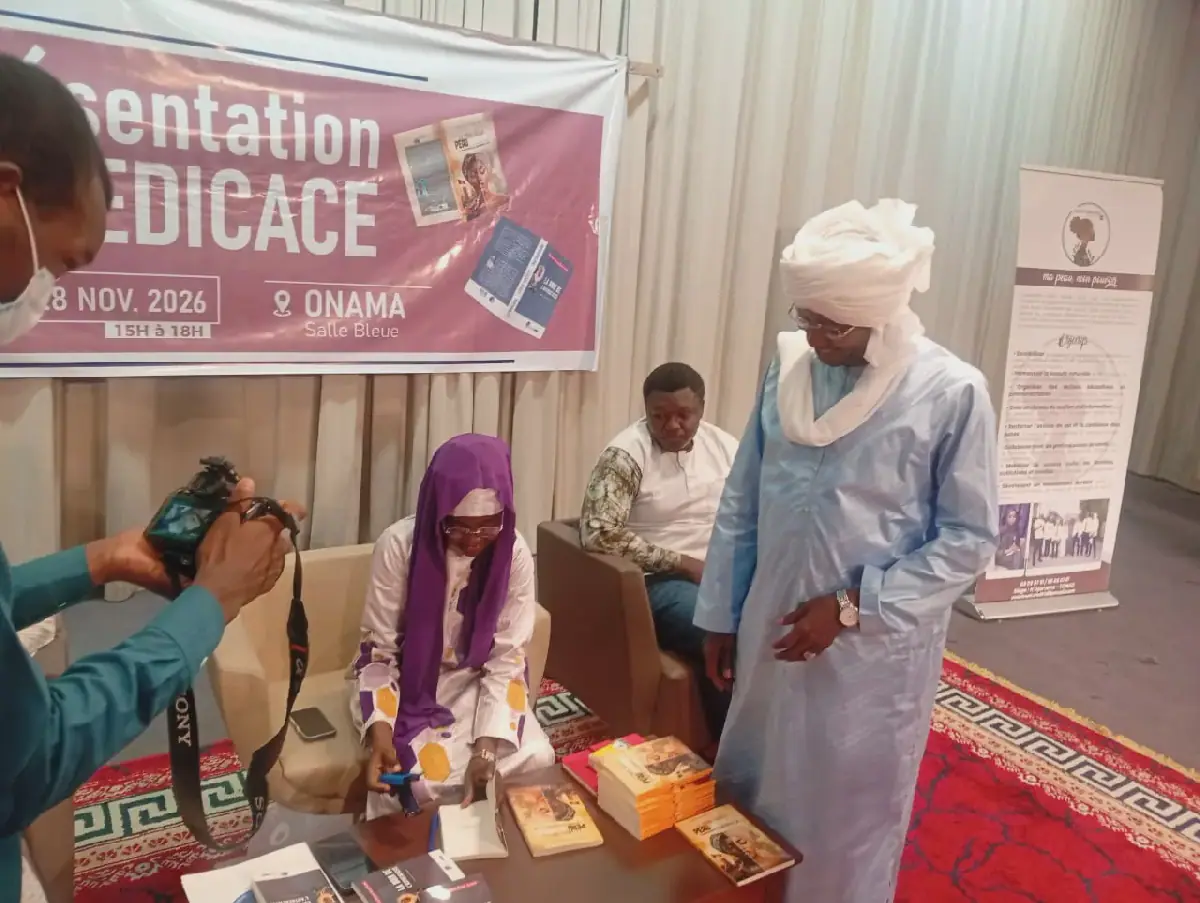
On November 28, 2026, in N'Djamena, Chad, young Chadian writer Raouda Hamat Bong Awaré presented and dedicated two new books published by Éditions Al-Gamar: "Le Prix de la peau blanche" and "La Voix de l’authenticité". The event was attended by women, young people, writers, journalists, and health professionals who came to discover works that question beauty standards and their consequences on health and identity.
The two books aim to tackle the issue of skin bleaching and promote authenticity. "Le Prix de la peau blanche" questions the central issue of how much the quest for white skin costs, including financial, health, and human costs. The author shows that skin bleaching is not just an aesthetic search but also an economic phenomenon that benefits sellers of lightening products while weighing financially on buyers and exposing their health to risks.
According to Professor Mamadi Robert, a literary critic, the book does not aim to accuse women but to question the system that makes them believe that beauty, love, and success depend on their skin color. Meanwhile, Dr. Djimtibaye Djounitanan, a dermatologist, emphasized the medical consequences of skin bleaching, including burns, stretch marks, skin cancer, kidney disease, and complications during pregnancy.
The second book, "La Voix de l’authenticité", prefaced by Cheik Souleyman, calls for a return to oneself. Raouda Hamat Bong Awaré believes that being authentic does not mean rejecting modernity but refusing to deny one's identity to please others. Her message is summarized by the phrase: "Ma peau est ma force" (My skin is my strength).
In "La Voix de l’authenticité", the author invites every Chadian to make their difference a strength and their identity a pride, rather than a reality to be hidden under lightening products. She particularly addresses young girls who start using these products during adolescence under the influence of the beauty standards they face.
Through these two books, Raouda Hamat Bong Awaré aims to pass a message: "Le Prix de la peau blanche" is too high, while "La Voix de l’authenticité" is priceless. In a context where skin bleaching remains a public health concern, these books aim to raise awareness about its consequences and promote self-acceptance.
The event was well-attended, with many participants showing interest in the author's work and the issues addressed in the books. The presentation of these two works marks an important step in the fight against skin bleaching and the promotion of authenticity in Chad.
Key points
- The two books, "Le Prix de la peau blanche" and "La Voix de l’authenticité", aim to combat skin bleaching and promote self-acceptance in Chad.
- The author, Raouda Hamat Bong Awaré, questions the economic and health costs of skin bleaching and promotes authenticity and self-acceptance.
- The books are part of a larger effort to raise awareness about the consequences of skin bleaching and promote public health in Chad.