Democracy watchers have raised concerns about the impact of disinformation on democratic stability and government legitimacy in Africa. A recent report highlighted how false narratives undermined the credibility of Ghana's 2024 general elections. Research has also shown that disinformation campaigns on social media have been used to influence voters during elections in several African countries. A new narrative is emerging, glorifying military rule as the appropriate form of governance for Africa. This trend is evident in the West African sub-region, where troll farms have promoted the profile of Burkina Faso's military ruler, Ibrahim Traoré.
The spread of disinformation has taken various forms, including AI-generated videos on TikTok that portray Ibrahim Traoré as an African hero who challenges Western imperialism. These videos often contain false claims, such as Traoré paying off Burkina Faso's sovereign debt or developing Africa's first electric cars. Such activities rely on disinformation and malign narratives to sow mistrust in democratic processes or influence policymaking and public discourse. In Ghana, some individuals have been drawn to these narratives, including 26-year-old Stephen Dankwa, who often watches developmental projects started by Traoré.
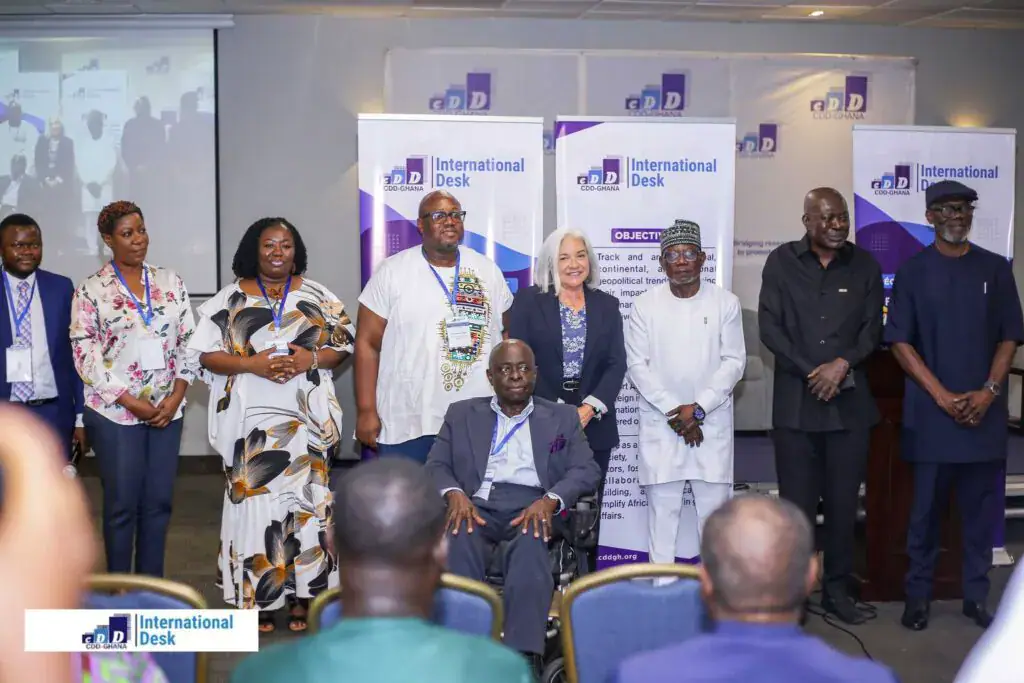
The Centre for Democratic Development (CDD-Ghana) has launched the International Desk to counter such malign influences on democracy. The platform tracks and analyses geopolitical developments within Africa and the Sahel region and examines their implications for democracy. The International Desk aims to monitor and find ways to ensure that the activities of various geopolitical actors support democracy and promote inclusive growth. Emmanuel Yeboah, a research analyst who coordinates the work of the desk, explained the centre's objectives.
Since its launch in April 2025, the Centre has sought to activate its research arm, beginning with a baseline study on foreign powers' interests in Africa. The study is intended as a first step towards building a body of research on how foreign powers may be influencing Africa's information environment. This research will help inform strategies to counter disinformation and promote democratic governance in the region. The centre's efforts aim to promote a more informed public discourse and support democratic development in Ghana and beyond.
The CDD-Ghana International Desk is part of a broader effort to address the challenges posed by Foreign Information Manipulation and Interference (FIMI). FIMI can manifest as a soft power tactic, appealing to audiences in ways that seek to shape their preferences. The centre's work highlights the need for effective countermeasures to mitigate the impact of disinformation on democratic processes. By promoting research and analysis, the International Desk aims to support evidence-based policymaking and public discourse.
The spread of disinformation has significant implications for democratic governance in Africa. By promoting false narratives and glorifying military rule, malign actors seek to undermine the legitimacy of democratic institutions. The CDD-Ghana International Desk is working to counter these trends by promoting research, analysis, and informed public discourse. The centre's efforts aim to support democratic development and promote inclusive growth in Ghana and the broader region.
The CDD-Ghana International Desk provides a model for how democracies in West Africa can counter malign influences on democracy. By tracking and analysing geopolitical developments, the centre aims to promote a more informed public discourse and support democratic development. The centre's work highlights the need for effective countermeasures to mitigate the impact of disinformation on democratic processes.
Key points
- CDD-Ghana launches International Desk to counter Foreign Information Manipulation and Interference.
- The centre's research aims to inform strategies to counter disinformation and promote democratic governance.
- The spread of disinformation has significant implications for democratic governance in Africa.