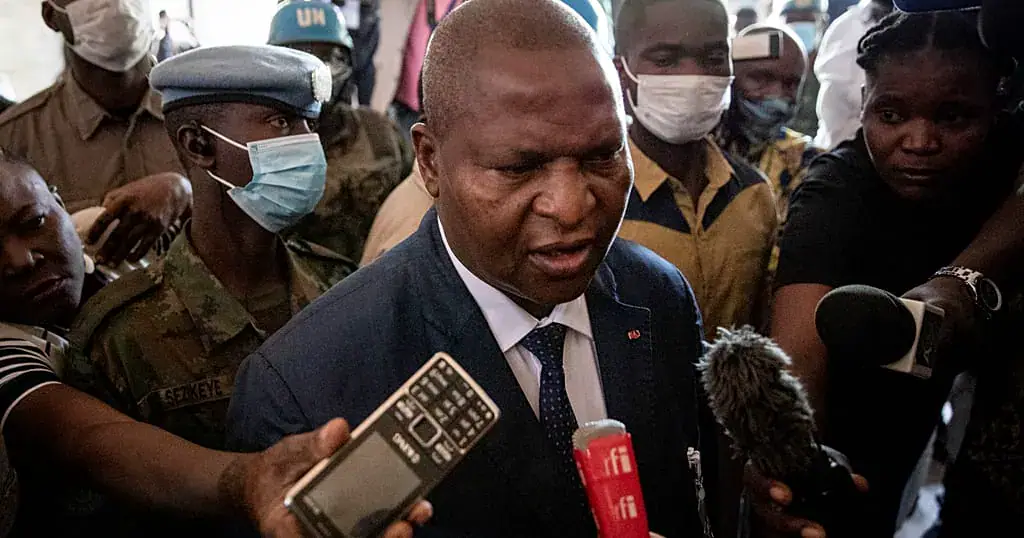
Media outlets in the Central African Republic observed a day without news on Wednesday to highlight the increasing pressure on independent journalism in the country. The strike was a response to recent incidents, including a protest against Radio Ndeke Luka, one of the country's most popular radio stations. The protest, which drew around 100 people, accused the station of anti-government bias. However, the station's management claimed it was an attempt to intimidate them into providing more favourable coverage.
According to Reporters Without Borders, Radio Ndeke Luka has faced increasing pressure since September, including online threats against the station and its supporters. The Union of Central African Journalists stated that Wednesday's strike was not a protest against the government, but rather a call for authorities to condemn threats against journalists and commit to protecting them. The union emphasised the importance of press freedom and the public's right to information.
Participating radio stations were asked to replace their usual news bulletins with a message defending press freedom and the public's right to information. The strike was a show of solidarity with Radio Ndeke Luka and a call to action for the government to take steps to protect journalists. The country's minister of communication has called for a de-escalation of the situation.
A meeting between media outlets and the minister of communication is scheduled for Friday to discuss the situation. The government has acknowledged the concerns of the media and has promised to take steps to address them. However, the details of these steps are yet to be announced. The situation remains tense, with many journalists and media outlets feeling vulnerable to intimidation and pressure.
The Central African Republic has a history of tensions between the government and the media. In recent years, there have been several incidents of journalists being harassed, intimidated, or arrested for their work. The government has been accused of trying to restrict press freedom and silence critical voices. The media community is calling for greater protection and support from the authorities.
The strike by media outlets in the Central African Republic has drawn international attention to the situation. The country's president, Faustin-Archange Touadera, has been criticised for his handling of press freedom. The international community is watching closely, and there are concerns about the impact on the country's democratic development.
The situation in the Central African Republic highlights the challenges faced by journalists and media outlets in many countries. The issue of press freedom and the safety of journalists is a global concern. The Africanews reported that authorities have called for a de-escalation, and a meeting between media outlets and the minister of communication is scheduled for Friday.
Key points
- Media outlets in Central African Republic go dark to protest mounting pressure on independent journalism
- Radio Ndeke Luka has faced increasing pressure since September, including online threats against the station and its supporters
- A meeting between media outlets and the minister of communication is scheduled for Friday to discuss the situation