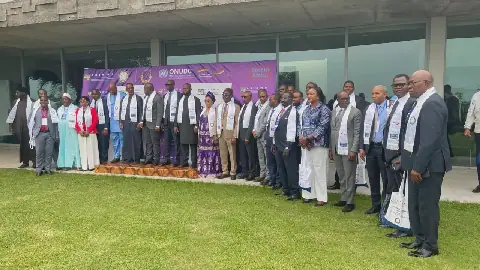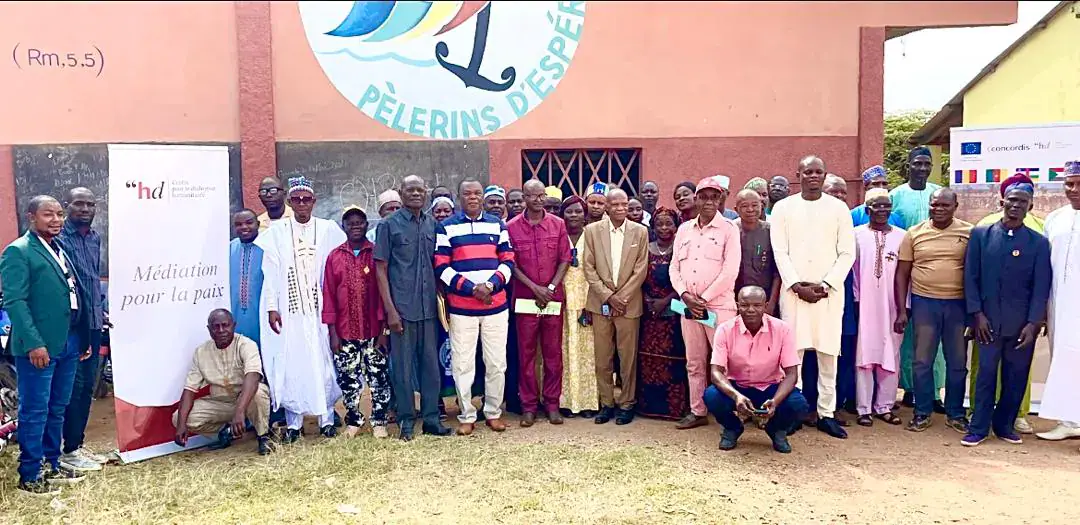
A two-day meeting in Bouar, Central African Republic, brought together mediators from Cameroon and the Central African Republic to enhance their skills in preventing and managing community conflicts related to transhumance. The event, which took place on November 17-18, was organized by the Centre for Humanitarian Dialogue (HD) and attended by around 50 participants from the Central African Republic's Mambéré and Nana-Mambéré prefectures, as well as the Adamaoua region of Cameroon.
The meeting is part of the project "Prevention and mitigation of the impact of local conflicts in border areas of Central Africa," which aims to contribute to the peaceful resolution of conflicts between farmers and herders in border areas of Central Africa. According to Héritier Brillant Ndakpanga, operations manager at the Centre for Humanitarian Dialogue, the objectives of the meeting were to review the mediators' activities in terms of conflict prevention and mitigation, and to strengthen their technical and operational capacities.
The agropastoral mediator networks play a crucial role in preventing tensions between farmers and herders, and were established to promote concerted action against transhumance-related violence. Participants at the meeting in Bouar emphasized the need to strengthen collaboration between the different networks and local authorities. Apollinaire Issa, a participant from Cameroon, noted that the meeting provided an opportunity to learn from colleagues from other communes and to understand the importance of collaborating with administrative and local authorities.
The project was launched in 2019 with the support of the European Union and aims to contribute to the peaceful resolution of conflicts between farmers and herders in border areas of Central Africa. Jean-Norbert Ndiende, sub-prefect of Baboua, highlighted the importance of the mediators in the conflict prevention mechanism, saying that they constitute a key component of the government's efforts to resolve agropastoral conflicts.
The initiative comes at a time when tensions related to transhumance continue to undermine coexistence between communities in several countries in the region. The strengthening of local mediation mechanisms is seen as a means of preventing violence and promoting peaceful coexistence between farmers and herders.
The meeting in Bouar is part of a broader effort to promote peace and stability in the region. The Centre for Humanitarian Dialogue is working to support the development of effective conflict prevention and mitigation mechanisms in border areas of Central Africa.
The training of agropastoral mediators is a key component of this effort, and is expected to contribute to the peaceful resolution of conflicts related to transhumance. By strengthening the capacities of local mediators, the project aims to promote sustainable peace and stability in the region.
Key points
- The project "Prevention and mitigation of the impact of local conflicts in border areas of Central Africa" aims to contribute to the peaceful resolution of conflicts between farmers and herders in border areas of Central Africa.