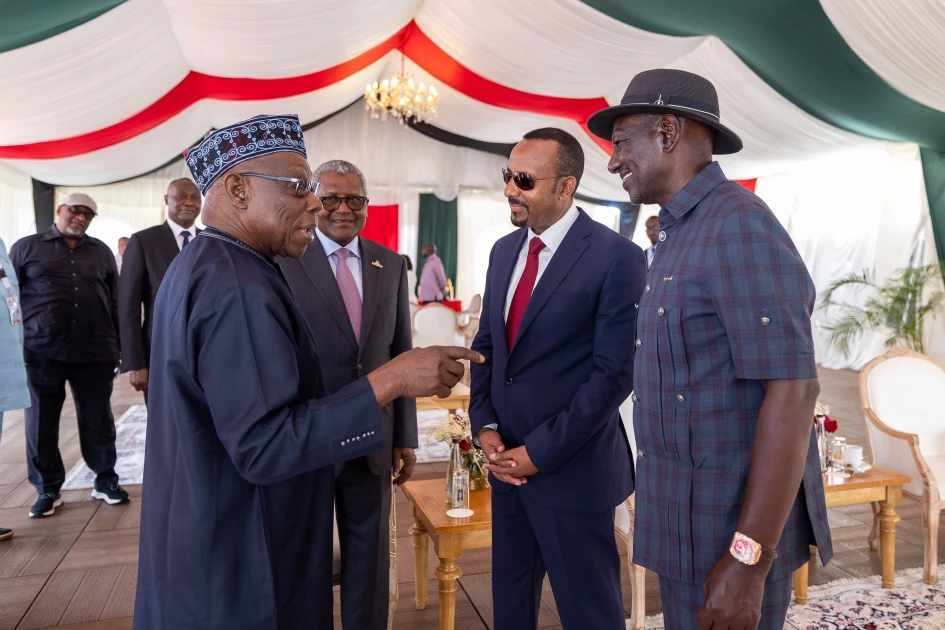
The cement manufacturing business in Africa has been marred by controversy, with leaders recently shedding light on the circumstances surrounding the exit of French investor Lafarge from the continent. At the Lamu refinery groundbreaking ceremony, Former Nigerian President Olusegun Obasanjo and Kenyan President William Ruto weighed in on the matter. Obasanjo alleged that Lafarge did not invest in Africa in good faith, while Ruto celebrated the takeover of the industry by Kenyans and East Africans.
For decades, Lafarge was a dominant player in African cement, with a significant presence in Kenya through Bamburi Cement, which was established in 1951. After merging with Swiss giant Holcim in 2014, its African assets were consolidated. However, the emergence of Nigerian billionaire Aliko Dangote as a major player in the cement industry posed a challenge to Lafarge's dominance. Obasanjo claimed that Lafarge was not pleased with Dangote's rise and put obstacles in his way.
Obasanjo specifically mentioned the experience in Senegal, where Dangote completed a five-million-tonne plant but was unable to produce cement for two years due to a legal fight instigated by Lafarge. According to Obasanjo, Dangote eventually won the case but had to pay $12 million to operate his factory. Obasanjo stated that Lafarge wanted to monopolize the cement market in Africa and prevent others from producing cement.
In Kenya, Lafarge's story ended differently. President Ruto revealed that in 2023, the government imposed a levy on imported cement, prompting Lafarge to choose not to invest further and leave the market. Ruto expressed satisfaction that the cement industry in Kenya is now controlled by East Africans and Kenyans. He also noted that Lafarge was not interested in expanding its operations in Kenya, preferring to import raw materials instead.
Ruto attributed Lafarge's exit from Kenya to its reluctance to invest in expanding its facilities, citing the company's preference for importing clinker from elsewhere. He welcomed the new management of Bamburi Cement, which is now investing in a new facility to increase cement production in Kenya. Meanwhile, Dangote had previously announced plans to build a $400 million cement plant in Kenya but later dropped the project, citing bribe demands and logistical challenges.
Dangote Cement's chief executive has since provided a different reason for the project's abandonment, stating that Kenya lacks a suitable limestone deposit. For now, Kenya is not part of Dangote's medium-term plans. The discussions surrounding Lafarge's exit from Africa have highlighted the complexities of the cement industry and the challenges faced by investors.
The Lamu refinery groundbreaking ceremony brought together several heads of state, including President Ruto and Former President Obasanjo. The event provided a platform for leaders to discuss key issues affecting the continent, including the cement industry and investment climate. The controversy surrounding Lafarge's exit from Africa serves as a reminder of the intricacies of the business environment and the need for investors to navigate complex regulatory and market dynamics.
Key points
- Lafarge's exit from Kenya and Africa was driven by disagreements over investment and market control.
- Obasanjo alleged that Lafarge did not invest in Africa in good faith and put obstacles in the way of other investors.
- President Ruto celebrated the takeover of the cement industry by Kenyans and East Africans after Lafarge's exit.