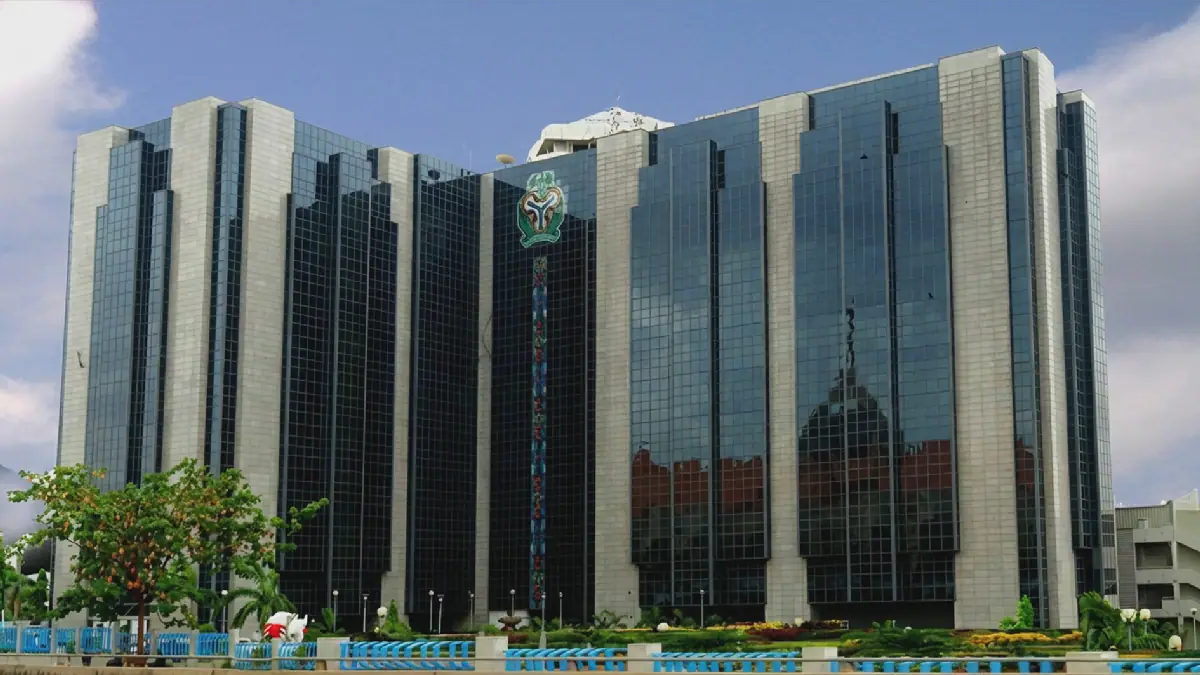
The Central Bank of Nigeria (CBN) appears to be losing its grip on the naira, given the rapid movement in the currency's rate in the last few days. Speculative trading, rising market arbitrage, and a growing spike in foreign exchange (FX) demand have thrown a spanner in the works. The familiar trio of speculative trading, high market arbitrage, and demand shocks threatens to reverse the gains of the past year, raising concerns about market uncertainty and the short-term direction of the local currency.
The CBN's Monetary Policy Committee (MPC) slashed the benchmark interest rate by 3.5 percentage points in September, defying the global trend. CBN Governor Yemi Cardoso said the decision was intended to recalibrate monetary policy transmission. However, some experts warned that the policy option could come with costly trade-offs, including capital outflows and increased pressure on inflation and the exchange rate. The market had remained relatively stable, but the recent fluctuations have raised questions about market liquidity and the adequacy of recent reforms.
The naira's value has been fluctuating, with the dollar touching N1,400 at the Nigerian Foreign Exchange Market (NFEM) on Friday. The local currency closed last week at a weighted average rate of N1,389.73/$, a metric the CBN has adopted as the official exchange rate. Over the five working days of the week, the naira shed 2.6 per cent of its value, while its month-to-date loss stood at three per cent. Despite this, the year-to-date (YTD) value gain remains comfortably in positive territory at approximately three per cent.
The 2027 presidential election represents a significant downside risk to the naira's performance. There are already reports that election spending is contributing to the naira's lackluster performance. In the past, FX market swings were more pronounced during political party primaries than shortly before general elections. However, the 2027 general elections are different from previous ones, with the primaries being less competitive and relying more on President Bola Tinubu's endorsement.
On the demand side, aggregate money balances grew by 25.3 per cent year-on-year (Y/Y) as of September, from N117.79 trillion to N147.6 trillion. This significant uptick, especially when weighed against the moderate expansion in economic activity, has raised concerns about FX demand. Narrow and quasi-money supply, which largely drive FX demand, recorded slower growth of 12.7 and 23.3 per cent, respectively.
The FX market is experiencing significant demand pressure, with interbank turnover spiking since the beginning of November. Last Friday, the figure hit $815.57 million, nearly 3,800 per cent higher than the trading volume recorded on the first day of the month. This month, the daily volume has averaged $114.45 million, the highest since the beginning of the year and more than 18 times the figure recorded in October.
Market arbitrage, measured by the spread between the official and parallel exchange rates, also rose to N70/$, or five per cent, at the weekend. A wider differential between the official and parallel markets is associated with unbridled speculation, round-tripping, and other forms of market manipulation. The CBN has implemented various policies to manage the FX market, but the recent fluctuations have raised concerns about its ability to maintain a stable exchange rate.
Key points
- The CBN's Monetary Policy Committee slashed the benchmark interest rate by 3.5 percentage points in September.
- The naira's value has been fluctuating, with the dollar touching N1,400 at the Nigerian Foreign Exchange Market (NFEM) on Friday.
- The 2027 presidential election represents a significant downside risk to the naira's performance.
Reporting sources
- Exchange rate arbitrage: Is CBN losing grip on the naira? · The Guardian