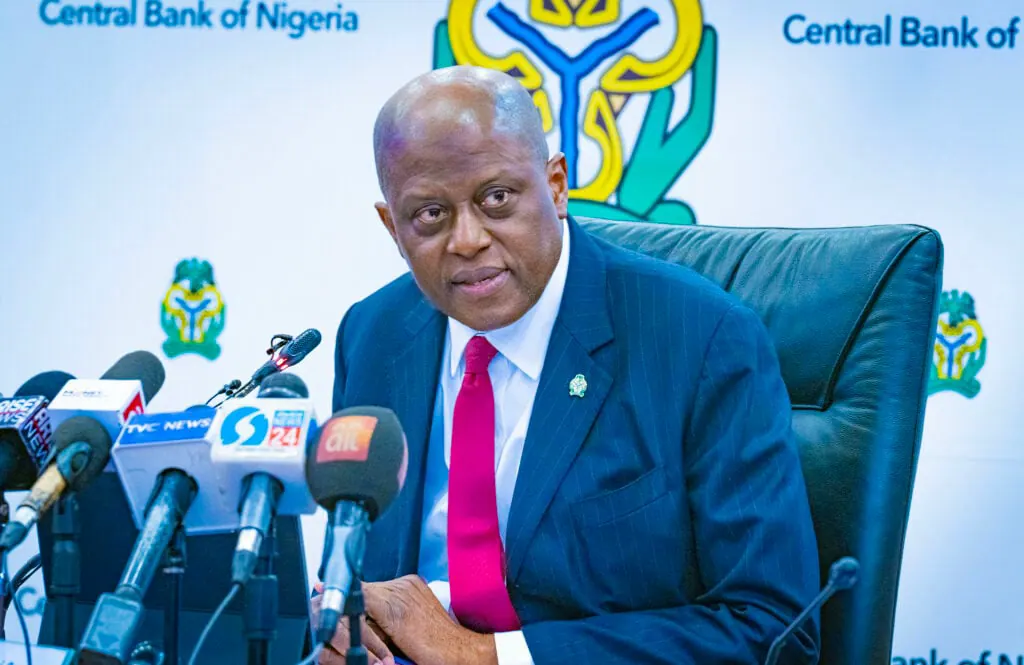
The Central Bank of Nigeria (CBN) has reset its Monetary Policy Rate (MPR) to 23 per cent and adjusted the Standing Facilities Corridor at its 307th meeting held on September 21 and 22, 2026. This move aims to strengthen monetary policy transmission and reinforce the MPR as the principal signal of monetary policy. The CBN described the decision as an "operational reset" rather than a change in the underlying monetary policy stance. The reset is intended to bring the policy framework closer to market realities.
The decision to reset the MPR was driven by the need to address the gap between the official MPR and prevailing market rates. The Monetary Policy Committee (MPC) noted that this divergence had weakened the effectiveness of monetary policy transmission. The CBN's ongoing repair of the monetary policy implementation framework, including the adoption of the Nigerian Overnight Financing Rate (NOFR) as a transaction-based operational benchmark, has improved transparency in money market operations.
Nigeria's inflation rate has shown signs of easing, with headline inflation slowing marginally to 15.39 per cent in August 2026 from 15.43 per cent in July. Food inflation declined from 20.31 per cent in July to 19.57 per cent in August, while core inflation dropped from 14.97 per cent to 13.29 per cent during the same period. The 12-month moving average of headline inflation also continued its decline, falling from 16.89 per cent in July to 16.30 per cent in August.
Nigeria's real Gross Domestic Product grew by 4.43 per cent in the second quarter of 2026, compared with 3.89 per cent in the first quarter. The non-oil sector expanded by 4.31 per cent, up from 3.94 per cent in the preceding quarter. Growth in the non-oil economy was supported largely by increased activity in information and communications technology, crop production, real estate, livestock, financial services, and trade.
Nigeria's external position has also improved, with the country recording a balance of payments surplus of $3.51 billion in the second quarter of 2026, compared with $2.38 billion in the first quarter. The current account surplus increased by 67.92 per cent, rising from $4.49 billion to $7.54 billion. The country's external reserves stood at $55.25 billion as of September 18, 2026, the highest level in 18 years.
The MPC's decision is expected to have implications for businesses, particularly in terms of borrowing costs and access to credit. The recalibration of the monetary policy corridor could improve the transmission of monetary policy into the money market and the wider financial system. However, the immediate decision does not amount to a reduction in the MPR, which remains at 23 per cent.
The CBN's move is also seen as a positive development for the banking industry, which has undergone successful recapitalisation. The MPC noted that the banking industry's capital buffers, resilience, and capacity to finance long-term projects in critical sectors of the economy have been strengthened. The decision is expected to support the ongoing effort to stabilise the macroeconomic environment.
Key points
- The CBN has reset its Monetary Policy Rate to 23 per cent.
- Nigeria's inflation rate has shown signs of easing.
- The country's external reserves have reached a 18-year high of $55.25 billion.