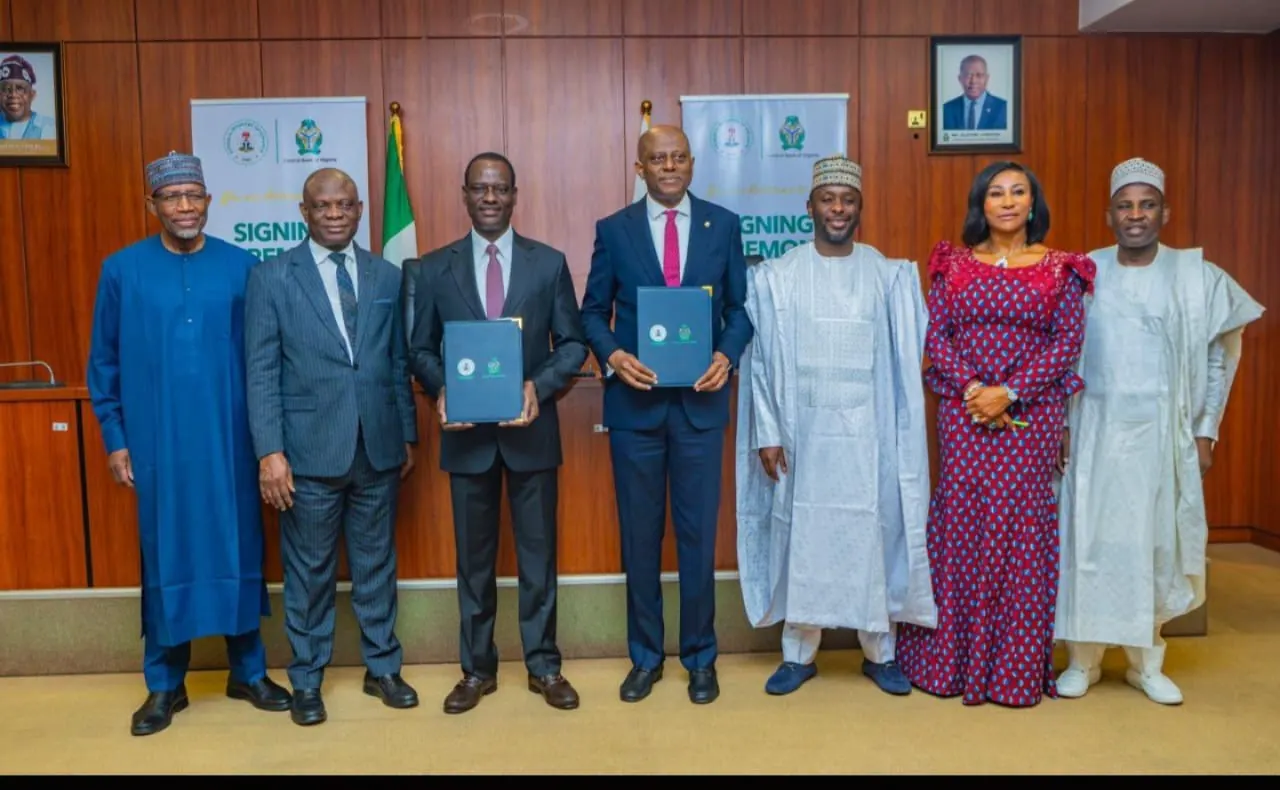
The Central Bank of Nigeria (CBN) and the Federal Ministry of Finance have formalized their cooperation through a Memorandum of Understanding (MoU) on fiscal and monetary policy coordination. This development is considered vital for Nigeria's economic management and sustainability. The MoU establishes a structured framework for information-sharing, aligned macroeconomic assumptions, and the resolution of areas where fiscal and monetary actions might work at cross-purposes.
Experts believe that the institutionalization of regular policy coordination between the CBN and the Ministry of Finance is both timely and economically significant. The agreement aims to ensure that government spending and monetary policy work towards common economic objectives. Both institutions will work with more consistent assumptions and forecasts on key indicators, including inflation, GDP growth, government revenue, liquidity, financing requirements, and the external sector.
The MoU provides for coordinated measures to address inflation, combining disciplined fiscal spending with interventions targeting food, energy, and logistics costs. The government plans to use measures such as strategic grain reserves, farmer support, rural road investment, and engagement with state governments on road levies and infrastructure linking farmers to markets. The government also aims to continue measures to support stability in fuel prices without reintroducing consumption subsidies.
The agreement includes plans to expand and increase the frequency of economic data, such as a Producer Price Index, employment, and productivity statistics. The federal government and the CBN, working with the National Bureau of Statistics, will coordinate government financing and cash management more closely to reduce the risk of public-sector borrowing crowding out credit available to businesses and other private-sector borrowers.
CBN Governor, Olayemi Cardoso, stated that the agreement would deepen cooperation in government cash management, debt issuance, liquidity forecasting, macroeconomic analysis, and policy consultations. He emphasized that the MoU provides a structured framework for regular consultation, information exchange, and policy coordination, which will strengthen collaboration in critical areas.
The CBN Deputy Governor, Corporate Services Directorate, Dr. Muhammad Abdullahi, noted that the agreement had become more important amid global economic uncertainty and geopolitical tensions. He cited developments in the Middle East, noting that disruptions to energy and shipping routes could affect oil prices, government revenue, inflation, capital flows, and financing conditions.
The agreement comes as Nigeria's external position strengthens, with the country recording a balance-of-payments surplus of more than $5 billion in 2025 and foreign-exchange reserves above $55 billion in 2026. The International Monetary Fund, in its 2026 Article IV assessment, noted that reforms since 2023 have strengthened macroeconomic stability, rebuilt external buffers, and improved foreign-exchange market functioning.
Key points
- The MoU aims to align policy coordination, curb inflation, and manage debt.
- The agreement provides for more structured information-sharing between the CBN and the Ministry of Finance.
- The MoU supports regular consultations, information sharing, joint technical analysis, scenario planning, and stress testing.