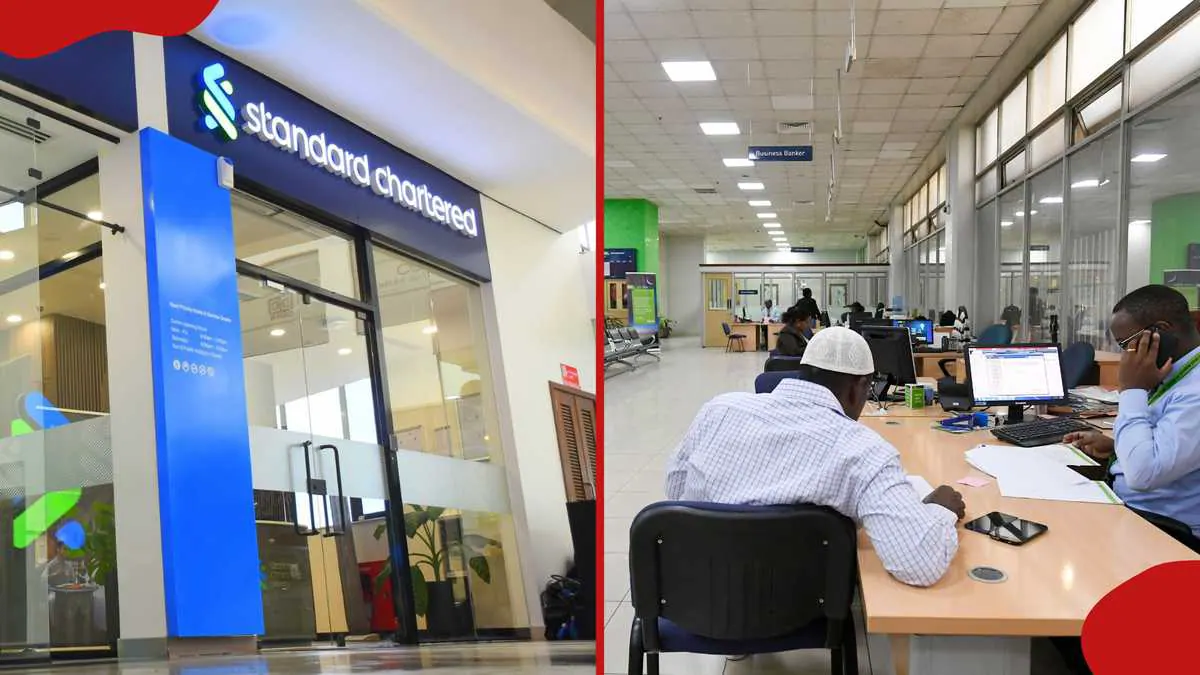
The Central Bank of Kenya (CBK) has released its Bank Supervision Annual Report for 2025, which reveals that Standard Chartered Bank Kenya has been demoted from the Tier One banking group. This decision was made due to the bank's market-size index falling to 4.5% in 2025, down from 5.4% in 2024, which is below the 5% threshold required for large-bank classification. The CBK uses a composite market-size index to assign banks to peer groups, taking into account total net assets, total deposits, shareholders' funds, and the number of deposit and loan accounts.
As a result of this demotion, Kenya's Tier One banking group has shrunk from nine to eight members. KCB Bank Kenya has strengthened its dominance at the top of the rankings, with its index climbing to 17.3% from 16.6% in the previous year. The bank reported total net assets of KSh 1.497 trillion and deposits of KSh 1.151 trillion as of December 2025. Equity Bank Kenya held second place at 11.8%, with net assets of KSh 1.04 trillion and deposits of KSh 849.1 billion.
The top eight banks in Kenya by market share are: KCB Bank Kenya, Equity Bank Kenya, Co-operative Bank of Kenya, NCBA Bank Kenya, Absa Bank Kenya, Stanbic Bank Kenya, I&M Bank, and Diamond Trust Bank Kenya. Co-operative Bank of Kenya ranked third at 9.4%, followed by NCBA Bank Kenya at 7.9%. Absa Bank Kenya secured fifth place with an index of 6.4%, while Stanbic Bank Kenya came sixth at 5.8%.
I&M Bank and Diamond Trust Bank Kenya both recorded indices of 5.6%, placing them seventh and eighth, respectively. Standard Chartered Bank Kenya now sits ninth in the overall rankings with net assets of KSh 364.4 billion and deposits of KSh 284.7 billion. The bank's slip to the Medium Peer Group has significant implications for its operations and reputation in the Kenyan banking sector.
Despite Standard Chartered's demotion, Kenya's banking sector has posted strong results. The total net assets across all commercial banks rose 10.3% to KSh 8.35 trillion in December 2025, up from KSh 7.57 trillion a year earlier. Customer deposits grew 11.6% to KSh 6.12 trillion over the same period. Pre-tax profit for the sector reached KSh 306.3 billion, a 17.7% increase from KSh 260.3 billion in December 2024.
The CBK attributed the profitability surge to a sharper decline in total expenses compared to the reduction in total income. Asset quality also improved marginally, with the ratio of gross non-performing loans to gross loans easing to 16.0% from 17.1% in December 2024. The total capital adequacy ratio stood at 20.7% in December 2025, well above the minimum requirement of 14.5%.
In other news, the CBK has proposed new National Payment System regulations that would overhaul licensing and capital requirements for mobile money operators, banks, fintechs, and other payment service providers. The proposed law would give CBK powers to suspend licences, take control of a payment company's assets, and appoint statutory managers. Payment providers would have to ring-fence customer funds and comply with consumer and data-sharing requirements.
Key points
- Standard Chartered Bank Kenya was demoted from Tier One banking group due to its market-size index dropping to 4.5%.
- KCB Bank Kenya retained the top position in the rankings with an index of 17.3%.
- The Kenyan banking sector recorded a 17.7% increase in pre-tax profit to KSh 306.3 billion in December 2025.