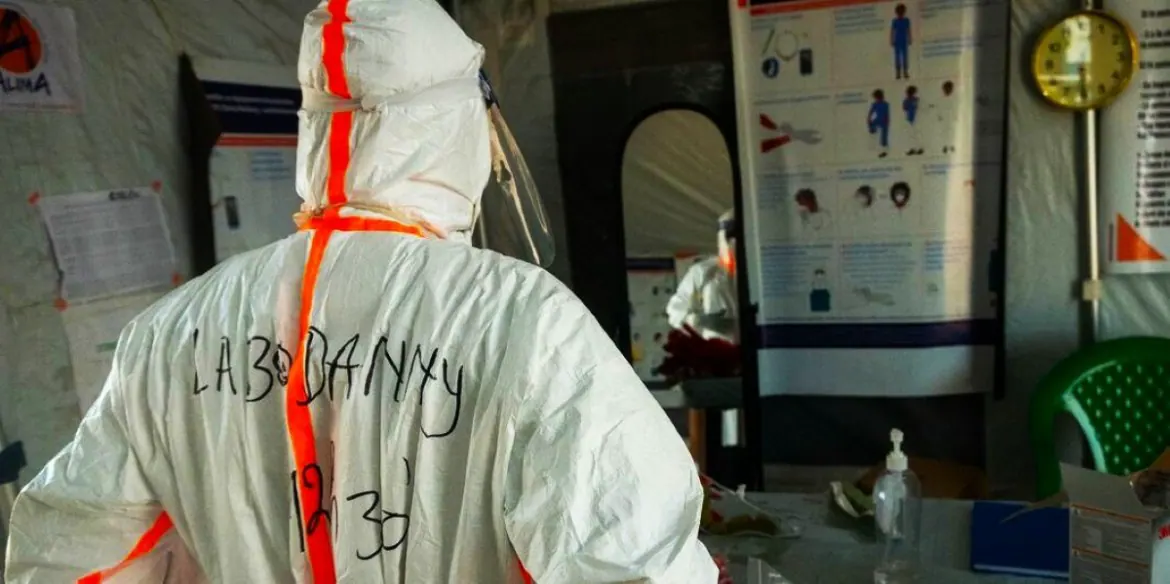
The Ebola outbreak in the Democratic Republic of Congo has claimed over 3,700 lives, according to the United Nations World Health Organization (WHO). In the last 21 days, cases of infection have decreased by 26% in Ituri province and 15% in Haut Uele province. However, North Kivu province has seen a 73% increase in cases, indicating a different transmission profile in the seven affected provinces.
The WHO Regional Emergency Director for Africa, Dr. Marie Roseline Belizaire, stated that while cases are declining in some provinces, they continue to rise in others, showing that the outbreak is still not under control. One of the greatest concerns is that many people are dying before reaching treatment. Around one in three new cases are identified after people have died outside Ebola treatment centers, in the community.
Children under five are at the highest risk, with a case fatality rate of over 60%, compared to approximately 40% among adults. Ebola infections in children under 5 are difficult to detect because they cannot explain their symptoms as well as adults, and the presentation of symptoms may be confusing. Youngsters also account for a disproportionate share of those dying in the community and in health facilities where Ebola is not diagnosed in time.
The WHO and partners are expanding their response across affected provinces, with nearly 1,400 treatment and isolation beds across 49 Ebola treatment centers. There are also 25 laboratories capable of processing up to 2,500 tests every day. However, infrastructure alone will not stop the outbreak, and the WHO emphasizes the need to direct teams, expertise, and resources to areas where transmission is greatest and risks are high.
Dr. Catherine Smallwood, a WHO medic, highlighted the massive mobilization of responders in recent weeks, particularly in rural areas of DR Congo. However, finding partners to work within health facilities is a significant challenge, and the human resources gap is one of the biggest gaps. The WHO needs to shift the response from urban centers to remote villages, where distances are long, and patients take a long time to be referred to urban centers.
The Ebola disease is a severe, often fatal illness affecting humans and other primates. The virus is transmitted to people from wild animals and then spreads through direct contact with infected people's bodily fluids. The average Ebola disease case fatality rate is around 50%, according to the WHO. The 2014-2016 Ebola virus disease outbreak in West Africa was the largest and most complex since the virus was first discovered in 1976.
Ongoing efforts to ramp up the disease outbreak response have contributed to a higher success rate in tracing contacts of infected people, now at almost 88%. However, too many new infections are still being detected without a known epidemiological link, and closing the surveillance gap is essential. The WHO aims to detect cases earlier, trace their contacts, and interrupt every chain of transmission to bring the outbreak under control.
Key points
- The Ebola outbreak in DR Congo has claimed over 3,700 lives, with children under five being disproportionately affected.
- The outbreak is still not under control, with cases declining in some provinces but rising in others.
- The WHO emphasizes the need to direct resources to areas where transmission is greatest and risks are high to bring the outbreak under control.