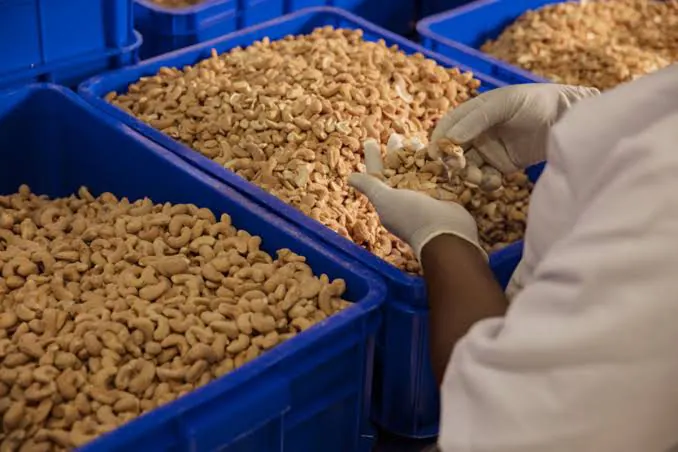
Tanzania is seeking to boost its cashew processing capacity to retain a greater share of the crop's value locally and increase production to one million tonnes of raw cashew nuts annually by 2030. The country's limited processing capacity presents significant investment opportunities in the agricultural value chain, including processing, storage, transport, drying, and other support services.
The Director of Crop Development in the Ministry of Agriculture, Dr Yasinta Nzogela, emphasized the government's focus on promoting private-sector investment in the agricultural sector. She stated that Tanzania can no longer focus mainly on producing and exporting raw agricultural commodities, missing out on opportunities to generate greater value through local processing. The government is ready to work with companies and institutions to facilitate investment and promote modern technologies aimed at improving production, quality, and the value of Tanzanian agricultural products.
According to Ministry of Agriculture statistics, Tanzania produced 617,683.77 tonnes of cashew nuts during the 2025/26 season, against a target of 700,000 tonnes. The country aims to increase annual production to one million tonnes by 2030, creating further demand for processing facilities and related infrastructure. Expanding processing capacity would help reduce post-harvest losses, increase farmers' incomes, create employment, and ensure a greater share of the value generated from agricultural products remains in Tanzania.
Currently, Tanzania processes less than 30 per cent of its cashew production, leaving substantial room for investors to establish processing and value-addition facilities. Akross Ltd Director of Marketing and Exports, Jackson Joel, noted that the biggest challenge faced is limited processing capacity. Akross is expanding its operations through a new processing facility with an initial capacity of 50 tonnes per session, which is expected to increase to between 70 and 100 tonnes a day when operating at full capacity.
Increased investment in processing would enable Tanzania to add value before export while creating jobs and stimulating economic activities in areas where processing facilities are established. Every processing plant requires permanent and temporary workers, meaning increased investment could generate employment while supporting businesses providing transport, packaging, logistics, and other services.
Expanded processing would also provide farmers with a nearby and more reliable market because processors purchase raw cashews through primary cooperative societies. Another opportunity is the Chinese market, following a zero-tariff agreement, although Tanzania still needs to complete registration procedures required for cashew products to enter the market. Completing the procedures would enable Tanzanian processors to access the large Chinese market and increase exports of value-added cashew products.
The investment opportunities in Tanzania's cashew sector extend beyond processing itself, with potential for growth across storage, transportation, packaging, logistics, and other services supporting the cashew value chain. With the government's vision to produce one million tonnes of cashew nuts by 2030, processing 50 per cent of the produce would translate to 500,000 tonnes being processed in Tanzania, creating significant opportunities for investors and stakeholders in the sector.
Key points
- Tanzania aims to increase annual cashew production to one million tonnes by 2030.
- The country currently processes less than 30 per cent of its cashew production.
- Expanded processing capacity could generate employment and stimulate economic activities in areas where processing facilities are established.