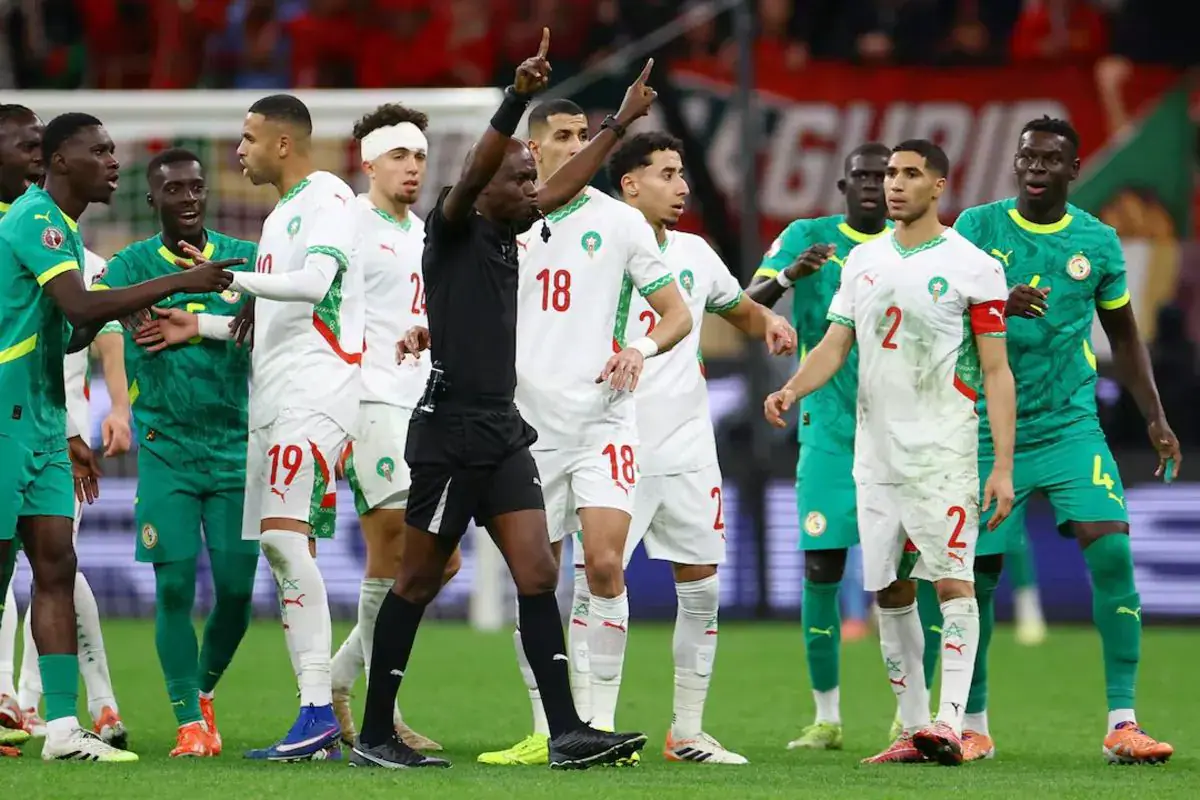
The Court of Arbitration for Sport has ruled in favour of Senegal, reinstating them as Africa Cup of Nations champions. This decision reinforces a fundamental principle of football: that referees' decisions on the field are generally final. The Swiss-based court upheld Senegal's appeal against the Confederation of African Football's decision to strip them of the title and award Morocco a 3-0 victory.
The controversy began during the January final in Rabat, when Senegal's players left the pitch for 14 minutes in protest after a penalty was awarded against them. The players returned, Morocco missed the penalty, and Senegal scored the winning goal in extra time. Morocco initially challenged the result, but its appeal was rejected before CAF's Appeal Board overturned the decision, ruling that Senegal had forfeited the match.
The Appeal Board's ruling relied on Article 82 of the tournament regulations, which states that a team can lose and be eliminated if it leaves the field before the end of a match without the referee's permission. However, referee Jean-Jacques Ndala of the Democratic Republic of Congo did not abandon the match, instead waiting for Senegal's players to return before allowing play to resume.
The CAS ruling cited Law 5 of the Laws of the Game, which states that decisions by referees on facts connected with play, including the result of a match, are final. The rules also limit the circumstances in which a referee can change a decision after play has restarted. This principle does not mean that every match result is beyond challenge, as FIFA has previously ordered matches to be replayed after finding evidence of deliberate manipulation by match officials.
In 2017, FIFA ordered a replay of a 2016 World Cup qualifier between South Africa and Senegal after Ghanaian referee Joseph Lamptey was found guilty of match manipulation. Senegal won the replay 2-0 to secure qualification for the 2018 World Cup. However, there has been no suggestion of wrongdoing by Ndala in the AFCON final, and his decision to allow the match to continue was central to the CAS ruling.
CAS Secretary General Matthieu Reeb stated that the panel found that referee Ndala did not commit any error of law. The ruling has significant implications for the sport, as it reasserts the authority of referees and the importance of respecting their decisions on the field. Former Champions League final referee Clement Turpin has described elite-level officiating as the management of extreme situations.
Turpin emphasized that referees must make the correct decisions rather than simply the popular ones. The CAS ruling has provided clarity on this issue, and Senegal can now celebrate their Africa Cup of Nations title without uncertainty. The team's victory was hard-won, and the CAS decision ensures that their achievement is recognized and respected.
Key points
- The CAS ruling reinforces the principle that referees' decisions on the field are generally final.
- The decision has significant implications for the sport, reasserting the authority of referees and the importance of respecting their decisions.
- The ruling provides clarity on the issue, allowing Senegal to celebrate their Africa Cup of Nations title without uncertainty.