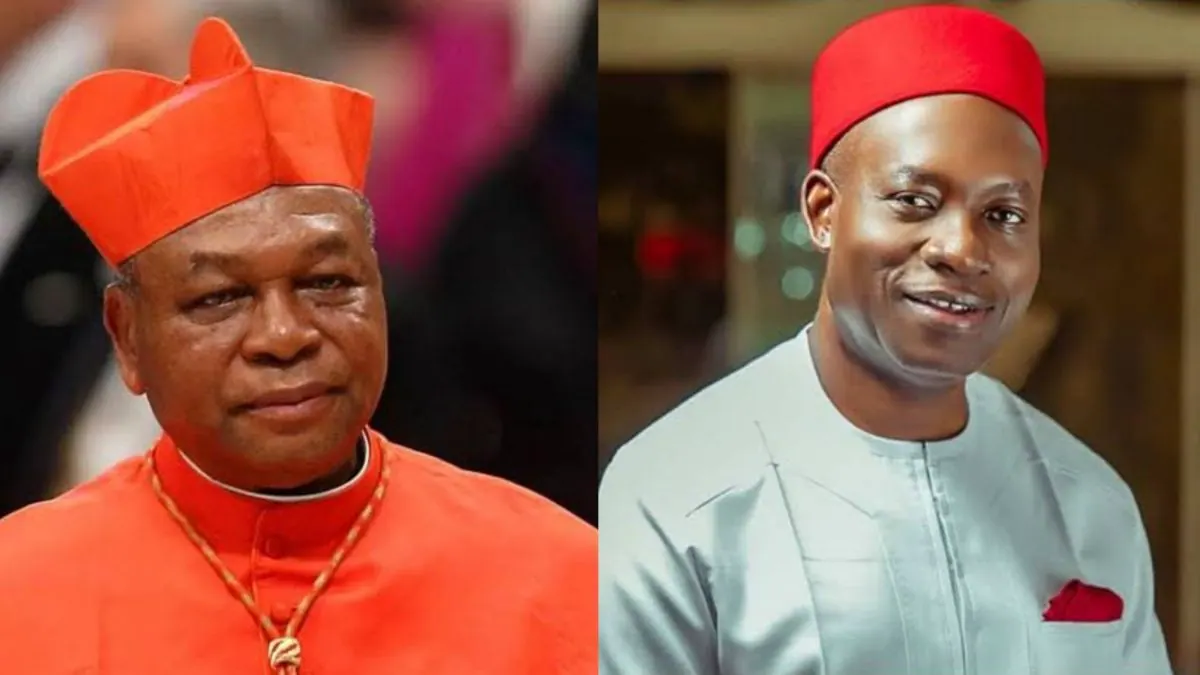
Catholic Archbishop Emeritus of Abuja Archdiocese, Cardinal John Onaiyekan, has spoken out against state governors influencing voters' decisions in the upcoming 2027 presidential election. He emphasized that voters, particularly in the South-East, should be allowed to freely decide who they want to elect. Onaiyekan stressed that governors have only one vote, just like every other eligible citizen, and should not dictate the voting choices of citizens.
Onaiyekan's comments were made in Enugu while discussing Nigeria's electoral process and concerns over the credibility of elections ahead of the 2027 general elections. He argued that elections should not be treated as an overly complicated exercise and that electoral authorities should be able to conduct polls freely and fairly. The cleric expressed dissatisfaction with the quality of elections conducted in Nigeria, stating that the country had yet to achieve the standard of seriousness required of a democratic electoral process.
The cardinal's remarks come in response to recent comments made by Governor Chukwuma Soludo of Anambra. Soludo had urged voters in Anambra and the wider South-East to adopt a strategic approach to elections, suggesting that they should not "waste" their votes on politicians who had not yielded significant benefits for the Igbo. Soludo questioned the contributions of unnamed politicians to the development of the South-East and promoted the All Progressives Grand Alliance (APGA) as a platform to secure Igbo interests.
Onaiyekan maintained that the ultimate decision on who should lead the country belongs to voters and should not be dictated by political office holders. He also spoke about the Independent National Electoral Commission (INEC) and its new chairman, Joash Amupitan, noting that Amupitan had promised to improve the electoral process. The cardinal expressed hope that Amupitan would fulfill his promise and make a positive impact on Nigeria's electoral process.
The Catholic bishops, including Onaiyekan, had raised concerns about Nigeria's political environment during a meeting with President Bola Tinubu. They warned the President that the political space was becoming unstable and that the conduct of free and fair elections was under threat. Onaiyekan emphasized the need for the government to ensure that the electoral process is fair, transparent, and free from manipulation.
Onaiyekan's call for a free and fair electoral process is echoed by many Nigerians who are concerned about the credibility of the country's elections. The 2027 presidential election is expected to be a crucial one, with many Nigerians looking forward to a peaceful and democratic transfer of power. The cardinal's comments serve as a reminder to politicians and electoral authorities of the importance of upholding the integrity of the electoral process.
The issue of electoral reform and the need for a free and fair electoral process has been a longstanding one in Nigeria. With the 2027 presidential election approaching, stakeholders are calling for a renewed focus on ensuring that the electoral process is transparent, credible, and free from manipulation. The cardinal's comments are a timely reminder of the importance of this issue and the need for collective action to ensure that Nigeria's democracy is strengthened.
Key points
- Cardinal Onaiyekan cautions governors against influencing voters' decisions in the 2027 presidential election.
- The cardinal emphasizes the need for a free and fair electoral process, citing concerns over the credibility of Nigeria's elections.
- Governor Soludo had urged voters in Anambra and the South-East to adopt a strategic approach to elections, promoting the All Progressives Grand Alliance (APGA) as a platform to secure Igbo interests.