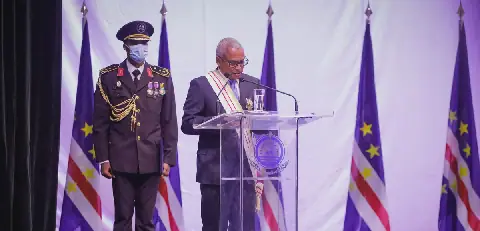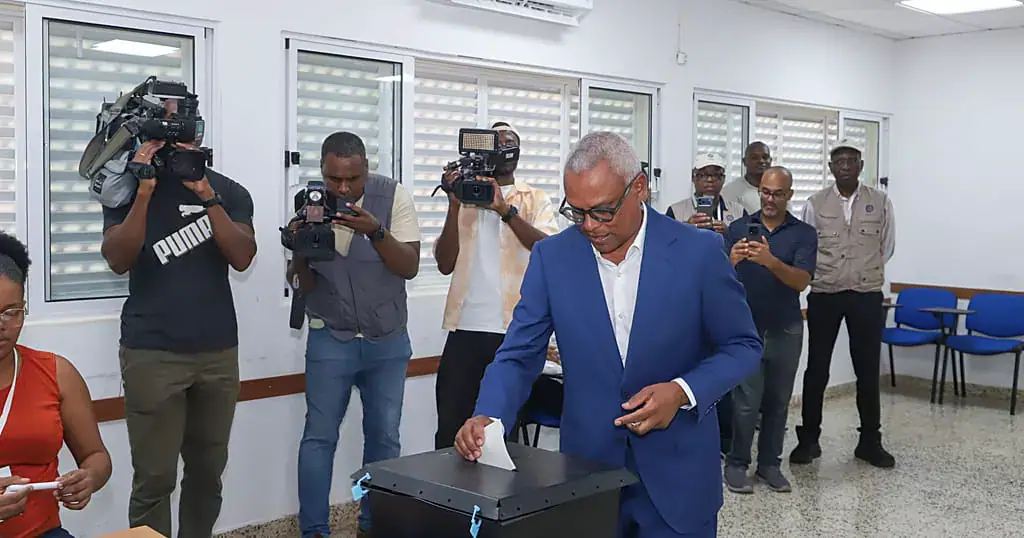
Cape Verde's President Jose Maria Neves is projected to win re-election with nearly 64% of the vote, according to results with 98% of votes counted. Neves, the incumbent president, cast his ballot during the presidential elections in Praia, Cape Verde, on November 15, 2026. The African Party for the Independence of Cape Verde, which backs Neves and controls the government and most municipalities, won a parliamentary majority in May, ending a decade of rule by the Movement for Democracy.
Neves claimed victory on Sunday evening, promising to build cross-party support to improve housing, healthcare, and education, and create jobs. In his address to supporters, Neves emphasized his commitment to being a president for all Cabo Verdeans, regardless of their political and social sensibilities. He stated that the president of the republic is not just about the majority vote, but for everyone, and that he would work to forge the union of all Cabo Verdeans in the islands and in the diaspora.
Official results show a turnout of around 32% of the more than 400,000 eligible voters. The country's first-ever female presidential candidate, Joana Rosa, came second with 31.5% of the vote. The West African archipelago has a history of competitive elections and peaceful transfers of power, and is considered a model of democracy in Africa, with strong economic growth.
Under Cape Verde's parliamentary system, the prime minister directs policy and holds most executive power, while the directly elected president's role is largely ceremonial, although the office carries the power to veto legislation. Neves was first elected president in 2021 and previously served as prime minister and president of the African Party for the Independence of Cape Verde (PAICV) from 2001 to 2016.
In July, the World Bank classified Cape Verde as an upper-middle-income country, thanks to economic growth in the tourism sector. However, the country faces many challenges, including persistent social inequality, geographic isolation, and a lack of affordable options for traveling between islands. The population's major concerns include the increased cost of living, fuel prices, and youth unemployment.
Neves has a long history of public service, having also served as a mayor and a lawmaker. His re-election is seen as a significant development in the country's politics, with implications for the future of the African Party for the Independence of Cape Verde and the country's democratic institutions.
The international community has taken note of Cape Verde's democratic progress, with the country's history of peaceful transfers of power and competitive elections serving as a model for other African nations. As Neves begins his second term, he will face the challenge of addressing the country's pressing social and economic issues, while maintaining the country's democratic stability and momentum.
Key points
- Neves' re-election is seen as a significant development in the country's politics, with implications for the future of the African Party for the Independence of Cape Verde and the country's democratic institutions.