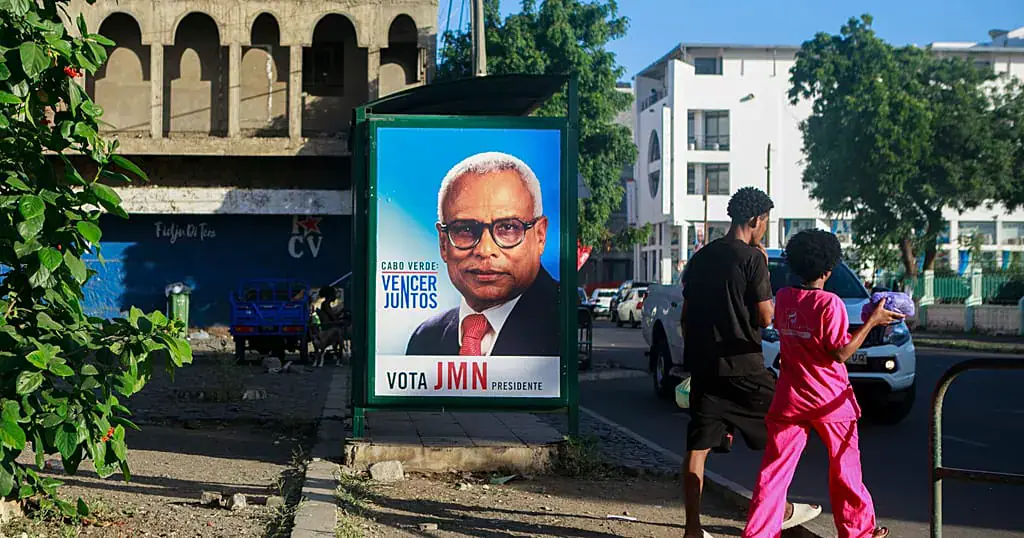
Cape Verde is set to hold its presidential election on Sunday, with incumbent President José Maria Neves vying for a second term. Neves is considered the frontrunner in the election, which is seen as a test of the archipelago's democratic stability. The Portuguese-speaking island nation, located off the coast of Senegal, is widely regarded as one of Africa's strongest democracies.
The election features six candidates, with Neves facing his main challenger, Joana Rosa Amado, a former justice minister seeking to become the country's first female president. Amado's candidacy has garnered significant attention, and her potential victory could mark a significant milestone for women's representation in Cape Verdean politics.
Cape Verde has been experiencing growing international attention in recent years, particularly following its national football team's historic World Cup debut and impressive run to the knockout stages. The country's tourism industry is also booming, accounting for around a quarter of its economy. This growth has contributed to increased economic opportunities for the island nation.
Despite these successes, challenges persist in Cape Verde, including rising living costs, youth unemployment, social inequality, and the continued emigration of young professionals. The country is heavily reliant on its diaspora, whose population abroad is estimated at nearly three times its resident population. These factors are likely to be key considerations for voters in the upcoming election.
The election is also significant in the context of the broader region, which has been increasingly affected by coups and political instability. Cape Verde's democratic reputation is widely regarded as a stability factor, and the outcome of the election will be closely watched by regional and international observers.
As voters prepare to choose their next president, the key question is whether Cape Verde can maintain its democratic reputation while addressing the economic and social pressures facing its people. The election outcome will likely have implications for the country's future development and its relationships with international partners.
The incumbent president's party has not released an official statement on the election campaign, but Neves has previously emphasized the importance of continuing to develop the country's economy and addressing social challenges. The election results will provide insight into the country's priorities and the future direction of its government.
Key points
- Incumbent President José Maria Neves is seeking a second term in the presidential election.
- The election features six candidates, including Neves and his main challenger, Joana Rosa Amado.
- The outcome of the election will be closely watched by regional and international observers due to its implications for Cape Verde's democratic stability.