Canadian Prime Minister Mark Carney has disclosed that the country is preparing for a potential US invasion, despite the likelihood being low. In an interview with the New York Times, Carney stated that as the US-Canada relationship evolves under the Donald Trump presidency, it is essential to consider all possibilities. This move comes after Trump's comments on making Canada the 51st state and imposing global tariffs.
The US-Canada relationship has historically been strong, with both countries collaborating on defense and trade. However, Trump's presidency has introduced uncertainty, prompting Canada to reassess its preparedness. A Leger poll conducted in January revealed that over 30% of Canadians believed a US invasion was likely. Military experts, including Lt-Gen Christopher Coates, a former Royal Canadian Air Force officer, consider an invasion a long shot due to the countries' integrated defense systems.
Canada and the US are members of the North Atlantic defense alliance, NORAD, and frequently share intelligence. Coates, who served on Nato missions, believes that if an attack were to occur, it would likely begin with discreet means like cyberwarfare rather than an armed assault. This perspective is shared by other military experts, who point to the multiple ways the two countries work together on defense.
Historically, Canada and the US have not always been allies. In the 18th and 19th centuries, the US attempted to invade British North American colonies, which later became Canada. Tim Foran, a researcher with the Canadian War Museum, notes that fear of the United States is foundational to Canada's identity. The country's formation as a collection of British North American colonies that remained loyal to the British Crown has contributed to this perspective.
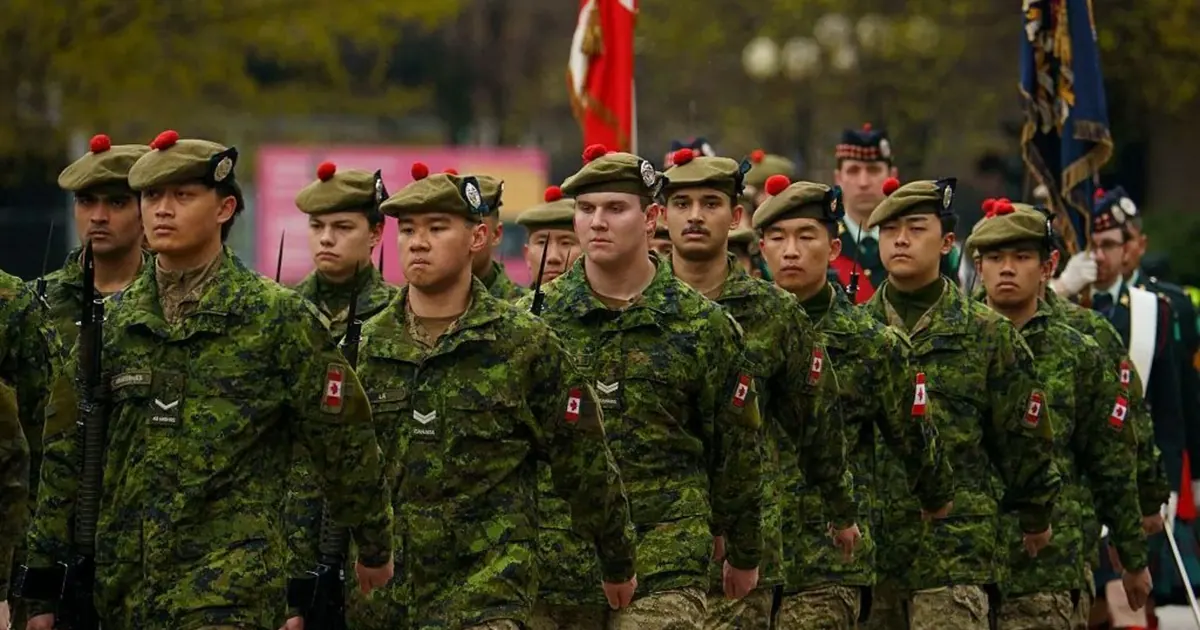
In the event of a US invasion, Canada's military strategy would involve guerilla-type warfare, as its forces would be outnumbered. Allied nations like France and Britain would be called upon to provide support and defense. According to a model used by the Canadian military, a US attack would overwhelm Canada's strategic positions within a week. This scenario is considered unlikely but is being taken seriously by Canadian leaders.
Matthew Schmidt, an associate professor of national security at the University of New Haven, notes that Canadian preparations reflect the significant shift in the global order. He adds that Canadian leaders have hard questions to ask about their continued partnership with the American military. Schmidt emphasizes that Americans may not take Trump's comments seriously, but Canadians clearly do and are prepared to defend themselves if needed.
Canada's defense chief has called for a significant increase in the size of its military, including the addition of up to 300,000 lightly trained citizen soldiers. This move is part of Canada's efforts to enhance its preparedness in an era of unpredictable geopolitics. While a US invasion remains unlikely, Canada's planning and preparations demonstrate its commitment to national security and defense.
Key points
- Canada is preparing for a potential US invasion despite the low likelihood.
- The US-Canada relationship has evolved under the Trump presidency, introducing uncertainty.
- Military experts consider an invasion a long shot due to integrated defense systems.