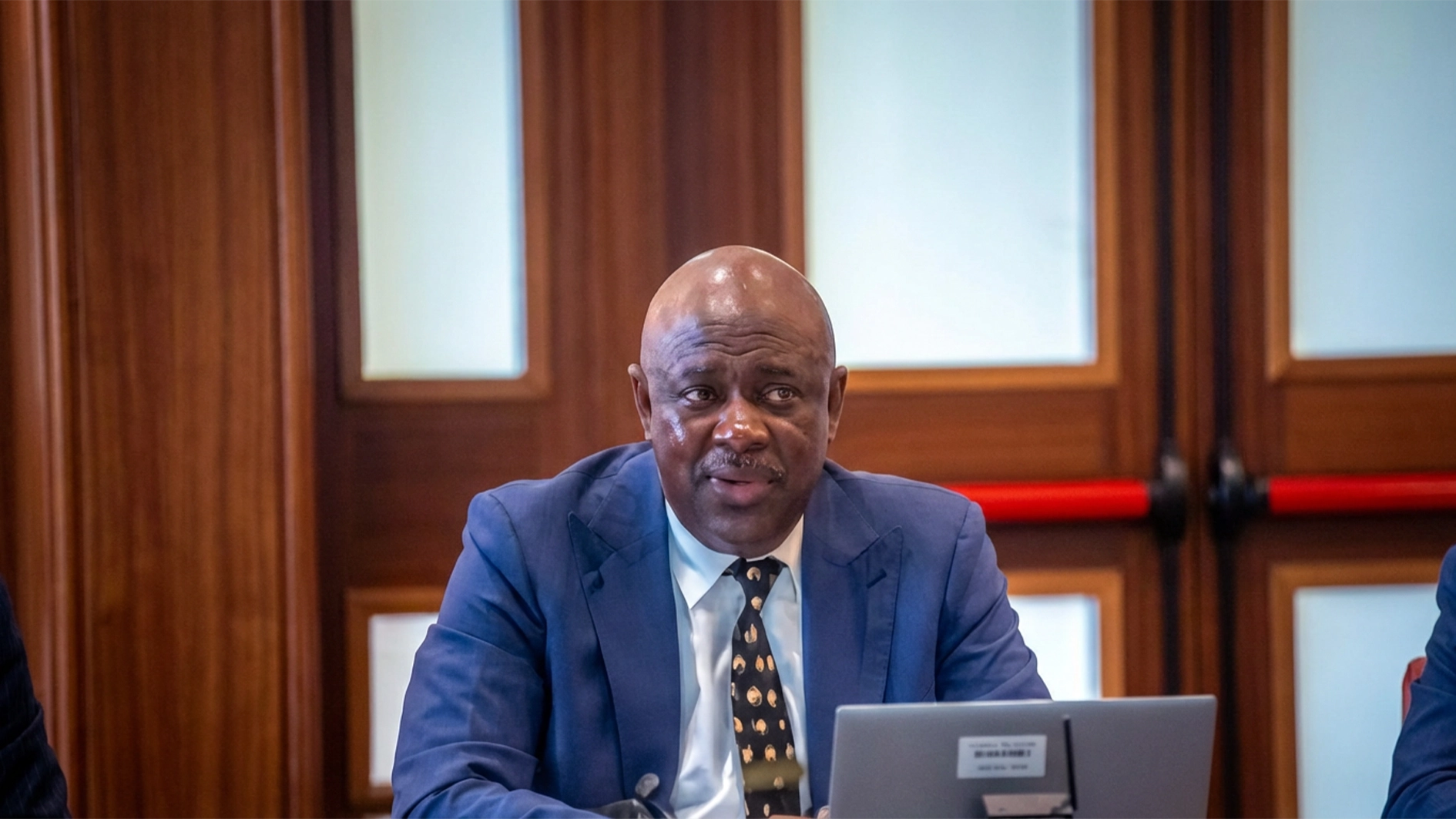
Nigeria's crude oil production has seen a significant increase of 80 percent over the last three years, under the current administration. The Minister of State for Petroleum Resources, Heineken Lokpobiri, disclosed this during an interactive session with selected media organisations from the Niger Delta at the Bayelsa State Government House. According to Lokpobiri, the country's crude oil production has risen to 1,824,000 barrels per day.
When Lokpobiri took over the office, Nigeria's crude oil production was less than 1 million barrels per day of crude and condensate. The Minister's revelation was followed by commendation from the Chief Executive Officer of Rehoboth Media, Susie Ogun, who praised President Bola Tinubu for the progress and greater stability in Nigeria's petroleum sector. Ogun cited the reforms, increased production, investments, and renewed activities across the industry as notable achievements.
Ogun appreciated President Tinubu for the appointment of Lokpobiri, describing it as a decision that had contributed to developments in the sector. She added that Lokpobiri's performance had positioned Nigeria as one of the global oil and gas destinations and investment-ready. According to her, there are a lot of investments and impacts on the nation's economy through the oil and gas sector, which this government had achieved.
Lokpobiri highlighted that before this government came, there was zero investment in Nigeria's oil and gas sector for over 10 years. However, today, 60 percent of investments are coming to Africa in the oil and gas sector. He also spoke on the President's effort to increase rig counts, saying that when this government came, there were about 10 active rigs in the country, but now there are over 70 active rigs.
The Minister highlighted investments by Shell and ExxonMobil, Bonga North, H.I., Bonga Southwest, and Zabazaba in the deep shore. He noted that initially, International Oil Companies (IOCs) dominated 90 percent of Nigeria's oil production, but today, indigenous companies account for about 60 percent of local production. This shift indicates a significant change in the industry's dynamics.
Reacting to concerns that proceeds from subsidy removal were not being judiciously used, Lokpobiri explained that most of the proceeds are shared among the three tiers of government. He emphasised the need for citizens to hold their state and local governments accountable. According to him, over ₦2 trillion is being shared, which has enabled states to pay salaries and pensions and execute capital projects.
Lokpobiri further explained that at the federal level, the funds are targeted at new initiatives such as student loans, social investments, and Compressed Natural Gas (CNG). The Minister's comments suggest that the government is working to ensure transparency and accountability in the use of subsidy removal proceeds.
Key points
- Nigeria's crude oil production has increased by 80 percent over the last three years, reaching 1,824,000 barrels per day.
- The country's oil and gas sector has seen significant investments, with 60 percent of investments coming to Africa in the sector.
- The government has increased the number of active rigs from 10 to over 70, indicating enormous activity and investment in the sector.