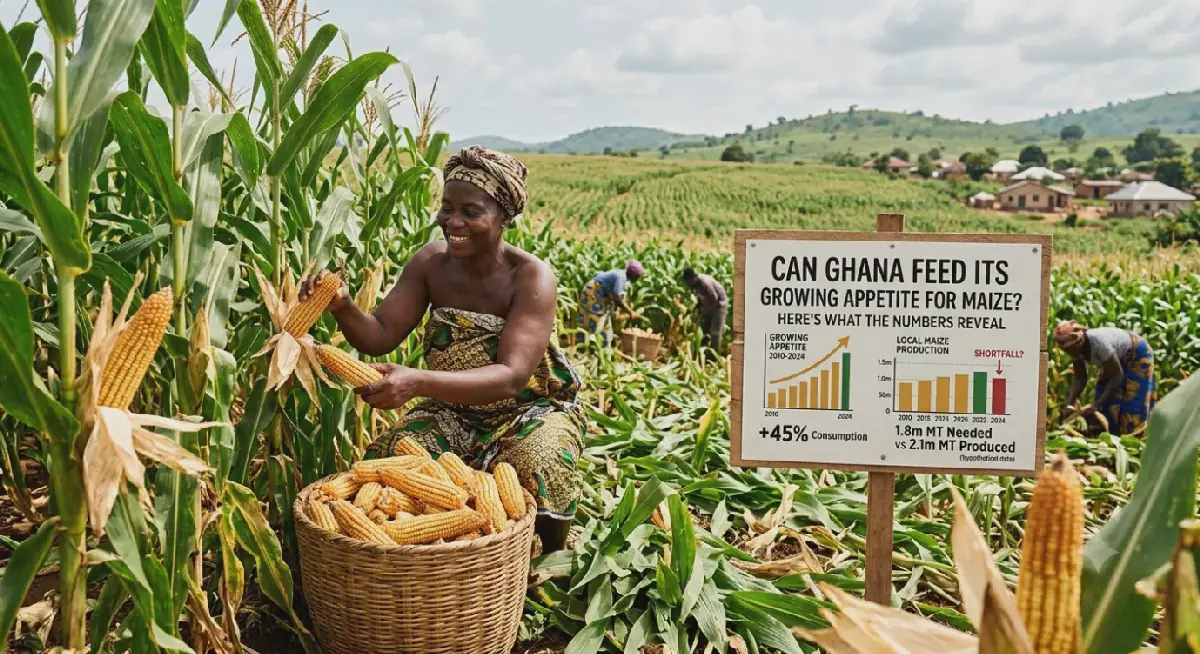
Maize is a fundamental component of Ghanaian cuisine, featuring in various traditional dishes such as koko, koose, banku, and kenkey. The grain is an integral part of daily meals for millions of Ghanaians. With its widespread consumption, maize plays a vital role in the country's food culture. The significance of maize in Ghanaian cuisine cannot be overstated, as it is a staple that brings people together. From breakfast to lunch and even as a snack, maize is a ubiquitous ingredient. Its importance extends beyond the culinary realm, as it also has economic and cultural implications.
According to Prince Asare Twumasi and Eunice Awudi, who recently published an article on the topic, there is a pressing need to examine the country's ability to meet its growing appetite for maize. The authors' inquiry into the matter reveals some interesting numbers that shed light on the current state of maize production and consumption in Ghana. Their findings highlight the importance of assessing the country's maize production capacity. The article provides an in-depth analysis of the maize industry in Ghana. It also touches on the challenges facing the sector.
The article, published in the Business and Financial Times, features insights and analysis on the maize industry in Ghana. As a major staple crop, maize is a crucial component of the country's food security. The publication of the article has sparked interest and debate among stakeholders, including policymakers, farmers, and consumers. The Business and Financial Times is a reputable source of financial and business news in Ghana. The publication has a wide readership and is known for its in-depth analysis of economic issues.
The significance of maize in Ghanaian cuisine is further underscored by its versatility. The grain can be consumed in various forms, including roasted, boiled, or processed into flour. Maize is also used as an ingredient in traditional beverages, such as koko. The crop is an essential source of livelihood for many farmers, who rely on it for their income. In addition to its economic importance, maize also has cultural significance, as it is often used in traditional ceremonies and celebrations.
Despite its importance, the maize industry in Ghana faces several challenges. These include inadequate irrigation systems, limited access to credit facilities, and the impact of climate change. The country's maize production has also been affected by the increasing demand for the crop. The government and other stakeholders have implemented initiatives aimed at boosting maize production and improving food security. These initiatives include the provision of fertilizers and other inputs to farmers.
The authors of the article, Prince Asare Twumasi and Eunice Awudi, bring their expertise and knowledge to bear on the subject. Their analysis provides valuable insights into the maize industry in Ghana. The article is a thought-provoking contribution to the ongoing discussion on food security and sustainable agriculture in Ghana. The authors' findings have implications for policymakers and stakeholders in the agriculture sector.
As Ghana continues to grapple with the challenge of meeting its growing appetite for maize, stakeholders must work together to find sustainable solutions. The country's food security and economic development depend on it. The government, farmers, and other stakeholders must collaborate to address the challenges facing the maize industry. This includes investing in irrigation systems, providing access to credit facilities, and promoting sustainable agricultural practices.
Key points
- The country's ability to meet its growing demand for maize is a pressing concern.
- Maize is a staple crop in Ghanaian cuisine, featuring in various traditional dishes.
- The maize industry in Ghana faces several challenges, including inadequate irrigation systems and limited access to credit facilities.