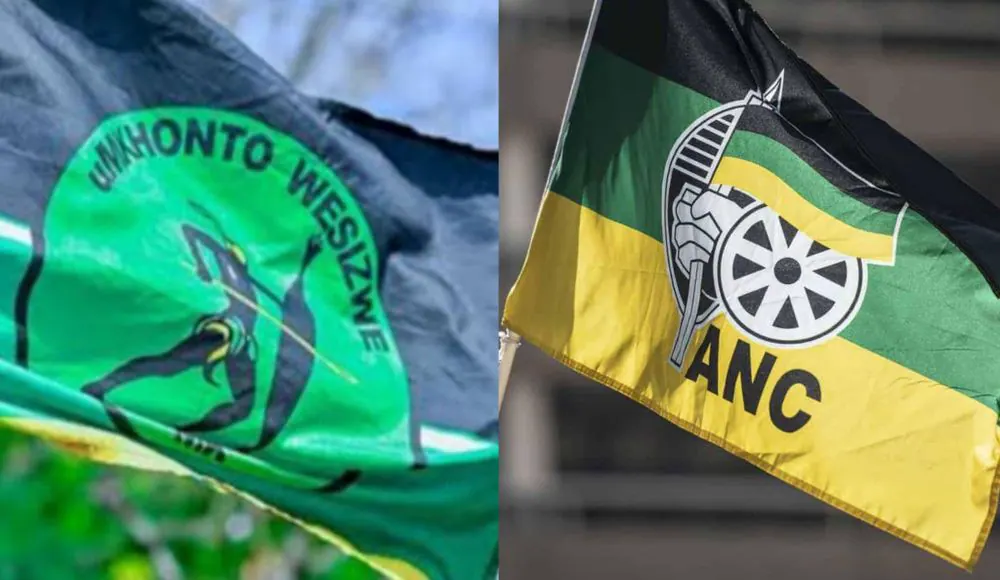
The uMkhonto weSizwe Party, led by former South African President Jacob Zuma, has made a significant impact in the country's politics, garnering 14.6% of the vote and 58 seats in its first election. The party was registered in September 2023 by Jabulani Khumalo and gained significant traction, with Zuma as its public face and leader by April 2024. This development has raised questions about the party's ability to break the African National Congress's (ANC) grip on power.
The ANC has a history of breakaway parties, with notable examples including the Pan Africanist Congress, led by Robert Sobukwe in 1959, and the Inkatha Freedom Party, founded by Mangosuthu Buthelezi in 1975. More recently, parties such as the Congress of the People (COPE) and the Economic Freedom Fighters (EFF) have emerged, but none have had the same level of impact as the uMkhonto weSizwe Party. The party's success has been attributed to its ability to challenge the ANC's monopoly on the story and offer a new alternative to voters.
One of the key factors that sets the uMkhonto weSizwe Party apart from other breakaway parties is its leadership. Zuma, who served as president of the ANC and the country, brings significant experience and influence to the party. Additionally, the party's name, which was also the name of the ANC's armed wing, has been seen as a bold move. The timing of the party's emergence, just as the ANC's moral credit was running dry, has also contributed to its success.
Despite its significant impact, the uMkhonto weSizwe Party's roots in the ANC have raised questions about its ability to break away from its parent party. Many of the party's leaders, including Zuma, have strong ties to the ANC, and the party's ideology has been seen as similar to that of the ANC. This has led some to question whether the party is truly a new entity or simply a rebranding of the ANC.
The uMkhonto weSizwe Party's success has also been attributed to its ability to draw support from voters who are disillusioned with the ANC. In KwaZulu-Natal, the party finished first, winning a significant number of seats. However, the party's internal dynamics have been marred by controversy, with reports of leadership changes and factional infighting.
The party's future has been the subject of much speculation, with some analysts questioning its ability to sustain its momentum. The uMkhonto weSizwe Party's leadership has faced challenges, including the expulsion of Duduzile Zuma-Sambudla and Nhlamulo Ndhlela, who are both challenging the expulsions in court. This has raised concerns about the party's ability to manage its internal conflicts and maintain its stability.
The emergence of the uMkhonto weSizwe Party has significant implications for South African politics, with some analysts suggesting that it could be a game-changer for the ANC. The party's success has highlighted the ANC's vulnerabilities and raised questions about its ability to maintain its grip on power. As the party looks to the future, it will be closely watched by analysts and voters alike.
Key points
- The uMkhonto weSizwe Party's success has been attributed to its strong leadership, its ability to challenge the ANC's monopoly on the story, and its timing.
- The party's roots in the ANC have raised questions about its ability to break away from its parent party.
- The party's internal dynamics have been marred by controversy, with reports of leadership changes and factional infighting.